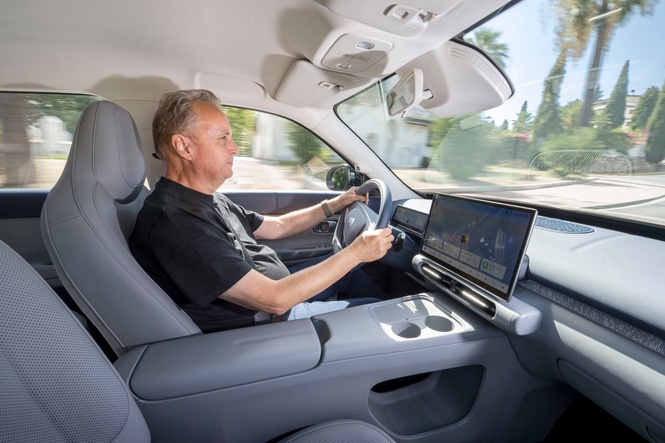
This week, I’ve driven the new Leapmotor B03X, the latest in a fast-improving range of cars from the Stellantis co-venture with a Chinese car maker.
One of the things that makes Leapmotors interesting is that they’re sold through a ready-made dealer network – the same people who may have sold you a Vauxhall, Citroen, Peugeot, Fiat or Jeep for many years. And those dealers are rather excited by selling something that’s great value, well-made and packed with tech – as many Chinese-made cars are.
When I say Chinese made, that won’t be for long. Leapmotor models will soon be built in some of Stellantis’ factories in Europe, while there are plans for Leapmotor tech to be used for a new Vauxhall model, too. Changing times, eh?
But to my point. The B03X follows the usual Leapmotor formula of offering impressive value with everything as standard and excellent space, too. Yet there were a few points that left me disappointed – as you can read in my review.
Sign up for Steve Fowler’s DriveSmart newsletter here
I was critical about the steering, some of the driver aids, and the endless beeps that made me feel like I was on life support in an episode of Casualty! They’re all elements that I based my verdict on, but it’s a verdict I’m going to have to revisit in just a matter of weeks.
You see, the Leapmotor B03X is a car that’s going to get better with age. Leapmotor folk, eager to please, told me that they planned a software update – that would be completed over-the-air without having to visit one of those dealers – that will improve the steering weight and feel, tweak the driver assistance systems to make them slightly less intrusive, and reduce the number of beeps and bongs.
I like it when car makers listen – as Volkswagen has done, as you will see in my ID. Polo review – but the speed with which Leapmotor plans to update its car left me shocked. It means that the car will be better before any UK customers get anywhere near it. And then, while they own it, it will keep on receiving updates that will improve the tech, which may even include the battery. Yes, there’s a chance that a new car could become even more efficient the older it gets.
Software-over-the-air (SOTA) upgrades are not especially new, but the number of owners they’re affecting is growing all the time. And they’re far more prevalent with electric cars than petrol models.
As with so many things around tech and EVs, Tesla has led the way with SOTA updates, bringing new features to cars, changing the way existing systems work and, in some cases, improving performance without an owner having to do much more than accept an update. Its Full Self-Driving software is probably the most obvious example of how dramatically a car can change after it has left the factory, with Tesla continually developing the system and sending newer versions out to cars already on the road.
That’s a very different ownership experience to the one most of us grew up with. Buy a car and, apart from routine servicing and the odd replacement part, it was pretty much the same car when you sold it as when you bought it. Now you can wake up one morning to find a new function on the screen, a revised interface or some other tweak that simply wasn’t there the day before.
There’s another, potentially more useful side to all this, too. If a manufacturer spots a software fault, there’s a growing chance it can fix it remotely rather than asking thousands of owners to make a trip to a dealer. Cars are increasingly connected back to their makers, so there’s even the possibility of a problem being spotted before you’ve realised there is one and a fix being sent out before it causes you any grief. I’d certainly rather have my car mend itself on the driveway overnight than spend a morning sitting in a dealer drinking questionable coffee.
However, there is a flip side. Every software update is effectively a manufacturer coming into your car and changing something you already own, and there’s no guarantee you’re going to prefer what they’ve done. Move an icon, alter a menu, change the way a safety system behaves or make something that previously took one press require three and an update can very quickly feel like a downgrade.
We’ve all experienced it with phones and computers. An update arrives promising improvements and you spend the next few days wondering where they’ve hidden the thing you used every morning. Cars are now no different, except you’re travelling at 70mph while trying to work it out.
So, car makers need to be careful. The clever bit isn’t simply being able to alter a car remotely; it’s making sure the changes genuinely make life better for the people who have already paid for it.
There’s another interesting consequence, though, and it could affect the way we buy cars. I’ve got a member of my American family with an original Tesla Model Y who has been looking at the newer version and wondering whether to change. At the moment, he can’t see enough reason to do so. His old car has Full Self-Driving and has continued to receive Tesla’s latest software, so although the new Model Y is physically different, his existing car doesn’t feel anything like as old as its registration document might suggest.
That’s fascinating for an industry that has spent decades persuading us that the newest car is automatically the most desirable. If your four or five-year-old EV still has the latest infotainment software, current navigation, updated driver assistance systems and even improvements to efficiency or charging, maybe you’ll be quite happy to hang on to it.
It also puts more pressure on manufacturers to make the hardware improvements on a new model genuinely worthwhile. A bigger battery, much faster charging, a significantly better ride, more space or an entirely new electrical architecture could tempt you. A slightly bigger touchscreen and a few new graphics probably won’t if your existing car has just downloaded the latest software anyway.
The analogies with phones are going to come ever closer. I don’t upgrade my iPhone every year because, quite simply, the hardware improvements often aren’t enough.
Similarly, there are obvious questions about how long manufacturers will continue supporting older cars, just as there are with phones and computers. But if they get that right, SOTA updates could become one of the most underrated advantages of the modern connected car.
We’ve become used to cars deteriorating slowly as they age. Perhaps we now need to get used to the slightly strange idea that, in some respects at least, the car sitting on your drive could be better next year than it is today.
Sign up for the DriveSmart newsletter
To get the latest motoring insights from EV editor Steve Fowler delivered straight to your inbox, simply enter your email address in the box at the top of this page.
Each edition of DriveSmart offers clear, expert guidance on the fast-moving world of electric vehicles and modern motoring, from trusted reviews and practical tips to the biggest industry news of the week.
You can also head to our newsletter preference centre to sign up for the email.
Read MoreNew Dacia Spring revealed - Britain’s cheapest car is reborn
I spent a morning with Cupra’s CEO on the day Volkswagen’s world changed
Now BYD’s aiming at the van and truck market
Volkswagen Mission Efficiency EV sets three records using new ID. Polo tech
Leapmotor B03X review: I drove the new electric SUV that’ll improve with age
Volvo XC40, EX40 and EC40 get smarter, safer and sharper for 2027