
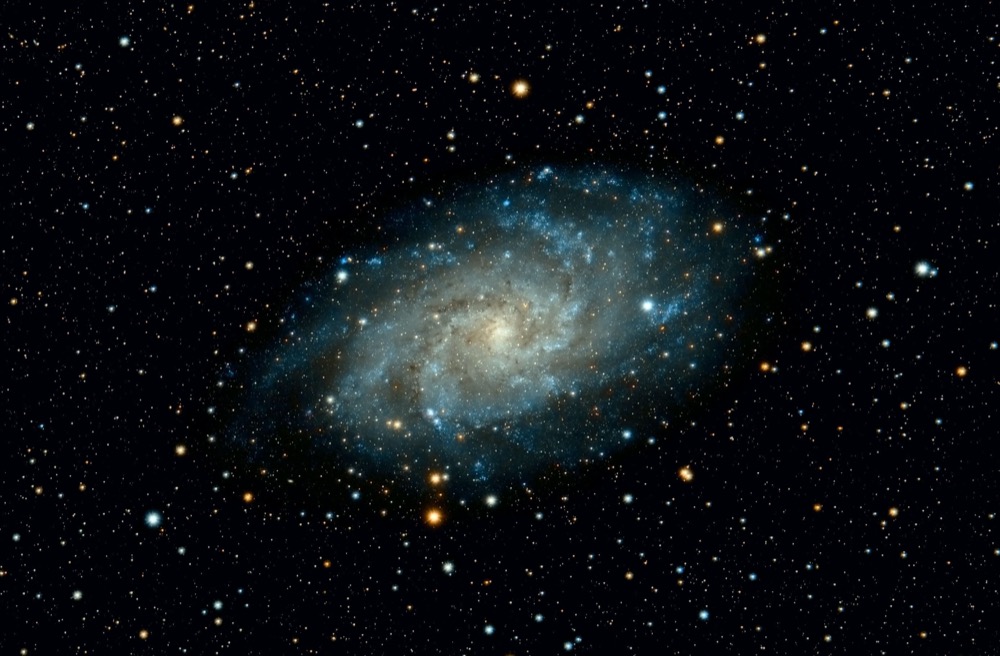
Astronomers have used the NASA Hubble Space Telescope to capture a striking image of NGC 1266, a galaxy in a rare post-starburst phase that offers a front-row seat to the dynamic processes shaping galactic evolution. The galaxy’s unusual structure and intense activity suggest it is caught in the middle of a dramatic transformation, shedding light on the interactions between supermassive black holes and their host galaxies.
A Galaxy Between Worlds
NGC 1266 is located roughly 100 million light-years away in the constellation Eridanus, also known as the Celestial River. Classified as a lenticular galaxy, it occupies a transitional stage between the familiar spiral galaxies, with their sweeping arms, and the more uniform, star-poor elliptical galaxies. Lenticulars possess a bright central bulge and flattened disk similar to spirals, but they lack active star-forming regions and obvious spiral structures.
What makes NGC 1266 particularly compelling is its status as a post-starburst galaxy. Unlike typical galaxies, it hosts a relatively young population of stars but shows minimal ongoing star formation. Post-starburst galaxies are exceedingly rare, representing only about one percent of the local galaxy population. Astronomers are especially interested in these galaxies because they offer unique insights into the physical mechanisms that halt star formation across cosmic time.
The Hidden Drama Within NGC 1266
Observations suggest that NGC 1266 underwent a minor galactic merger approximately 500 million years ago. This collision likely triggered a burst of star formation while funneling gas into the galaxy’s central supermassive black hole, dramatically increasing its activity. The result: a powerful active galactic nucleus (AGN) that generates intense jets and winds of gas.
These energetic outflows are not mere fireworks, they fundamentally reshape the galaxy. By ejecting or heating the gas needed for star formation, the black hole suppresses the birth of new stars. Hubble and other observatories have detected strong shockwaves and turbulence throughout the galaxy’s interstellar medium. Most remainingstar-forming activity is confined to the central core, while the outer regions are largely quiescent. This interplay between the black hole and the galaxy’s gas illustrates the profound influence of AGNs on galactic evolution.
NASA Insights on Galactic Evolution
According to NASA, post-starburst galaxies like NGC 1266 are crucial laboratories for understanding how galaxies transition from active, star-forming systems into quieter, elliptical structures. By observing the remnants of recent starbursts and the impact of black hole activity, researchers can piece together the sequence of events that regulate star formation. These observations help refine models of galaxy evolution, revealing how violent internal processes can dictate a galaxy’s fate over hundreds of millions of years.
Enjoyed this article? Subscribe to our free newsletter for engaging stories, exclusive content, and the latest news.