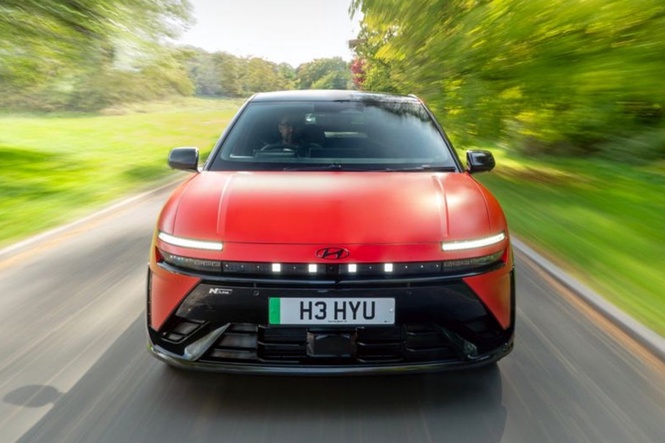
Hyundai has a history of brilliant electric Ioniqs. The Ioniq 5 and 6 were both World Car of the Year winners, while the big Ioniq 9 has won huge praise, not least from me, for bringing luxury car touches to the mass market – and when I say mass, I mean room for up to seven people. So, I had high hopes for the little Ioniq 3, and I wasn’t disappointed – this is the best Ioniq yet.
When I first saw the Ioniq 3, I thought its price would start in the high £20,000s. It has the style, the quality and the very latest tech to make that seem a reasonable guess – and now I know that it drives brilliantly as well. Instead, prices start at £18,495 thanks to the Electric Car Grant, which makes this a small hatchback for supermini money.
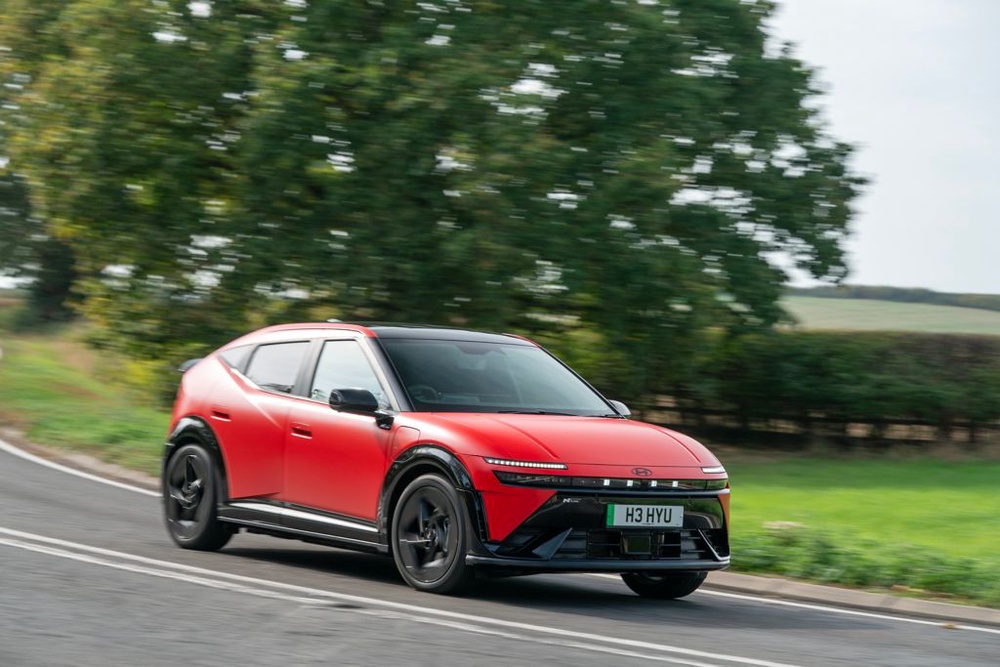
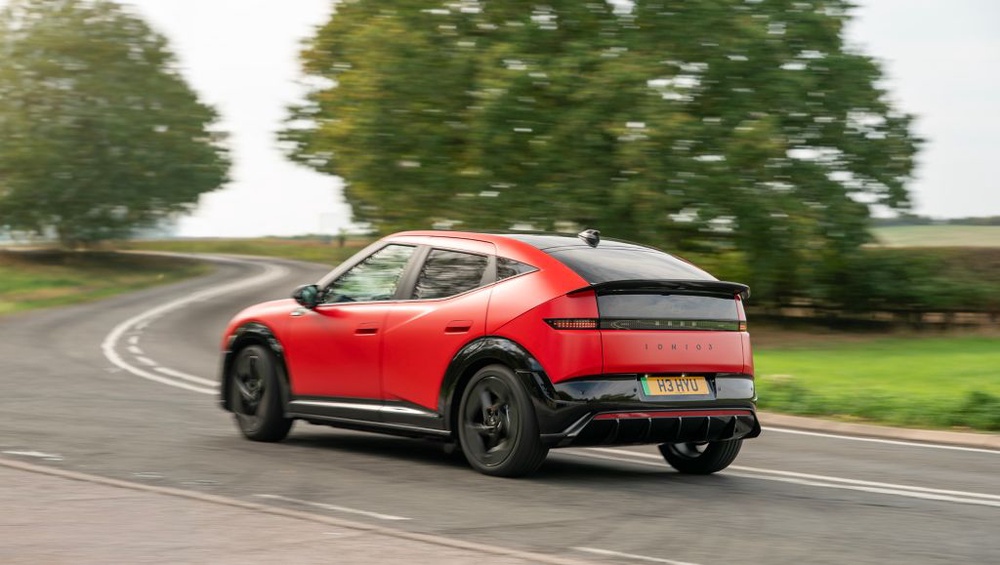
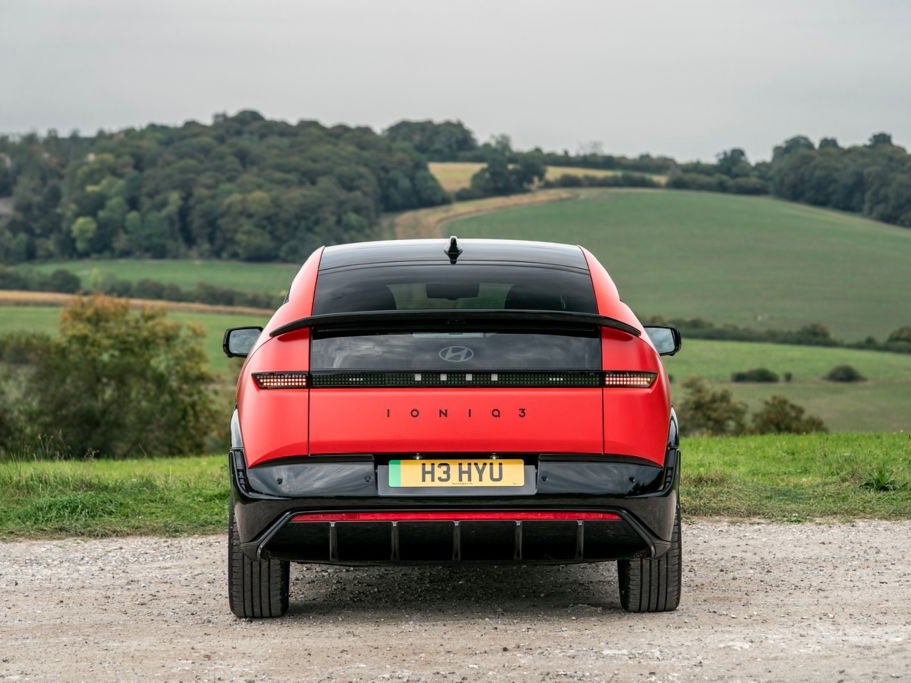
I like the way Hyundai has gone about the styling, too. It hasn’t followed the Renault 5 down the retro route, and I think it’s all the better for doing its own thing. Hyundai calls the shape an Aero Hatch, with a low nose and a roofline that leaves room over the back seats before dropping down to meet the rear spoiler. The pixel lights link it to the bigger Ioniqs, including four dots that spell out H in Morse code – clever; I like that.
My test N Line Evo looked fantastic in Fierce Red matte paint with a matte black roof, its black 19-inch wheels and bigger spoiler adding to the effect. It was the top-spec car with the EV, Design and Comfort packs fitted, so its £34,740 price after the grant was a fair way from the headline figure. Even so, the quality and the amount of kit made it look sensational value. It’s nicely put together in Turkey, too, which also helps towards those grants.
How we tested
I drove the Hyundai Ioniq 3 N Line Evo on familiar roads around my South Buckinghamshire home, including town roads, country lanes, motorways and even a supermarket car park. I tried its Pleos infotainment system and checked the boot and rear seats, including sitting behind my own driving position to assess space.
Hyundai Ioniq 3: from £18,495, Hyundai.com
Independent rating: 10/10
- Pros: Impressive quality, great to drive, generous space, excellent value, long maximum claimed range
- Cons: No rear wiper, split rear screen affects visibility, shorter range on the more expensive versions
Hyundai Ioniq 3 specs
- Price: from £18,495
- Battery size: 42.2kWh or 61kWh
- Maximum claimed range: 308 miles
- Charging: 119kW DC, 10 to 80 per cent in 29 minutes; 110kW and 30 minutes with the 61kWh battery
Battery, range, charging, performance and drive
Despite the price, there are no compromises to the way the Ioniq 3 drives. There’s a weight to the steering that I rather like – you don’t get a huge amount of feel through it, but it’s reasonably direct and the weight adds to the Ioniq 3’s upmarket feel, while still making the car nice and easy to drive. It feels agile, too, with sprightly enough performance to make it enjoyable, and although the ride’s a little firm, I never found it uncomfortable. This should suit family duties very nicely, with a bit of style thrown in.
You’ve got plenty of choice over the brake regeneration, so you can adjust how much the car slows when you lift off the accelerator. The steering-wheel paddles let you change the level, and there’s one-pedal driving as well, which feels natural.
The N Line Evo looks sporty, but there’s no extra power over the other 61kWh versions: all have 133bhp driving the front wheels. It takes what looks on paper like a leisurely 9.6 seconds to reach 62mph, while the cheapest Ioniq 3 is actually quicker, with 145bhp and an 8.8-second time. So, you don’t need to buy the bigger battery to get a bit of go.
The smaller (cheaper) battery pack is called 42kWh, although its capacity is 42.2kWh, and is available only in Advance trim. Its maximum claimed range is 213 miles, which is more than reasonable for the money and further than most similarly priced rivals will go. With the 61kWh battery, the Advance’s maximum claimed range rises to 308 miles, but that figure starts to fall as you move up through the different versions: 303 miles for Premium, 300 miles for Ultimate and 265 miles for bodykitted N Line Evo.
That’s something to bear in mind if the N Line Evo’s looks and equipment appeal as much as they did to me. I found the efficiency good, as I’ve come to expect from Hyundai, and the range prediction was reasonably reliable, too. The official combined efficiency figure for the N Line Evo is around 3.9 miles/kWh.
Charging takes about half an hour from 10 to 80 per cent on a suitable rapid charger. To be precise, Hyundai quotes 29 minutes and a maximum of 119kW for the smaller battery, or 30 minutes and 110kW for the bigger one – not stella charging speeds but good enough. Both support up to 11kW AC charging, while Premium and above can warm the battery before a charging stop. A heat pump comes with the optional EV Pack fitted to my car, which also lets you power electrical equipment from the battery through an internal socket or external connection.
Interior, practicality and boot space
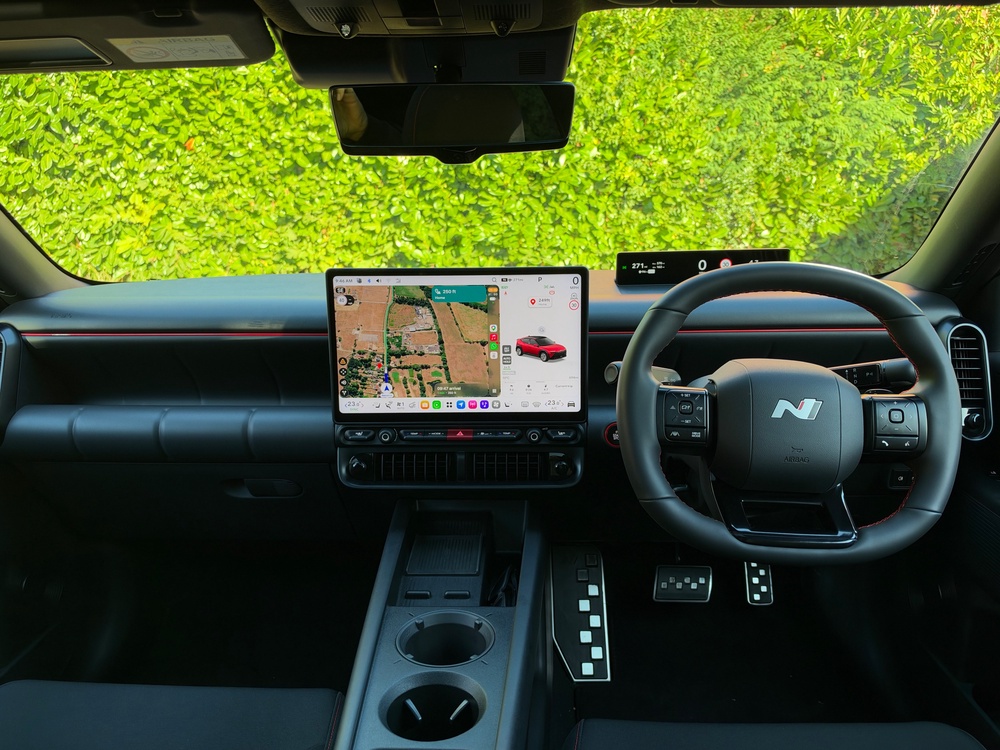
I love the Ioniq 3’s dashboard design. It looks really upmarket, and the materials would impress me even if the Ioniq 3 cost considerably more. My N Line Evo had black cloth and suede seats with red stitching, a red detail across the dash and a black headlining, so there was a bit of the sporty look from outside carried into the cabin as well.
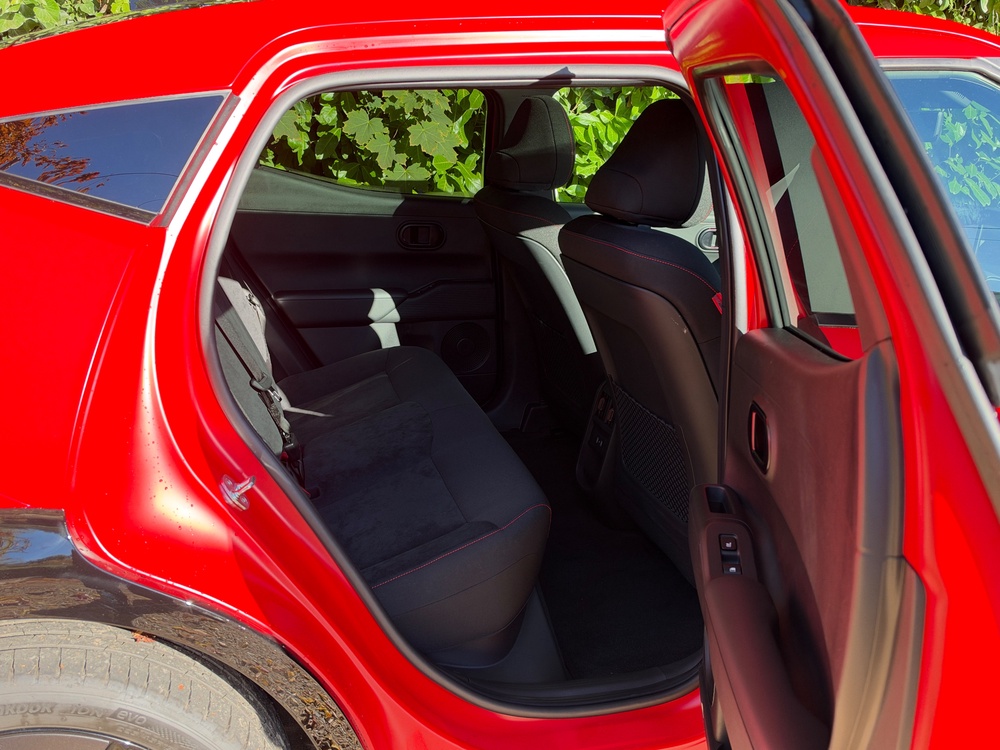
What surprised me was how much room there was in the back. I’m approaching six feet tall and could sit comfortably behind my own driving position, which isn’t what you might expect when you see the shape of the car. The doors open usefully wide, too, so getting in and out is straightforward. Even the entry-level Ioniq 3 gives you much more space than most similarly priced rivals, and on Ultimate and N Line Evo the rear seats recline as well.
The boot is a good shape, nice and deep and wide, with 441 litres in total. That includes the 119-litre compartment beneath the floor that Hyundai calls the Megabox, while folding the rear seats takes the total to 1,213 litres. The seats split 60:40 and there’s an adjustable boot floor, so you’ve got some flexibility when you need to carry more. All this comes in a car that’s reasonably compact at 4,155mm long (or 4,170mm in N Line form) and 1,800mm wide without its mirrors.
My car’s Comfort Pack brought electrically adjustable front seats with a driver’s memory setting, ventilation for the front seats and heating for both front and rear seats. Heated front seats and a heated steering wheel are standard on Ultimate and N Line Evo, while every version gets dual-zone aircon. The Design Pack added the Vision Roof and the contrasting roof colour, and there’s useful storage beneath the floating centre console, with cupholders that adjust for bigger bottles.
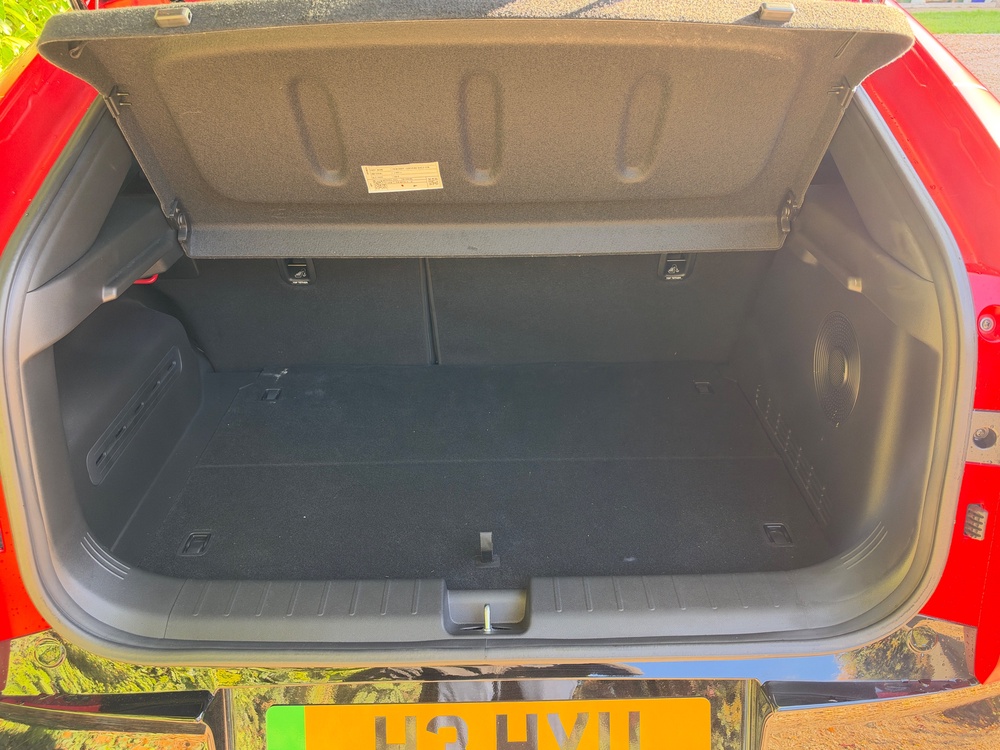
My main irritation is the view out of the back. A split rear screen is never perfect for visibility, and there’s no rear wiper, which is one of my pet peeves. The lower part of the screen does stay relatively clear, so I’ll give Hyundai that, but I’d still like a wiper. It’s frustrating on a car that I otherwise find so hard to fault.
Technology, stereo and infotainment
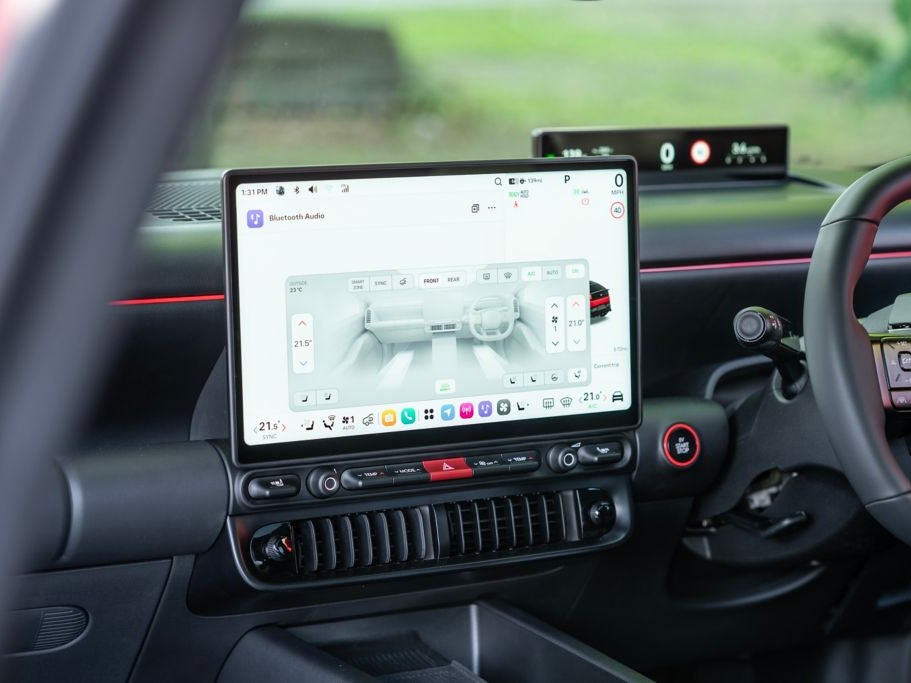
Hyundai’s new Pleos Connect system works really well, and the Ioniq 3 is the first Hyundai developed for Europe to get it. There’s a familiar smartphone feel to the layout, whether you have the 14.6-inch screen fitted to my N Line Evo or the 12.9-inch version in the other cars. Premium and above also get a separate 9.9-inch driver’s display.
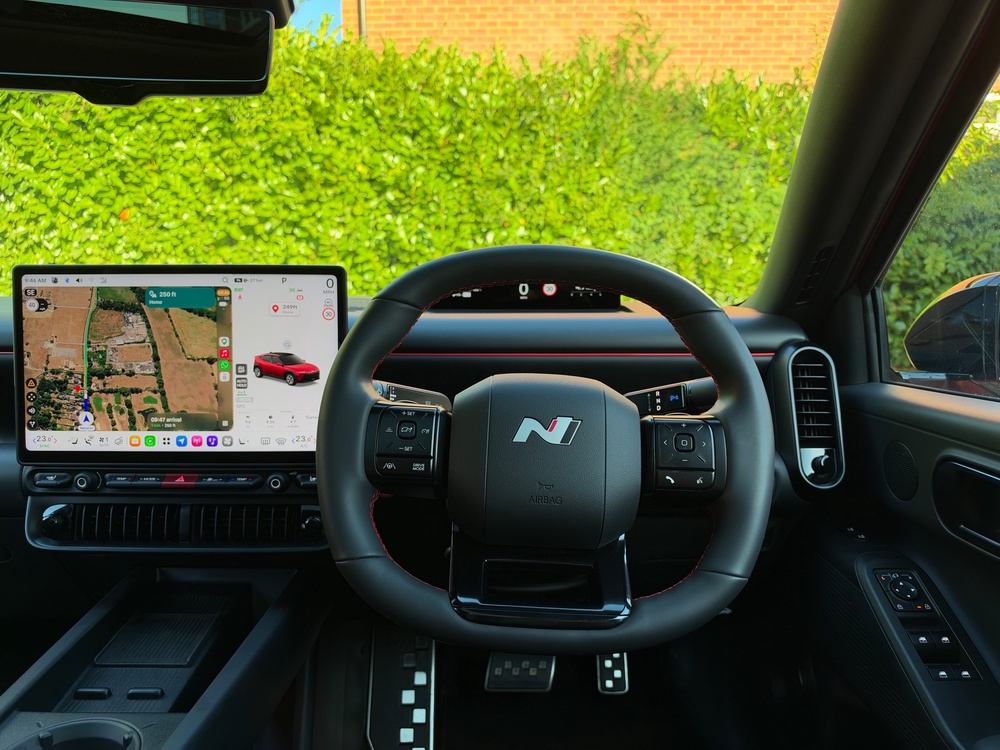
You can use wireless Apple CarPlay or Android Auto whichever one you choose, while Ultimate and N Line Evo have built-in navigation. There’s help with charging stops when planning a route and Plug & Charge allows compatible chargers to recognise the car for seamless payment. A wireless phone charger is included from Premium upwards, while the Comfort Pack on Ultimate and N Line Evo lets a compatible phone or wearable device act as the key.
Pleos has its own apps for music and entertainment, along with a voice assistant and software updates that arrive over the air. My car had the eight-speaker Bose stereo, including a subwoofer and amplifier, which comes with the Comfort Pack in place of the standard six-speaker system – it sounded pretty reasonable. The pack also adds an artificial driving soundtrack on the N Line Evo.
I was pleased that the safety systems weren’t as intrusive as they can be in some rivals. There’s plenty of assistance, including adaptive cruise control with stop-and-go and help with keeping in your lane, but the car remained nice and easy to get along with. The two top versions also have Highway Driving Assist 2 and matrix LED headlights.
You get a reversing camera and front and rear parking sensors on every version, while the N Line Evo adds an all-round camera view and a display for the blind spots when you activate the indicators. There’s assistance that can brake to help avoid a parking collision, plus remote parking and Memory Reverse Assist – the latter remembers the final stretch of the route you’ve driven to help reverse back out of a tight spot; handy down a country lane with a tractor coming the other way!
Prices and running costs
I suspect most buyers will be tempted past the £18,495 headline price and into the £21,995 Advance with the 61kWh battery. Getting a maximum claimed range of 308 miles for that money is very appealing, although the 42kWh version deserves a proper look before you move on. It’ll cover a maximum claimed 213 miles, which is already further than most similarly priced rivals, and you get the same generous amount of space inside the car.
Beyond those two Advance models, Premium costs £23,695, Ultimate £26,195 and N Line Evo £28,195, all after the £3,750 government grant that every version qualifies for. I can see the appeal of working your way up the range, especially having driven a car with all the extras, although I’d keep an eye on those range figures. The extra money buys more kit, but the 61kWh Advance is the one that goes furthest.
My car had all three option packs, which added £1,250 for the EV Pack, £1,500 for the Design Pack and £2,500 for the Comfort Pack. The Fierce Red matte and matte black roof colour option was another £1,295, bringing the total to £34,740 after the grant, or £38,490 before it.
You can have solid Fierce Red without paying extra for paint. The EV Pack is available on Premium and above, while the Design and Comfort packs are offered on Ultimate and N Line Evo.
Hyundai includes a five-year warranty with no mileage limit and covers the battery for eight years or 100,000 miles, along with five years of vehicle health checks and a roadside-assistance package. Its good efficiency should help keep charging costs down, although the bill will depend on where you plug in and your electricity tariff.
The verdict: Hyundai Ioniq 3
The Ioniq 3 is so much more than just a cheap car. Even without the government grant, I’d probably give it ten out of ten, because I’m so impressed by the whole package – from the quality to the way it drives. There’s room for the family, the boot is useful and the dashboard looks properly upmarket, with the latest technology to go with it.
It’s a car that’s very difficult to find fault with. I’d like a rear wiper, and the split rear screen isn’t perfect for visibility, while you also need to remember that the more expensive versions with smart body kit bits have a shorter range, so the N Line Evo’s extra equipment comes with a compromise.
I still think the Renault 5 is brilliant, but the Hyundai makes it look expensive, small and a bit dated on specification.
Hyundai Ioniq 3 rivals
- Renault 5
- Mini Cooper SE
- BYD Dolphin Surf
FAQs
How long does it take to charge?
Hyundai quotes 29 minutes from 10 to 80 per cent for the 42.2kWh battery and 30 minutes for the 61kWh version on a suitable rapid charger, with maximum rates of 119kW and 110kW respectively. A 7kW home wallbox takes six hours and 20 minutes or eight hours and 35 minutes for a 10 to 100 per cent charge. Both versions support up to 11kW AC charging.
How much does it cost and is it worth it?
Prices start at £18,495 after the government grant, with the 308-mile Advance 61kWh costing £21,995. My N Line Evo, with all three option packs and matte paint, was £34,740 after the grant. It’s excellent value, but I’d be impressed by the quality and the way it drives even if it cost more.
Does Hyundai replace batteries for free?
The battery is covered for eight years or 100,000 miles, so a free repair or replacement depends on the fault being covered by the warranty. The rest of the car has a five-year, unlimited-mileage warranty.
Why trust us
Our team of motoring experts have decades of experience driving, reviewing and reporting on the latest EV cars, and our verdicts are reached with every kind of driver in mind. We thoroughly test drive every car we recommend.
Think EVs are too expensive? These 12 could blow your mind, not your bank balance
How to install an EV charger at home: Costs, grants and what to expect
Skoda Epiq review: I’ve driven the cool new electric SUV, but is it epic?
Leapmotor B03X review: I drove the new electric SUV with 237 miles of range that’ll improve with age
Bentley ploughs on with electric Luxury Urban SUV plans
BMW iX3 review: Is this new electric SUV with 500-mile range a game-changer?
This fast-charging EV can have an almost-full battery in under 10 minutes
Volkswagen ID. Cross review: Small electric SUV feels impressively polished and properly posh