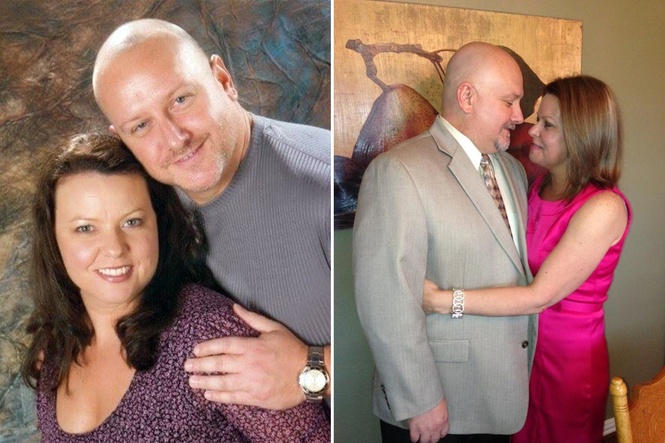
Brian Rooney never thought he would be one of the hundreds of thousands of Americans who experienced bankruptcy last year.
But that’s where the father-of-five from Houston, Texas, found himself after a series of tragedies and hardships beyond his control.
In 2013, his wife of 26 years, Tina, died after a two-year battle with cancer, leaving him with $350,000 in medical debt from her care. Two years later, he suffered a stroke, putting him out of work for a month and adding another $60,000 in debt. Then the pandemic took a major toll on his longtime email marketing business and he leant on credit cards, racking up another $10,000 debt. By late 2024, he was $500,000 in debt.
“I was losing sleep like crazy,” Rooney, 60, told The Independent. “There were times I wouldn't sleep for days on end.”
He made the decision to file for bankruptcy and in doing so, became part of a worrying trend in the United States. Personal bankruptcies have surged nearly 50 percent since 2022, according to federal data.
“There was a lot of shame,” Rooney said. “There was a lot of embarrassment. Up to that point, I had been the guy that ‘handles it.’ I just realized, ‘I can't handle it. I'm not going to be able to do this like I thought I would.’”
Nearly two-thirds of Americans who go bankrupt say that medical debt was the cause.
Tina Rooney died in 2013 after a two-year battle with squamous cell carcinoma, leaving her husband and five children. Her husband was left with bills totaling $350,000 for chemotherapy, radiation and extensive surgeries. The Rooneys’ health insurance, a plan they got as part of the Affordable Care Act, didn’t cover all the costs.
Brian Rooney filed for bankruptcy in May 2025 which required several weeks of paperwork, detailing how he amassed his debt. Writing down all those numbers plunged him back into the pain of the past 12 years - his wife’s death, his stroke and the pandemic. All of it was disturbing, he said.

“You're seeing it kind of laid out in front of you as you fill out this form. Here's all the money you've spent. Here's all the bills you've run [up]. Here's what you haven't kept up with. Here's where your life sits. And the reality [that] if you don't get some help with this, it doesn't get better,” he said.
There are two main types bankruptcies that apply to individuals and businesses - Chapter 7 and Chapter 13. The names derive from the fact the information is found in chapters of the federal bankruptcy code.
Chapter 7 is a liquidation, or forgiveness, of debts. Chapter 13 is a reorganization of debts into a payment plan of three to five years. If there’s a balance left after five years of payments, the government forgives the debt.
‘Hardworking people with bad luck’
In the same year that Rooney declared bankruptcy, over 356,000 filers qualified for Chapter 7 and around 208,000 qualified for Chapter 13. Most of them were personal bankruptcies, according to federal data.
In general, income is the factor that determines which chapter. If the filer makes enough money to pay off their debts, Chapter 13 is a possibility.
Rooney’s experience represents many bankruptcy filers, said Mike Ziegler, a bankruptcy attorney at Florida-based Ziegler Diamond Law. They don’t accumulate debt through bad decisions and a lavish lifestyle. Instead, they tend to be hardworking people with bad luck.
“I think there is a preconception that bankruptcy filers are in their situation as a result of ‘bad choices’ - they went on cruises around the world, they all have 80-inch TVs and live a careless life,” Ziegler told The Independent in an email.
“That is far from the truth. Most bankruptcy filers have done their very best to live responsibly and work hard to support themselves and their families.”
After completing his paperwork and going over it with his lawyer, Rooney submitted it to his case’s trustee, a federally-appointed person who oversees the bankruptcy process.
The trustee decides whether someone’s case is Chapter 7 or Chapter 13, and if any assets must be sold to pay down the debt.
The trustee makes that decision during a “341” meeting, often virtual. There, the person answers questions about their debt, income and expenses. In some cases, creditors such as lenders and credit card issuers, can join the call.
In Rooney’s case, the trustee said he qualified for Chapter 7 and didn’t have to sell any assets to pay off part of his debt.
Debtors typically have to wait up to 60 days after the 341 to receive a formal discharge notice that erases their debt. During that time, creditors can file objections to the trustee’s decision.
Shortly after that 60-day window closes, Chapter 7 filers receive their discharge notice. For Rooney, that day was August 12, 2025, according to court documents viewed byThe Independent.
‘Overwhelmed with relief’
Once the debt is discharged in a written notice to the individual, creditors cannot try to collect on it. The end of collections calls and notices was a weight lifted for Rooney.
“I won't have the bill collectors and the debt and trying to figure out how to take more money than I have and pay bills that just get bigger,” he said. “[I was] overwhelmed with relief, and ultimately, wish I'd done it sooner.”
Rooney’s regret is common, bankruptcy attorney Ashley Morgan told The Independent in an email.
“Probably the most common thing I hear after someone files is some version of: ‘I wish I had done this sooner,’” said Morgan, who owns Virginia-based Ashley F. Morgan Law, PC.

“Individuals too often imagine losing everything, never getting credit again, or being judged for how they got into debt. Once people actually go through the process, many clients are surprised by how straightforward it is.”
Most Chapter 7 cases take three to four months, Morgan said, while Chapter 13 takes three to five years. Rooney’s case took around eight months as he had to pay his legal fees in installments before he filed, adding four months to the process.
The average cost to file for Chapter 7 ranges from $1,250 to $3,500 for court and lawyer fees, according to legal marketplace LegalShield. Rooney’s legal fees were just under $3,000, he said.
The consequences
Life after bankruptcy offers freedom but at a high cost. Bankruptcies can stay on a credit report for up to 10 years, according to the Consumer Financial Protection Bureau. That can lead to denied applications for credit and loans, and higher interest rates that add thousands of dollars to a loan balance.
Rooney’s credit score fell to 482 after bankruptcy, a number that means he would be likely offered the highest interest rates on any loans or credit cards he applied for.
He has spent the past year building back his credit score through on-time credit card payments and responsible spending. His score is now 689, he said, a number that lenders consider “good.”
The temporary credit-score damage that bankruptcy causes is a small trade-off for living debt-free, Morgan said.
“Someone may have spent years worrying every time the phone rings, moving money between accounts, deciding which creditor gets paid this month, or waking up in the middle of the night worried about debt,” she said.
“Filing doesn’t fix every financial problem, but removing that lingering pressure can make a huge difference.”
Read MoreWhy filling up your IRA before your 401(k) could leave you vulnerable
US holiday spending is on track for a major milestone
Three money habits keeping you broke — whether you’re Gen Z or retired
US claims for dog bites hit nearly $2B. What victims and pet owners need to know
Nearly all goods and services have seen prices spike in last 5 years
McDonalds and Burger King turn to novel idea to entice customers: Human workers