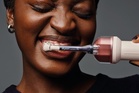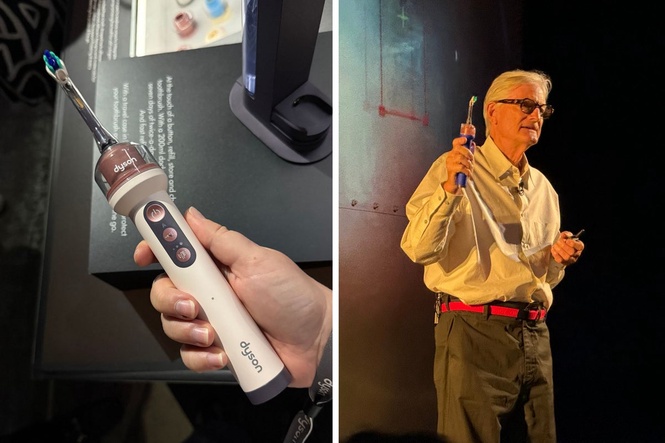
Dyson has ventured into a new tech category with the launch of the Dyson CameraJet electric toothbrush. In the world of electronics, it’s been four years since Dyson last explored a new department, with the release of the Dyson Zone headphones back in 2022. I attended the CameraJet’s official unveiling in Paris this morning and, as someone who’s hesitant to endorse a toothbrush that exceeds £400 (especially with a manual brush costing £3 or less), I was surprised to find myself justifying the sky-high spend.
Combining brushing with sonic and oscillating bristles, water flossing and mouth washing, the device is set to cut around two-minutes off your oral health regimen, if you deduct the recommended time for daily flossing and mouth washing. What’s more, it uses AI-powered cameras to scan your teeth in real-time and take a targeted approach to flossing, attacking plaque as the camera tracks it.
As if that wasn’t enough of a distinction between the CameraJet and similarly premium products such as the Oral-B iO10 toothbrush, Dyson takes things one step further with a conical (versus jet stream) spray to tackle flossing. Where a jet of water or mouthwash (from something like a Waterpik flosser) is capable of puncturing through plaque build-up, Dyson’s broader conical spray was said in testing to be more effective at thoroughly dislodging plaque across a wider area. These features, alongside a multi-purpose charging dock and anti-gravity mouthwash tank (more on this below), all make it easier to endorse a £419.99 price tag.
Here’s everything I’ve gleaned after getting hands-on with the device as it launched.
Read more: Best water flossers, tested
Dyson CameraJet electric toothbrush, ceramic pink, £419.99, Dyson.co.uk
As I held the CameraJet in my palm, I was pleased to find that the device felt no heavier than my current Oral-B electric toothbrush, despite the addition of the mouthwash tank. I then tried my hand at brushing using a demo mouth model and, while the conical spray was slightly messy, I’ve no doubt it would be tidier when tucked behind your lips, especially given that James Dyson posed the problem of excess spray from existing water flossers during the launch event. I’ll report back after a more thorough testing.
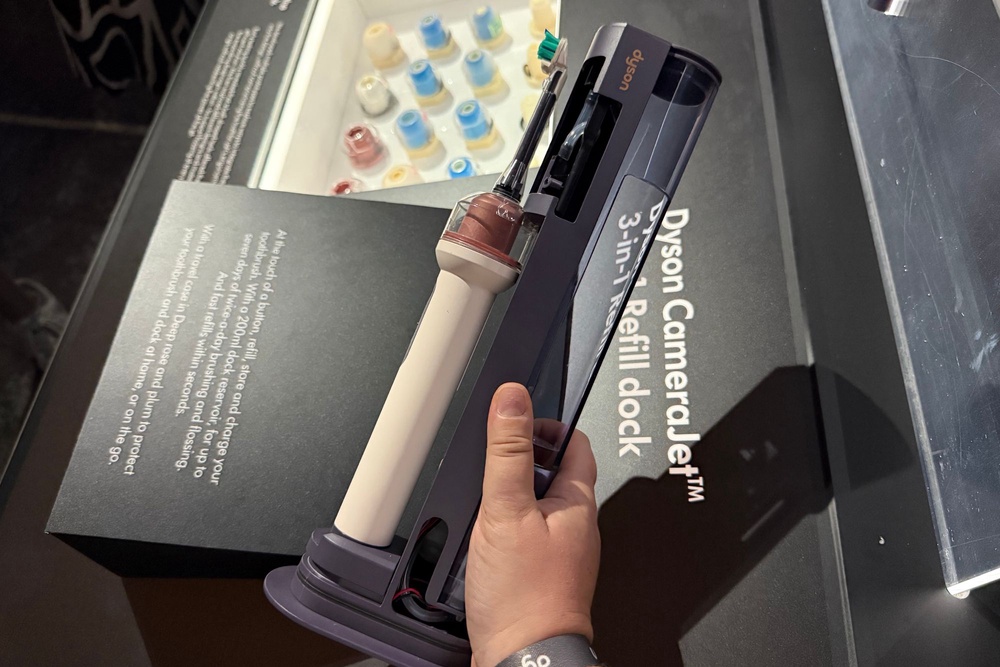
He also discussed the large amount of mouthwash or water required of most electric flossers, explaining that the CameraJet requires just 12.5ml of liquid per brushing session to effectively bust away plaque. Even better, the on-handle mouthwash tank has been designed with an expanding balloon to ensure you can manoeuvre the handle in all directions without preventing water from reaching the brush head. And, once you’ve finished brushing, simply place the device onto the charging dock (pictured, above) and refill the mouthwash tank in three seconds using a single button. For context, if you’re travelling you can fill the mouthwash tank manually, to save you finding space for the dock in tight luggage allowances.
The device has been launched alongside a range of three toothpastes (peppermint for sensitive teeth, spearmint and ginger mint) and two mouthwashes. Your toothbrush comes equipped with one of each when purchasing but, thankfully, you don’t have to stick with these Dyson formulas going forward. The flosser spray works with just water and you can swap in your toothpaste of choice – though, the brand did caution that toothpastes that are too foamy (high in SLS, which Dyson has avoided in its formulas) may interfere with how much the camera can see between your teeth.
I’ll be giving the device a full test in the hours and days to come, but in the meantime the device is available to purchase today via the Dyson website.
Read more: Best whitening toothpastes, tested