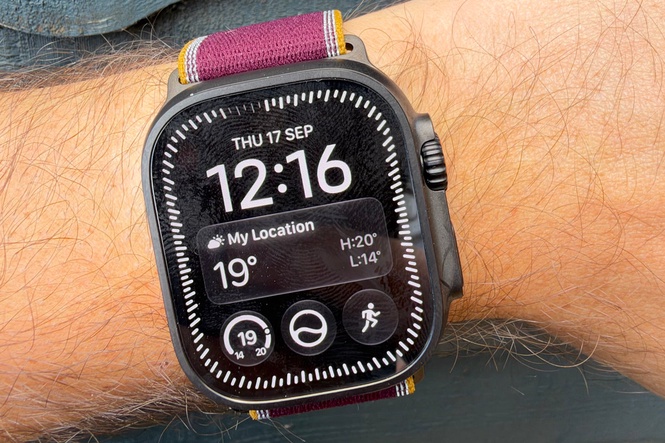
Apple has released its new Watches: the Series 12 and Ultra 4. And while they largely look the same while you’re wearing them, they come with some major changes on the inside that finally address some of their biggest problems – while also adding new complications.
The updates to the Series 12 and Ultra 4 are largely the same as each other – both get the new health sensing features, better battery charging and a new chip that enables the potentially controversial new features. As with other years, almost all features are the same between the two Apple Watches, but the Ultra 4 primarily comes with a bigger screen, a bigger battery, and a bigger price tag.
The updates to both Apple Watches are primarily focused on improving their ability to sense your health and wellbeing. This is through a range of improvements both to the sensors on the back of the watch, as well as the software that crunches up that data and turns it into something useful. Together, they mean that Apple is finally threatening to take on fitness trackers such as those made by Garmin and Whoop.
The other big change is the processor on the inside. That helps power those health and other features, but also enables the Series 12 and Ultra 4’s other headline new feature: Audio Intelligence. That has been controversial since it was announced at the Apple Watch’s launch event last week, and I look further into the implications of it below.
Overall, these add up to a host of subtle but important changes for this year’s Apple Watch line-up. But do they really make a difference in daily use, both for all-day wellness and exercise tracking, as well as the general purposes of a smartwatch? I dig into all of them in my reviews below.
Read more: I’ve reviewed the iPhone 18 Pro and Pro Max
Apple Watch Series 12
Colours: Dark bronze, light gold, black, space grey (aluminium); radiant gold, natural (titanium); pearl white, night blue (ceramic)
Dimensions: 46mm x 40mm x 9.85mm, or 42 x 37 x 9.85mm
Processor: S11 chip with 64-bit dual-core processor
Battery life: Up to 24 hours of normal use, with 80% charge in 30 minutes
Why we love it
- Health tracking features finally catch up to devoted wellness wearables
- Best smartwatch you can use with an iPhone
- Array of clever features, including ready access to Siri and deep integration with other Apple devices
Take note
- Exercise tracking and wellness tools still more simple than some competitors
- 'Audio Intelligence' features could prove controversial
Apple Watch Series 12: Design
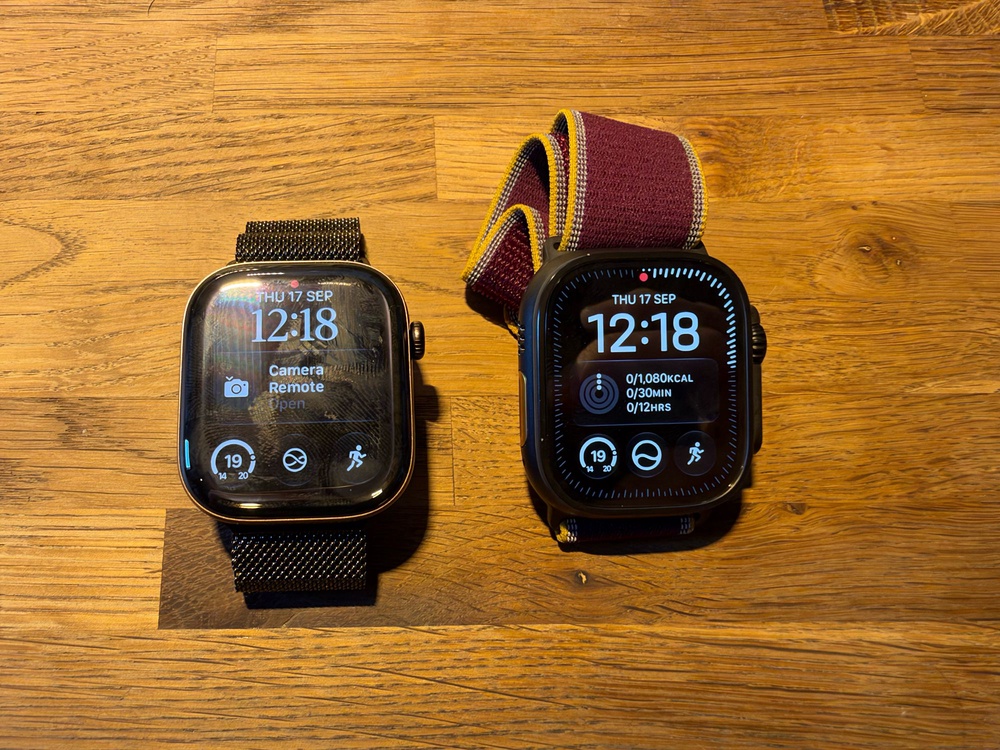
From the front, absolutely nothing about either the Series 12 or Ultra 4 has changed. They keep the same rounded square design, and are so little changed that you can still use all of the same bands and accessories that you had before.
The only really obvious changes to the design are the new colours and finishes that are available for the Series 12. There is a new light gold and dark bronze – which can sometimes look a little dark and dirty in pictures, but looks refined and subtle in person – as well as the return of the ceramic finish, in white or night blue. I’ve never been quite sure about the white ceramic, which Apple first introduced in 2016, as to me it can look a little like formica. But plenty of people at the launch were wowed by it, and there are so many options for colours and finishes that you will be able to find something that appeals.
The really big change to the design is hidden, and only obvious when you turn either version of the Apple Watch over. There, you’ll see that Apple has completely redesigned the heart rate sensor on the back, and it immediately looks bigger and more complex. That’s where the real changes this year come in.
Apple Watch Series 12: Health features
That new sensor has been named the “Health Sensing System” and enables dramatically better tracking of your body. In the most immediate terms, the improved sensors mean that the smartwatch can read your heart rate far more often and more accurately than the previous versions: it will take up to 60 times more readings of your heart rate, and 24 times more frequent readings of your heart rate variability.
It also means that the heart rate tracking is generally more accurate and reliable. During the testing period, I checked the Series 12’s heart rate data against other wearables and a heart rate strap, generally taken to be the gold standard for tracking, and it lined up dependably, with the Apple Watch responding quickly to intervals that speed up the heart rate, for instance.
It is also much less likely to have the dropouts that some previous versions of the Apple Watch had, which seems to happen when the sensor loses its snug fit against your wrist. Thought I still sometimes suffered from a long-term issue where the heart rate sensor couldn’t see properly through a tattoo on one of my arms, and so didn’t track properly as a result.
All of that data is of course only as useful as the information that the Apple Watch can provide you with about it. And, helpfully, Apple has introduced a whole range of new features that actually make sense of all of that tracking.
Most prominent among them is a new readiness score, which aims to give you a mark out of ten for your capacity to take on the day. It pulls together data from across the watch – your activity and your sleep, as well as vital metrics such as heart rate variability – to give you a rough estimate of how much energy you have, so that you can decide whether you need to rest or can continue to push.
It’s an important addition to the Apple Watch’s health metrics, joining up a variety of different scores that were sometimes interesting but not especially useful on their own. And it brings Apple’s offering more in line with more devoted wellness trackers, such as the Whoop, as well as third-party apps that tried to do the same thing with the Apple Watch and iPhone, like Bevel.
It still, notably, does not include some of the features those competitors include with their readiness score. There is no journal tool, for instance, which means that unlike both Whoop and Bevel you can’t get a precise sense of what factors such as alcohol or late meals might affect your score. But it is a useful and actionable first step.
I haven’t yet been able to test out the readiness score – it needs at least seven nights of data, and I have only been wearing the Series 12 watch for a week, which included one disrupted night because of that tattoo complication. But all of the data that it pulls from appears to be accurate and precise, when compared with other measures of heart rate and HRV, and so there is no reason to doubt that the score won’t be the same.
Health and exercise tracking has always been at the heart of the Apple Watch, but it has in recent years been overtaken by some competitors who both track better data and use that for more helpful information. Now, with the new generation of smartwatches, Apple is catching up – with both unparalleled data collection, and vastly more useful ways of actually turning it into something helpful.
Apple Watch Series 12: Audio Intelligence
Alongside the health features, the really big change this year is the new S11 chip that is found inside both versions of the Apple Watch. It enables a variety of changes, which are discussed below – but chief and probably most controversial among them is Apple’s new Audio Intelligence features.
Some of these tools are very impressive, undeniably useful, and unlikely to kick up much of a fuss. There is a new sound recognition feature that can detect important sounds such as alarms or breaking glass, and alert you to them, particularly useful for people who are deaf or hard of hearing. And a new music recognition feature means that Shazam is always running in the background, so that you can instantly identify any song.
But there are two other new Audio Intelligence features that aren’t quite so clearly good: Live Rewind and Siri Recap. Both use the new chip to constantly listen out for audio, feed it through AI, and try to use that data in useful ways.
Live Rewind lets you find out what was just said, and Apple said it might be useful in situations such as meetings where you missed the details of someone speaking. You can double-press the button on the side of the Watch and it will show a transcription of what was just said. The Watch will also make a pinging sound to alert anyone around to what you are doing, which is important for privacy.
Siri Recap listens out through the day, using the microphone to take notes on important conversations that are then summarised on your phone. It means, in effect, that the Apple Watch is able to remember your whole life for you – which is both the promise of the feature, and the reason that it’s likely to stay controversial.
Apple has stressed that both features are built with privacy in mind from the beginning: the watches do not save any audio, transcripts are kept in a private and secure part of Apple’s ecosystem, they don’t include information about who was actually talking, and the features have to be explicitly switched on and can be switched back off at any time.
But, even with those firm privacy safeguards, some might find that there is something perturbing about having these kind of notes taken at all, since they store information about you and other people without you having to do anything. they make what might feel like a fleeting conversation into something stored potentially forever. Of course, anyone with the new Apple Watches can make their own minds up about those features – the upgrades are more than enough to mean that both watches are a great upgrade, even if you never think about them again – and we will see what the reaction is when they finally arrive.
Which, it’s important to note, is not quite yet: even though the watches are out this week, the two more controversial Audio Intelligence features will not be available with them. Apple says that Live Rewind and Siri Recap “will be available in beta later this year” and that it will provide more details on them when they launch.
That means, of course, that I have been unable to test how they actually work, both in terms of their reliability and accuracy and also the ways that people might react to knowing that my smartwatch is taking notes on our chats. But I saw them in action at Apple’s launch event for its new products, and they appeared to work entirely as advertised.
Apple Watch Series 12: Performance and battery
The same S11 chip that enables those features also brings much broader improvements to the Apple Watch. They are immediately noticeable – and, thankfully, come with none of the same controversy or difficulties.
Recent Apple Watches have never really been slow, and so the chip might not make an obvious difference most of the time. But they have however struggled sometimes since Apple introduced its new version of Siri, which is now available to the public and uses artificial intelligence to allow for much more complicated queries, better responses and world knowledge. It meant that asking a detailed question to Siri could be frustrating – and that, sometimes, the Watch would mistake a simple question such as setting a timer for something more complicated, and start a long process of trying to answer.
That seems to be largely solved with the S11 chip. Even complex queries to Siri are now faster, and it is better at recognising what you want to do quickly. In most other use, you are unlikely to notice any speed upgrade, but really that is only because the Apple Watch was already more than capable at handling everything you might want to do with it.
The most obvious other change is the battery life. The Ultra 4 will now last up to 50 hours, compared with the Ultra 3’s 42; there is no change to the Series 12’s battery life, but like the Ultra it can now fast charge much more quickly. Both changes are very welcome, especially since so many of the Watch’s health features require you to wear it as you sleep, which generally requires you to get into the habit of topping it up through the day rather than giving it one big charge at night.
The battery life still remains a concern when compared with many other wearables; it is simply something you don’t really have to think about with most Garmins, or bands such as the Whoop. But the addition of faster fast-charging especially means that you can simply get into the habit of giving the Apple Watch occasional top-ups, and will rarely find yourself in trouble.
Buy now £369, Very.co.uk
Apple Watch Ultra 4
Colours: Natural titanium, black
Dimensions: 49mm x 44mm x 12mm
Processor: S11 chip with 64-bit dual-core processor
Battery life: Up to 50 hours of normal use, and 84 hours in low-power mode, with 80% charge in 45 minutes
Why we love it
- Bigger display for more data and info
- Dramatically longer battery life
- Better location tracking
Take note
- Can look chunky on the wrist
- More expensive
- Fewer colour and material options
The Ultra 4 gets you all the big improvements above, including the same fitness tracking and Audio Intelligence changes, and all of the smartwatch features you’d expect from any other Apple Watch. But – for an additional price – you also get a bigger design and battery, and better location tracking.
Apple Watch Ultra 4: Design
The Ultra version of the Apple Watch is intended as the rugged, outdoorsy and exercise-focused version of the Apple Watch. And that’s visible right across its design.
Most obviously of all, it is bigger. The whole case is taller, wider and thicker, and it generally has a chunkier design that makes it look more like a piece of outdoors equipment than a normal Watch.
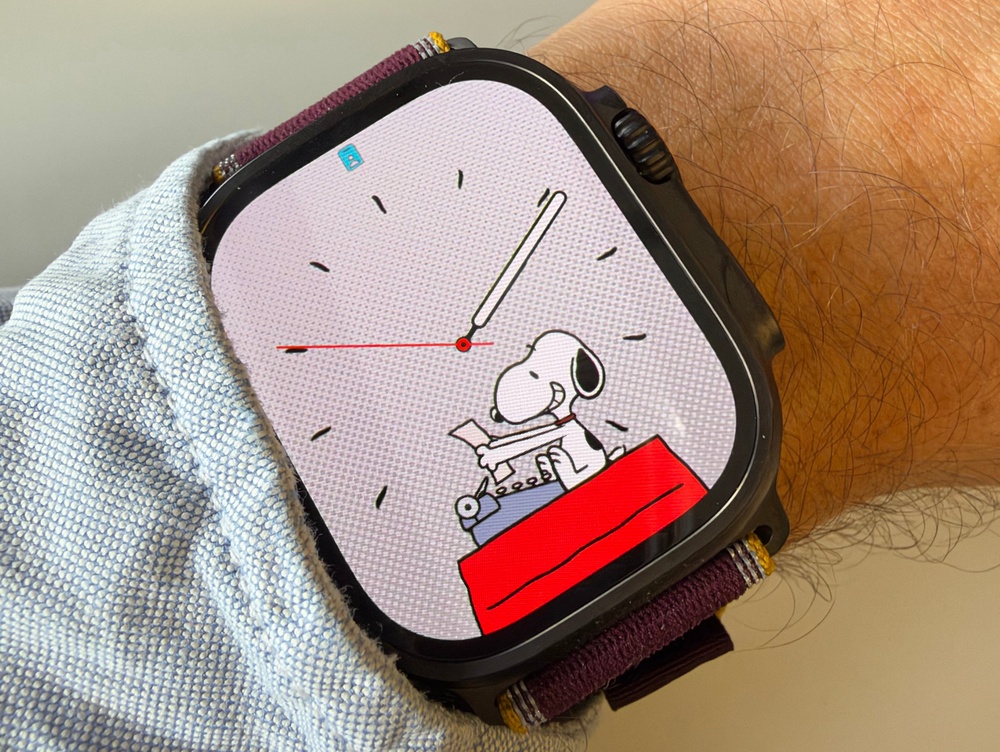
That bigger case allows for a bigger and brighter display, too. And Apple takes advantage of it, giving you more information wherever you look, including more data-rich watch faces.
The Ultra’s bigger design leaves space for a bright orange Action Button on the side, which you can configure to do whatever you want. You can press to start a workout, for instance, or to leave a pin for later; you can also press and hold it to use the siren, detailed below.
And it also allows for Apple to pack more inside the Watch, which enables its other two main features.
Apple Watch Ultra 4: Battery life
Really the most useful thing about the Ultra 4 is that its bigger design also leaves space for more battery. That means that it will last more than twice as long as the Series 12 – up to 50 hours, compared with up to 24 hours – and it can also fast charge more quickly, giving you up to 18 hours of use from just a 15 minute charge.
That’s useful during big activities that can strain the Watch’s batteries, such as completing a long hike or triathlon. But it is also useful across the day, too, especially if you are using the sleep tracking features that can bring with them the changes to your charging routine detailed above.
Apple Watch Ultra 4: Outdoors features
The third big thing that the Ultra 4 gives you are a range of additional outdoors features, in keeping with its status as the Watch for heavy – and sometimes extreme – use wherever you are. The most obvious of them is the inclusion of dual-frequency GPS, which can be much more accurate than the more basic version included in the Series 12, especially if you are tracking your location somewhere that tends to confuse GPS such as busy city streets or among heavy tree cover.
There are some other more outdoors-focused features, too, though of the kind you hope never to use. The Apple Watch Ultra includes satellite connectivity so that you can send out an emergency SOS even if you don’t have cellular connection, and it includes a loud siren
Buy now £749, Very.co.uk
Should you buy the Apple Watch Series 12 and Ultra 4?
The Apple Watch has long been without a doubt the best smartwatch, at least for the iPhone. But it has always faced its strongest competition over its fitness features, especially in a world where everything from Garmin to Whoop offer precise tracking and detailed recovery metrics.
Like a runner at the end of the race, the Apple Watch has now largely caught up. Both the Apple Watch Ultra 4 and Series 12 now offer the best heart rate tracking of their kind, and use that for features that are much closer to those offered by competitors. And, of course, you still get access to all of the useful fitness and health tracking features that Apple has rolled out over the years.
The new releases cement Apple’s status as the very best smartwatch you can wear, but that was never in doubt. They now put the Apple Watch close to the very top of the fitness wearables market, too, which was really the only time it struggled.
As such, the Apple Watch Series 12 and Ultra 4 are an obvious buy for anyone who wants continuous health and wellness tracking, strong fitness data, as well as the whole Apple ecosystem of Siri and smart features that having one of the brand’s products on your wrist gives you access to.
How I tested the Apple Watch Series 12 and Ultra 4
I have been using the Apple Watch Series 12 and Ultra 4 daily since shortly after their launch event last week. That has meant putting them through their paces in every kind of environment – from hard running to sleeping – as well as making use of all their smart features, such as using Siri, listening to music, sending messages and simply telling the time. In my testing I assessed the following:
Why you can trust IndyBest reviews
The Independent’s dedicated shopping section, IndyBest is committed to providing unbiased reviews and expert advice. Our team of editors and writers have years of experience in testing products, particularly new Apple releases like the iPhone and AirPods 5, and put them through rigorous trials in real-world conditions.
Andrew Griffin has been technology editor at The Independent for more than a decade, reviewing everything from the latest iPhones to new smartwatches and wearable devices. He is an avid runner and cyclist, and has a sometimes overly emotional connection to understanding his own health and fitness through technology
Read more: iPhone 18 Pro vs iPhone 17 Pro – is it worth the upgrade?