The Pro version of the iPhone is not used to being upstaged. It is usually the headlining star of Apple’s entire product line, packed with the very latest and best technology the company has. This year, however, that’s not the case: the iPhone 18 Pro arrives alongside the iPhone Duo – and it’s the folding phone that has taken much of the limelight.
This year, the iPhone 18 Pro also arrives without an iPhone 18, further complicating the line-up. For now, Apple is just selling the still-brilliant iPhone 17, though rumours suggest that an updated version of the base model will arrive in the spring. Last year, the choice was relatively simple: if you wanted the latest and greatest iPhone, get the Pro, but if it is a little too expensive then you could get the base version and not miss out on much.
Nonetheless, the iPhone 18 Pro is still packed with a host of changes that make it a meaningful upgrade from last year’s Pro model, and it remains the device that most people will still be looking to buy this year. There are few changes on the outside, beyond a new colour and a slightly altered screen, but some dramatic improvements on the inside. But is it enough to keep the iPhone 18 Pro on top of the phone market? Here’s my full review after testing the iPhone 18 Pro for a week.
Read more: My first impressions of the iPhone Duo
iPhone 18 Pro and Pro Max
Display: Pro: 6.3in OLED, 120Hz, 2,622 x 1,206 pixels, 460ppi or Pro max: 6.9in OLED, 120Hz, 2,868 x 1,320 pixels, 460ppi
CPU: Apple A20 Pro
Storage: 256GB, 512GB, 1TB, 2TB
Size: Pro: 150mm x 71.9mm x 8.75mm or Pro Max: 163.4mm x 78mm x 8.75mm
Main camera: 48MP (with new variable aperture)
Ultra Wide camera: 48MP
Telephoto camera: 48MP
Selfie camera: 18MP
Why we love it
- Beautiful, reliable and sturdy design
- Even better camera system
- Battery and performance improvements mean you never have to worry
Take note
- Already pricey – and now even more so
- Could be upstaged by folding iPhone Duo
iPhone 18 Pro and iPhone 18 Pro Max: Design and display
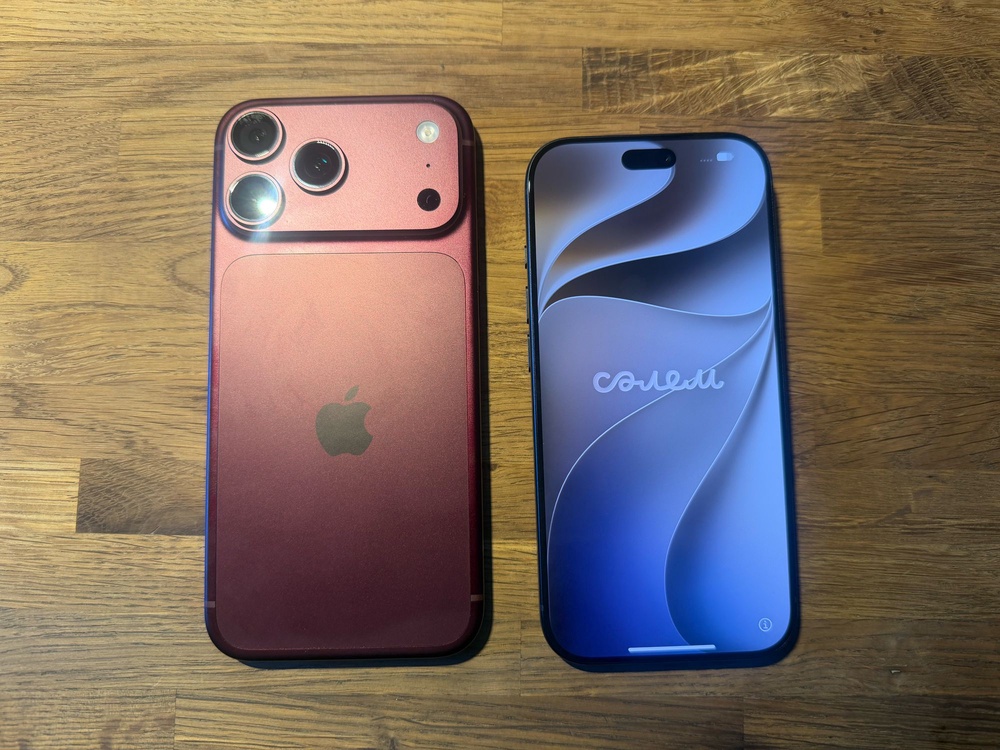
The most obvious change in this year’s iPhone design is the addition of a new colour. It’s burgundy, which is the company’s hero colour this year – you can get a whole host of accessories from Apple Watch bands to cross-body straps in it, and new chief executive John Ternus even wore a burgundy shirt during the introduction.
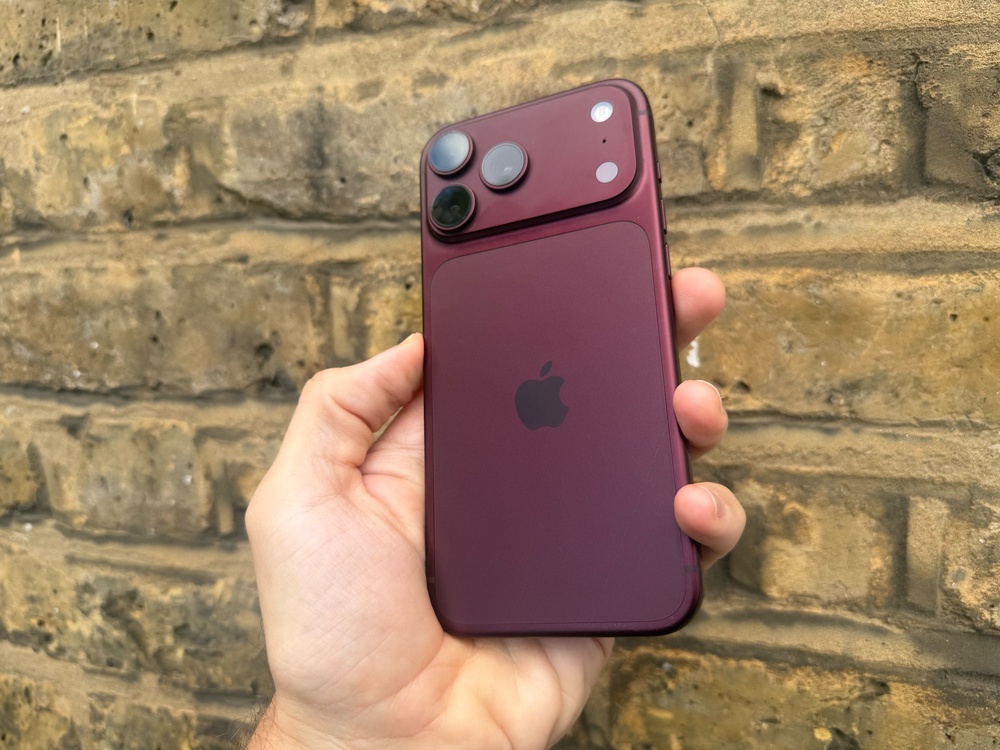
It’s a long way from the “cosmic orange” that served the same purpose last year: unlike that colour, which announced itself loudly and shouted that you had the new Pro, this new colour is deep, rich and subtle. It looks expensive (which it is; the iPhone Pro was already pricey and has had a £100 upgrade, as discussed below). If that doesn’t do it for you then there are actually plenty of other new colours, too: a new “glacier” one that is a similarly subtle silvery-blue, a proper black returns to the line-up, and then there is the classic silver.
Another small tweak to the colours means that the matte glass panel that is on the back of the phone – to allow wireless charging to pass through its otherwise aluminium body – is now better colour-matched to the rest of the phone. This makes the design look a little more cohesive, though the slight mismatch on last year’s models made for an interesting two-tone effect, depending on how the light hit it.
The only other change that’s visible from the outside is a smaller version of the Dynamic Island cutout that sits near the top of the display, and contains sensors for the camera and Face ID unlock technology. It has become smaller because Apple has moved some of the Face ID tech under the display, to the top left, where information including the network is shown. It’s almost entirely imperceptible, apart from at some angles, and it doesn’t really matter when you do see it because it sits in a part of the screen that doesn’t often show particularly important information.
The smaller notch means that the phone can now show three of the “live activities” that spring out from that Dynamic Island, displaying information such as your music or directions as you use the rest of your phone. The things that can trigger live activities are relatively rare though, for instance you’d have to be listening to music, getting directions and following sports scores all at once – but it’s neat to have the option.
Beyond those small tweaks, the design and display of the iPhone 18 Pro are unchanged from last year’s models. In fact, they’re so similar that you can happily put an iPhone 17 Pro into an iPhone 18 Pro case. Last year’s update brought a whole new and very welcome look to the Pro phones, so it was always unlikely that Apple would make any big changes, especially given everything else it has going on this year.
That means, however, that with the iPhone 18 Pro you get access to all of the great upgrades that have come in recent years. The display is beautiful: bright even on a sunny day, crisp enough that you almost forget it is there, smooth in a way that’s noticeable when you go back to a model that doesn’t have Apple’s ProMotion technology. And the build of the iPhone 18 Pro is robust. The materials and case design are the same as the iPhone 17 Pro, which has survived me dropping it an embarrassing number of times over the last year. The screen has stayed largely unblemished and the sturdy aluminium design means that any dings actually give it a kind of nice, outdoorsy patina, and there's no reason to think the new 18 Pro won't be the same.
As with last year, the only difference between the Pro and Pro Max are their size; they have all the same features otherwise. With the Max, you just get a larger display (and, of course, a larger phone in your pocket), as well as slightly more battery life thanks to that extra space. The choice really comes down to whether you want that bigger display and the bigger phone, as well as the slightly larger price tag (it starts from £1,299 for 256GB).
iPhone 18 Pro and iPhone 18 Pro Max: Cameras
Perhaps the most impressive – and technically bewildering – feature of the new camera is its new variable aperture setting on the main camera. That means that the phone’s lens can work like one on a bigger, SLR camera: opening or closing the hole in front of the lens, to decide how much light is allowed through.
Because of the size constraints, Apple had to do this in an astonishingly impressive, if entirely invisible, way. To open and close the aperture, the phone moves little pieces of material – thinner than a human hair – around the lens. But you aren’t aware of that happening, and Apple has stressed that the technology went through intense testing to ensure that it remains robust and not likely to break despite its delicacy.
The most obvious way that this matters is that the phone can open up the aperture so that it allows more light through, for better performance in dark conditions. Apple says that this gives about 50 per cent better low-light performance – and while it is hard to judge exactly what that means in practice, photos taken in the dark are crisper, brighter and much less likely to be smudged by motion blur.
The aperture changes also mean mean that you can dig in and change them if you want. Apple offers the option to change the aperture all the way up from its biggest 1.48 to 4 – letting the phone capture more detail from across the scene, such as the background, as well as allowing for flashy new effects like the “starburst” that happens on bright parts of the scene.
To get the most out of the new phone’s cameras, you can dig into the camera’s settings, and iOS 27 brings detailed controls for changes such as shutter speed and white balance, as well as that aperture. The new phone also has an updated version of Apple’s photographic styles, which let you fiddle with grain and skin tone, as well as allowing for a film-like look.
Those controls are convenient and instinctual – but they also disappear if you don’t want them, and you wouldn’t even need to know they are there. The iPhone 18 Pro’s camera now offers expansive customisation but also enough smarts that you can just point and click, and the phone will adjust everything including the new aperture to make sure you are getting the best photo it can take.
It means that the camera in the Pro is the best of Apple’s design: finely customisable if you want it, but stunningly simple when you don’t. And the photos that it produces are representative of that. For pointing and shooting, especially in low light, the new Pro models are so capable that you hardly have to think about it until you look back on a picture and marvel at just how crisp and detailed it looks. But if you do want to think about it, then you can, and the phone is capable of shooting spectacular, professional-level photos and videos if you want to use it that way.
iPhone 18 Pro and iPhone 18 Pro Max: Performance
Some of the biggest improvements in this year’s phone are entirely invisible. Apple has made a whole host of new performance improvements – most notably its new A20 Pro chip, and a new cooling system – that mean that the phone should run more quickly, stably and cooler.
The chip is up to 50 per cent faster than the previous model, according to Apple’s own claims. Those are proved by our testing in benchmarks, which take the phone through a representative if slightly artificial set of tasks to see how it can handle them. It has better AI capabilities as well as a whole range of other improvements that mean that the phone can run incredibly fast, much faster than previous models – which were already best-in-class.
The difference is harder to test in practice, especially over such a short period. But the phone is snappy in daily use, and impressively capable at handling complex tasks such as running complex AI models. Using the new Siri AI feature even on the iPhone 17 Pro could sometimes mean waiting for a response; with the iPhone 18 Pro, that is almost entirely gone.
The truth is that the iPhone 18 Pro’s increased power is most notable in what you don’t see. Whatever you throw at the phone, it does, and you never see it slow or have any kind of trouble. It means that the processor can do what you ask of it and then power down again, which is an important part of the battery improvements outlined below. Few people are likely to push the A20 Pro to its very limits – in truth, iPhones have been more than capable of the daily work of texting, using social media and taking photos for years – but you don’t actually need to be pushing at its boundaries to experience the benefits.
The more obvious difference in performance is the new cooling system. Last year, Apple introduced a vapour chamber to the Pro models, which uses water inside the phone to move heat around and let it dissipate more quickly. This year, that vapour chamber is much bigger and the phone’s internals have been moved around to make better use of it – which Apple says means up to 40 per cent better sustained performance, useful when doing long, intense work such as AI models or gaming.
That change is similarly hard to test over such a short period. But, just like the new chip, it is notable in part by what you don’t notice: the iPhone 18 Pro and Pro Max simply refuse to get hot, even while charging, in hot weather, and doing intense tasks. As well as the boost to high-end performance, it means that you are much less likely to run into those less glamorous problems that come with a hot phone, when the display brightness tunes itself down, it starts to run slow, and sometimes even refuses to work at all.
iPhone 18 Pro and iPhone 18 Pro Max: Battery life
Apple has made dramatic strides with its battery life in recent years, and this year’s models continue that further. Apple says that the iPhone 18 Pro Max will work for 29 hours of typical use, and up to 43 hours of video playback, a six-hour increase. The smaller Pro model has the same (remarkably long-lasting) battery life as last year’s bigger Max model.
This is hard to test in such a short period: new iPhones get busy downloading, indexing and much more besides as soon as you take them out of the box. That’s even more notable than usual this year – since the phones also have access to Siri AI, which makes the voice assistant vastly more useful but requires a complex process at launch to learn all the information it needs about you to work. Both of these things mostly happen only when the phone is charging, helpfully.
But in the first week, Apple’s claims that both sizes of the iPhone 18 Pro will comfortably last you through the day, certainly seem to stack up. While the precise numbers of the improvement still need more testing, they come together to mean something important and clearly true: you won’t need to worry about charging this phone through the day.
When you do need to charge it, that’s improved too. The phone has faster wired charging that means that you can get the iPhone 18 Pro up to 50 per cent charge in 15 minutes, with the right plug, so it’s quick and simple to top up.
iPhone 18 Pro and iPhone 18 Pro Max pricing
Pricing for the Pro starts at £1,199 in the UK, and £1,299 for the Max. You can go all the way up to £2,499 for the biggest options of display and storage.
That is at least a £100 increase from last year’s Pro phones, and the most expensive model is £500 more than the equivalent last year. But the same price increase has gone into effect across the line-up, including for instance for last year’s cheaper iPhone 17 and 17e. Apple didn’t explicitly say why, but the hike comes after it pushed up the prices of devices across its line-up, in response to a chip crisis that has made parts more expensive.
It means that this year’s Pro line-up is undeniably pricey, though not of course as pricey as the iPhone Duo that starts at £1,999 and can be upgraded to much more than that. But it also means that the choice is largely the same: all of the devices are more expensive, so represent similar value for money, relatively.
Buy now £1199, Very.co.uk
Should you buy the iPhone 18 Pro or Pro Max?
The iPhone 18 Pro and Pro Max occupy a new position in Apple’s line-up: no longer the shiniest or most expensive of the models, because of the foldable iPhone Duo, and not yet accompanied by a base model to compare them with. It means the decision about which iPhone you should buy – and whether that should be a Pro or a Pro Max – is a slightly different and more complicated one.
What’s more, the price has changed slightly. The iPhone Pro and Pro Max, especially at their bigger storage capacities, were already very expensive phones; now they’re at least £100 more expensive. If you were previously on the fence about the Pro version or its price, then the cheaper models are still worth a look, though they too have been hit by price rises.
But amid all that change, the value that the iPhone 18 Pro and Pro Max offer is unchanged. They still offer the very best of Apple’s phone line-up, if not the very newest technology, all in a dependable and beautiful design. The changes improve all the things that the iPhone is best at, and which we rely on most: the camera, the performance and the battery life.
And so amid all the changes and excitement, the question of whether you should buy the iPhone 18 Pro or Pro Max is really the same. Do you want the very best of the iPhone and of Apple, and are you willing to pay a premium to get it? If it’s a yes, then you absolutely should.
It might not be the flashiest (or foldiest) of Apple’s line-up anymore, and it is still not the best value-for-money. But it remains the best phone on the market, and it just got quietly better.
How I tested the iPhone 18 Pro
I’ve had the iPhone 18 Pro since shortly after its launch event. I’ve been using it for all the usual things –taking photos, messaging, the fantastic new improvements to Siri that arrive with iOS 27 – as well as more unusual things that stress the powerful new chip (one of the biggest upgrades in the new phone). As I tested, I considered a range of things, especially those that represent the big new changes in the new model:
Why you can trust IndyBest reviews
The Independent’s dedicated shopping section, IndyBest is committed to providing unbiased reviews and expert advice. Our team of editors and writers have years of experience in testing products, particularly new Apple launches like the iPhone Duo and MacBook Neo, and trialling them within real-world conditions.
Andrew Griffin is technology editor at The Independent, where he has been covering all of the latest launches for more than a decade. He has experience reviewing new devices from across the market, including Android phones and new Apple launches. He attended Apple’s launch event for the iPhone 18 Pro, Pro Max, Duo and more, and was able to get hands-on with the new tech before it hit the market.