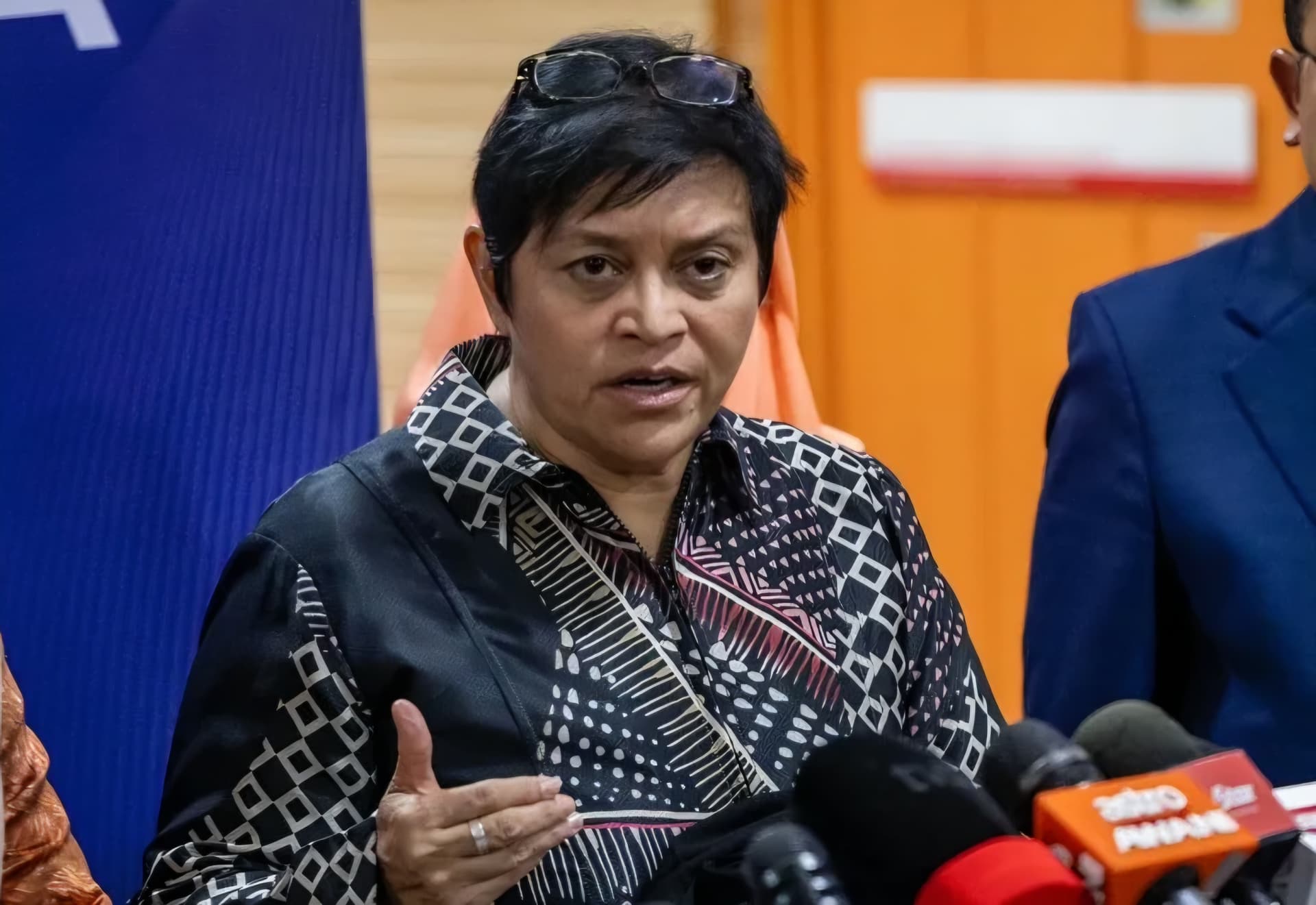
Malaysia's latest controversy involving former prime minister Datuk Seri Najib Razak's conditional pardon has exposed an uncomfortable question about transparency in government: when an important official document becomes relevant to public accountability, should Malaysians have to depend on selected screenshots and political explanations to understand what actually happened? The controversy intensified after former DAP MP Tony Pua published five pages purportedly taken from the minutes of the Federal Territories Pardons Board's 64th meeting, held at Istana Negara on 18 September 2026. The pages appeared to record objections from Attorney-General Tan Sri Mohd Dusuki Mokhtar and Federal Territories Minister Hannah Yeoh to the proposed house arrest arrangement for Najib. They also described the Yang di-Pertuan Agong's decision to grant the conditional pardon. But the publication immediately raised further questions. Why were only five pages shared? What happened to pages 1, 2 and 4? Who authorised the declassification? And were the copies circulating online identical to the official minutes? Prime Minister Datuk Seri Anwar Ibrahim subsequently said that confidential Pardons Board documents could be declassified when brought into court proceedings. Meanwhile, a source cited by Free Malaysia Today said the minutes had been declassified for the Attorney-General's Chambers to use in an affidavit responding to the Bar Council's legal challenge. These developments make one question increasingly difficult to avoid: If the document has been declassified for legal purposes, why can't the government publish an authenticated version of the complete minutes, subject to any legitimate legal restrictions? This is not a demand to expose confidential information indiscriminately. It is a demand for clarity, consistency and public accountability.
The Public Should Not Have to Rely on Political Screenshots
The first problem is the way information about the Pardons Board meeting has reached the public. Rather than receiving a complete document through an official government channel, Malaysians have been discussing images shared by political personalities and extracts reported by news organisations.According “The Star”, Pua shared five pages numbered 3, 5, 6, 7 and 8. Those pages appeared to contain important details about the meeting, including the differing positions expressed by members of the Board. However, a screenshot is not the same as an authenticated government record. Even when a document appears genuine, the public still needs confirmation that it has not been altered, selectively reproduced or separated from important surrounding information. This is particularly important when the document concerns a constitutional institution and the exercise of the royal prerogative of pardon.The government should therefore remove unnecessary uncertainty by publishing an authenticated version of the complete document that is legally releasable. Such a publication should identify the issuing authority, confirm the document's authenticity and clearly explain whether any portions have been withheld. The public should not have to determine the credibility of a constitutional record through Facebook posts, political statements or competing interpretations.
Declassification for Court Proceedings Is Not Automatically Public Release
There is an important legal distinction that must be understood. On 19 November 2026, Free Malaysia Today reported that a source familiar with the matter said the minutes had been declassified for inclusion in an affidavit prepared by the Attorney-General's Chambers. The affidavit was intended to respond to the Bar Council's legal challenge concerning Najib's house arrest. The report also stated that Cabinet approval was not required for the declassification under Section 2C of the Official Secrets Act 1972. “Read the Free Malaysia Today report”. This explanation is significant, but it does not answer every question. A document being declassified for a particular legal purpose does not necessarily mean that every page, attachment or related record is automatically authorised for unrestricted public circulation. The scope of the declassification decision matters. Did the authorisation cover all eight pages of the minutes? Did it include supporting documents? Were any portions still subject to restrictions? Was the document cleared for public release, or only for use by the Attorney-General's Chambers in court proceedings?
Why Has the Government Not Published an Authenticated Copy?
The controversy has already exposed uncertainty within the government's own public communications. On 12 November, Home Minister Datuk Seri Saifuddin Nasution Ismail indicated that he would raise a proposal to declassify the minutes at the Cabinet meeting. On 13 November, government spokesperson Datuk Seri Fahmi Fadzil said the matter had not been directly discussed at the meeting, although the government was considering the necessary legal requirements. Then, on 18 November, Minister in the Prime Minister's Department (Law and Institutional Reform) Datuk Seri Azalina Othman Said stated that the proposal had not been raised at the previous Cabinet meeting and called on the relevant authorities to explain how the minutes had been declassified. “The Star” These statements created an obvious perception problem.If the government was still discussing the process of declassification, how did the document subsequently become available for circulation? The reported explanation that the Attorney-General's Chambers required the minutes for court proceedings may help clarify the sequence of events. Prime Minister Anwar also stated on 19 November that documents classified as confidential could be declassified when challenged through court proceedings. “Malay Mail reported the Prime Minister's explanation”.Nevertheless, an explanation of the legal mechanism is not the same as publication of the official record. The government should provide a clear account of the decision, including who authorised it, when it took effect and what documents it covered. Without that clarification, the public will continue to question whether the disclosure was handled consistently.
The Pardons Board Is a Constitutional Institution, Not a Political Publicity Tool
It is equally important to protect the integrity of the institution involved. Article 42 of the Federal Constitution provides the framework for the Yang di-Pertuan Agong's power to grant pardons and establishes the constitutional arrangements concerning the Pardons Board. The “Federal Constitution”. should remain the starting point for understanding the constitutional responsibilities involved. The publication of meeting minutes should not become an excuse to question the monarchy through political insinuations or to portray every disagreement among Board members as evidence of wrongdoing. Members may express different views during deliberations. The existence of disagreement does not automatically mean that the constitutional process was improper. At the same time, respect for the monarchy should not be used as a reason to dismiss legitimate questions about the administration of official records. The public can respect the constitutional institution while asking the government to explain the document's authenticity, classification and release. These principles are not contradictory. In fact, transparent procedures can help protect public confidence in constitutional institutions by reducing speculation and political manipulation. The objective should be to establish what the official record says, not to manufacture a political narrative around selected passages.
The Government Has an Opportunity to End the Speculation
The government now has an opportunity to resolve the controversy through a straightforward administrative response. Instead of allowing political parties to exchange accusations, the relevant authorities could take several practical steps.
Publish the authenticated minutes.
The Attorney-General's Chambers or the appropriate government authority should confirm whether it holds the official eight-page record and identify the version authorised for release.
Clarify the scope of declassification.
The public should know whether the authorisation covers the complete minutes, selected pages or additional attachments.
Explain any redactions.
If some information cannot legally be disclosed, the government should explain the applicable restriction without revealing the protected material itself.
Confirm the status of the court affidavit.
If the minutes are intended to be used in court proceedings, the authorities should clarify whether they have been filed and whether the relevant document can be accessed through the appropriate court process.
Establish a single official source.
A verified government publication would prevent different political personalities from becoming the public's main source of information about a sensitive constitutional document.
These steps would not require the government to disclose information that remains lawfully confidential. They would simply establish a reliable public record of what can be disclosed.
What Do You Think? I’d Love to Hear Your Opinion in The Comments Section.
The controversy surrounding the Federal Territories Pardons Board minutes should not be reduced to a political battle between Tony Pua, UMNO, DAP or any other political personalities. It is a question of public accountability. If the minutes have been lawfully declassified for use in court proceedings, the government should clarify the exact scope of that decision. If the entire document can legally be released, there should be no reason to make Malaysians depend on selected screenshots. If certain portions remain confidential, the authorities should publish the releasable sections and explain the legal basis for withholding the rest. An authenticated document would not automatically end every political disagreement. Different parties may still interpret the meeting differently. But at least Malaysians would be debating the same verified record rather than competing versions of screenshots and political claims. The public is not demanding access to every confidential government discussion without restriction. It is asking for the maximum transparency that the law permits. That is a reasonable expectation in a democracy. If the government believes that the disclosure process was lawful, it should have no difficulty explaining the process clearly. If the documents are authentic, it should confirm their authenticity. And if some pages cannot be released, it should explain why. So, one question remains for Putrajaya: Can the authorities publish an authenticated version of the complete releasable minutes, instead of allowing Malaysians to piece together a constitutional controversy one screenshot at a time? Because transparency should not depend on who happens to possess the documents. It should be a responsibility of the institutions entrusted with them.
AM World (tameer.work88@gmail.com) is a content creator under the Newswav Creator programme, where you get to express yourself, be a citizen journalist, and at the same time monetize your content & reach millions of users on Newswav. Log in to creator.newswav.com and become a Newswav Creator now!
The User Content (as defined on Newswav Terms of Use) above including the views expressed and media (pictures, videos, citations etc) were submitted & posted by the author. Newswav is solely an aggregation platform that hosts the User Content. If you have any questions about the content, copyright or other issues of the work, please contact creator@newswav.com.