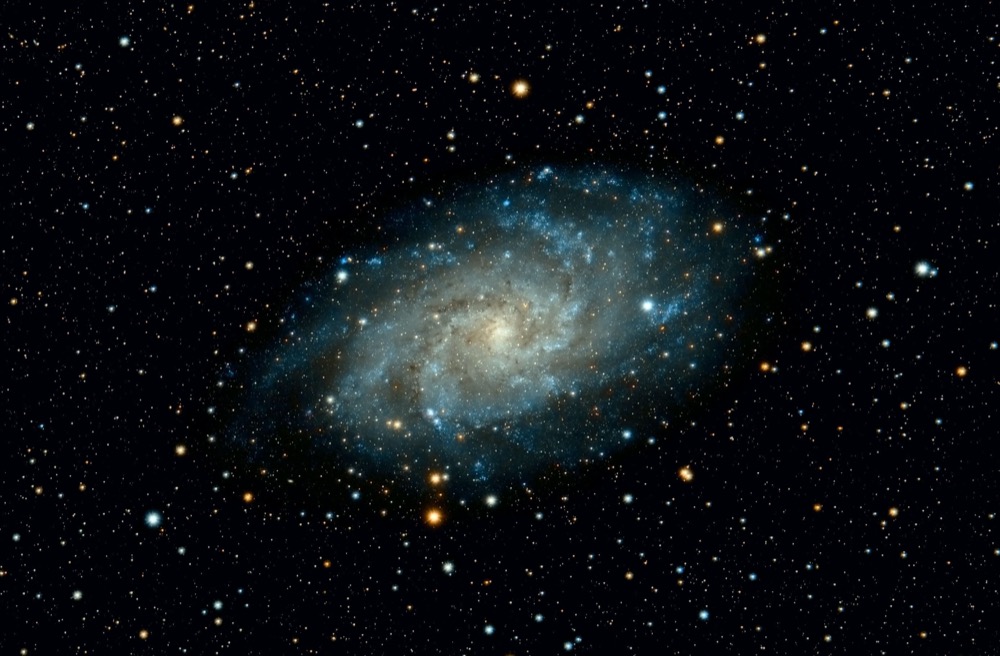
Far from city noise and lights, Hanle in Ladakh, India, offers a destination that feels almost unreal. This remote Himalayan village has become a favourite among stargazers around the world, with astrophotographers and curious travellers often coming here to spot the Milky Way with the naked eye.
Hanle reminds us of the skies we've forgotten. There was a time when a bright night sky full of stars and planets was commonplace. People could step outside and find themselves under a sky full of stars, a rarity in today's world. This was long before streetlights, billboards, and glowing apartment windows took over, and the resulting light pollution left dark skies with fewer or no stars. In many parts of the world, spotting a tiny constellation also feels like a major win, while the Milky Way has vanished entirely from the view of millions of people.
Amidst this, astrotourism, a form of travel focused on experiencing the night sky, is on the rise, and people are hoping for every chance to see the wonders of the sky. Tucked away in the farthest corner of India is Hanle, a remote Himalayan village that has built its economy around astrotoursim after becoming one of the best places in the world for stargazers.
Best destination in the world for stargazers
Hanle is a tiny village in the remote Ladakh region of northern India, close to the border with China. It sits at an altitude of about 5,290 metres (17,355 feet), making it one of the highest inhabited places in the world. The atmosphere here is dry, high, and thin, making it an astronomer's paradise. In December 2022, the area around Hanle was declared India's first Dark Sky Reserve. Hanle has around 270 clear nights per year.
This makes it one of the best places for stargazers in the world, as a dark sky changes what the eye can see. In Hanle, you don't need a telescope to get the full effect of a night sky. Instead, you can see a sky full of stars, rare constellations, and more with the naked eye. On the right night, especially around the new moon, the Milky Way is visible without any extra effort. It's not just scenic, it's also scientific.
Hanle is an astronomy hotspot
Hanle's rise as one of the best places in the world for stargazing didn't happen by accident. Instead, it's intentional. The village is home to the Indian Astronomical Observatory, one of the highest observatories in the world. The area surrounding Hanle has become a key base for astronomical research in India. The observatory and the dark sky reserve give Hanle a unique identity. It's a lived-in village with fun and adventurous things to do, but also a place to study the sky.
This has changed Hanle's economy. Local residents now work as astro-guides and homestay hosts. The village also hosts a Star Party, an annual gathering that brings astronomy enthusiasts from around the world together in the high Himalayas. It usually takes place in or around September, as the peak visiting season is June to September. On some nights, Saturn's rings, distant galaxies, and a Milky Way bright enough to stop conversation become a common affair.
Hanle's Star Party
Hanle's Star Party is what makes it unique and gives it an edge over other stargazing spots in India. For a few days, the entire vibe of the village changes. Astronomy enthusiasts, astrophotographers, and sky lovers gather with telescopes, cameras, and a lot of patience to capture the night sky in all its glory — from Saturn's rings to the Milky Way. The conditions during the Star Party are good enough to see the delicate deep-sky details, including celestial objects that you cannot see elsewhere.
And this is what makes Hanle different from other mountain getaways in India. People do not come for shopping streets, cafes, or a packed itinerary. They come for the night sky, the peace, and the opportunity to spot the Milky Way, Saturn's rings, and shining stars.
Planning to visit India? These articles will help you plan your trip better:
- In India, this coastal location is a tropical paradise for pristine beaches
- In India, this Himalayan valley is home to over 600 species of flowers and is a UNESCO World Heritage site
- In India, this remote desert sitting at over 3,000 metres above sea level is an off the beaten path destination waiting to be discovered