
An Andalusian village repainted in cinematic blue, an Asturian port hidden until the last bend, rainbow façades once used by fishermen to find their way home. And a town no one ever needed to paint—the sandstone took care of it. Welcome to a multicoloured Spain.
The pueblos blancos made Andalusia famous. But from the Bay of Biscay to the Aragonese sierras, another Spain embraces colour: rainbow façades facing the Mediterranean, pink sandstone clinging to cliffs, Smurf-blue walls chosen by referendum. Five villages where whitewash has no place.
- Cudillero
- Villajoyosa
- Tazones
- Albarracín
- Júzcar
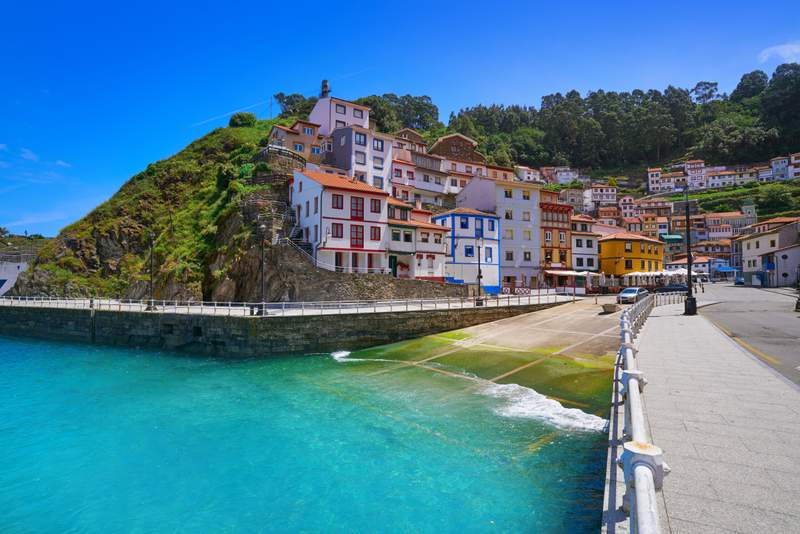
Cudillero, the hidden amphitheatre
The village reveals itself at the last bend, tucked away by a natural curve that conceals it from both land and sea. Then suddenly, an amphitheatre of colourful houses tumbles down towards a tiny harbour overlooking the Bay of Biscay. The locals, known as pixuetos, still speak their own dialect.
Each year during the feast of Saint Peter, they recite a satirical sermon in verse, delivered from a moored boat—a tradition that dates back five centuries. The vivid façades once helped fishermen identify their homes from afar: each house matched the colour of the family boat.
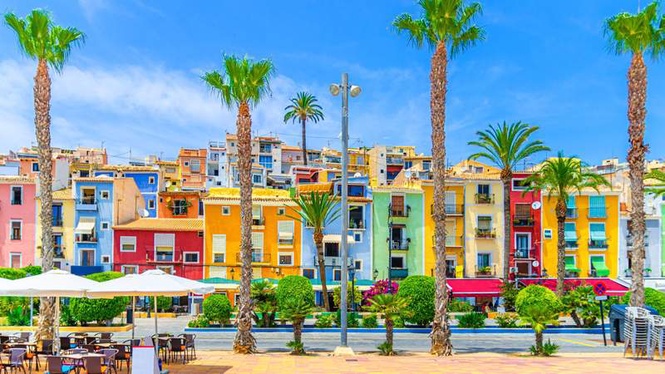
Villajoyosa, a Mediterranean rainbow
On the Costa Blanca, pastel façades line up along the Mediterranean like a box of crayons left in the sun. Fishermen once painted their homes to spot them from offshore, while balconies doubled as signal posts—white sheets for a birth, black for mourning.
Since the 18th century, Villajoyosa has also been a centre for chocolate-making. The company Valor, founded in 1881, opened a museum tracing three centuries of local production. Between rainbow façades and bars of cocoa, the village offers more than one reason to linger.
https://www.youtube.com/watch?v=-J_vqLakYtk
Tazones, the miniature harbour
With just 300 inhabitants, brightly painted fishermen’s houses wedged between two cliffs, and a sheltered harbour where boats return each evening with the day’s catch, Tazones feels almost untouched. Part of the municipality of Villaviciosa—Asturias’ cider capital—it has been listed among Spain’s Most Beautiful Villages since 2019.
Steep lanes wind between painted façades; at the top, the 1864 lighthouse overlooks the coast. Down by the water, restaurant terraces serve grilled fish and seafood to the sound of the waves. The Casa de las Conchas, adorned with seashells by a whimsical resident, adds a final eccentric flourish.
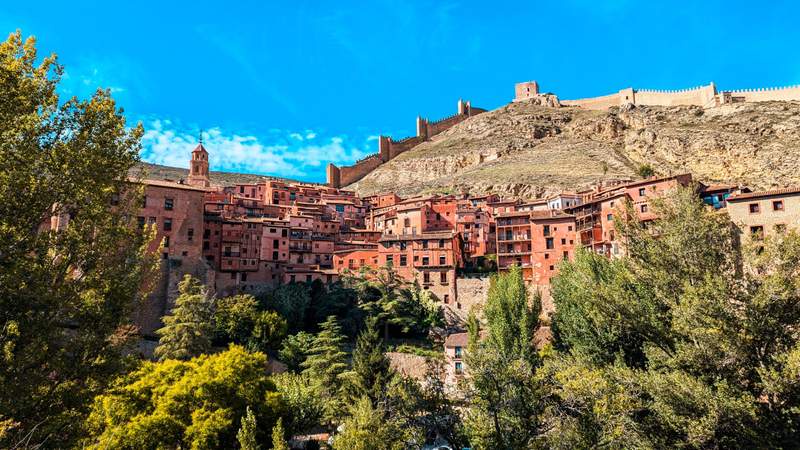
Albarracín, in shades of Berber pink
At 1,182 metres above sea level, the village seems carved from the mountain itself. Its hue—salmon pink to coppery ochre depending on the light—comes from the local rodeno sandstone. In the 11th century, Albarracín was the capital of a small kingdom founded by the Berber Banu Razin dynasty, from which it takes its name.
Ramparts snake along the ridgelines, stretching longer than the village itself and overlooking the bend of the Guadalaviar River. Declared a National Monument in 1961, Albarracín is home to around a thousand residents, a Renaissance cathedral built on the site of a former mosque, and 16th-century Flemish tapestries housed in the diocesan museum.
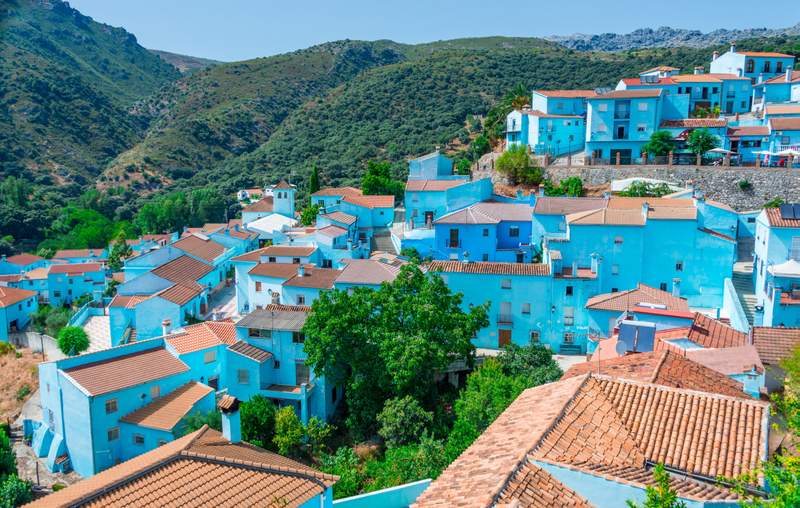
Júzcar, the village painted by Sony
In 2011, Sony Pictures was looking for a pueblo blanco to transform for the promotion of The Smurfs. Júzcar, a village of 220 inhabitants in the Genal Valley, said yes. Four thousand litres of blue paint later, even the Church of Santa Catalina had changed colour.
At the end of the campaign, a referendum sealed its fate: residents voted unanimously to keep the blue. A dispute over rights brought the official label to an end in 2017, but the façades remain. Today, the village lives on as a curiosity set among chestnut groves.
Travelling to Spain? These articles should interest you:
- In Spain, this natural park has just been named the most beautiful place in the world (and it boasts exceptional biodiversity)
- In the Canary Islands, this island with 300 days of sunshine a year is the ideal destination for retirement
- In Andalusia, this natural park is home to one of the wildest beaches in Europe