
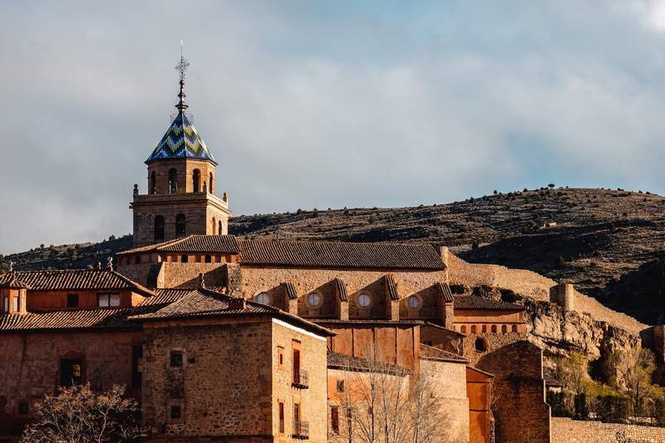
Listed among the most beautiful villages in Spain, Albarracín captivates at first glance. Clinging to the rock, this maze of pink-hued houses seems to defy gravity itself. A rare place, where architecture and landscape exist in near-unreal harmony.
Perched in the mountains of Aragon, far from the main routes, Albarracín preserves a precious sense of singularity. Enclosed within a bend of the Guadalaviar River, this medieval village unfolds like a timeless interlude.
Ranked among Spain’s most beautiful villages, it is not merely visited — it is explored, contemplated, and truly experienced. With every step, the setting reveals itself, uncovering a story deeply rooted in stone and relief.
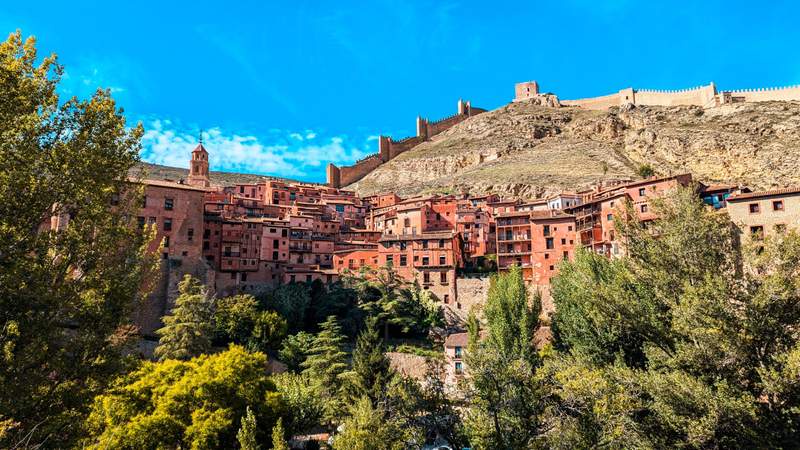
A village clinging to the rock
From the moment you arrive in Albarracín, the view is striking. Houses appear to grip the cliffside, defying the void with a seemingly fragile balance. Below, the Guadalaviar River winds slowly, tracing a natural boundary around the village.
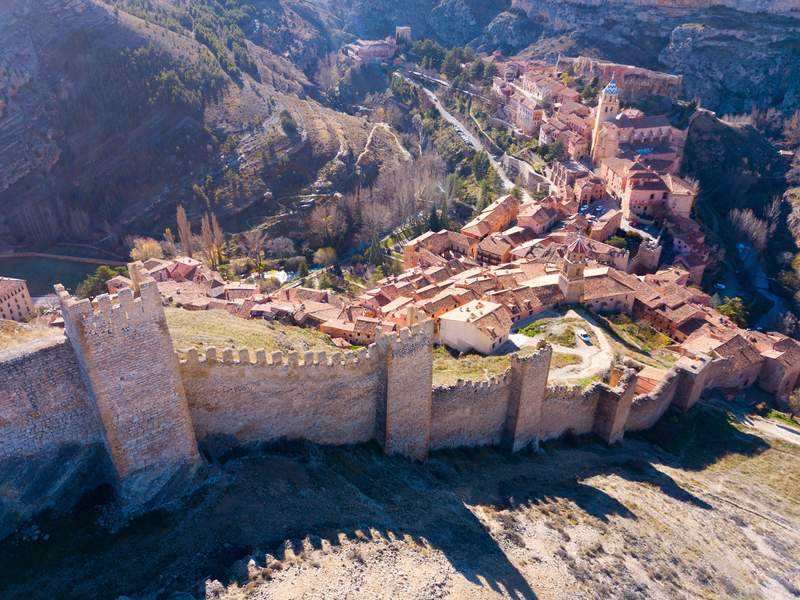
The medieval ramparts follow the contours of the mountain, forming a silhouette unlike any other. Walking alongside them, the eye takes in a raw, almost untamed landscape, where nature appears to set the rules.
Inside, narrow streets intertwine into a labyrinth of steep passageways, sharp staircases, and unexpected perspectives. Around every corner lies a surprise — an archway, a small square, a sudden opening onto the valley. Everything here invites you to wander.
A unique architectural identity in Spain
Albarracín also stands out for its strong and instantly recognisable visual identity. Facades tinted with ochre, red, and pink catch the light, transforming the village throughout the day like a living canvas.
Often narrow and vertical, the houses combine wood, stone, and plaster structures. Some jut out over the streets in overhanging forms, reinforcing the sense of precarious balance. Wooden balconies, heavy doors, and handcrafted details reflect an enduring traditional know-how.
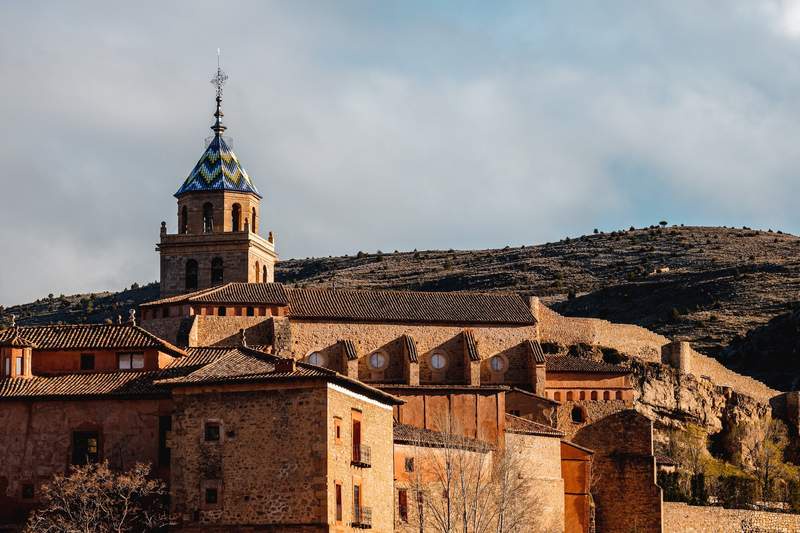
At the top of the village, the elegant 16th-century cathedral overlooks the entire site, while former palaces recall Albarracín’s past importance. Together, they form a dense architectural landscape where every element seems to echo the next.
A journey into medieval history
Behind its walls, Albarracín tells a complex story shaped by both Muslim and Christian influences. Once an independent kingdom in the Middle Ages, the village still bears traces of this singular past, visible in its layout and architecture.
This history is written in the stones, but also in the atmosphere. The quiet streets, the slow pace, the sense of isolation all deepen the impression of travelling back in time.
And as you wander, the village reveals another side — that of a preserved, almost confidential place, where heritage is not displayed, but lived. A destination that goes beyond a simple image, offering a true experience suspended between vertigo and contemplation.
https://www.youtube.com/watch?v=7nM1G9pwlzU
Travelling to Spain? These articles should interest you:
- In Spain, this natural park has just been named the most beautiful place in the world (and it boasts exceptional biodiversity)
- An hour and a half from Barcelona, this little-known village built on volcanic rock, is a hidden gem to discover this spring
- Forget the Alps, this Spanish national park with breathtaking canyons is the best place to go hiking in Europe – from gentle trails to demanding routes