
On 19 September 2023, the Canadian government expelled an Indian envoy after Trudeau's government accused the Indian intelligence service of masterminding the assassination of a Canadian Sikh activist on Canadian soil in June this year. The unnamed envoy is said to be the Indian diplomat responsible for intelligence in Canada. Delhi countered the move the next day by expelling a Canadian envoy to India. So, what do you need to know about this evolving event?
The Victim
The victim of the assassination, Hardeep Singh Nijjar, was an India-born naturalised Canadian Sikh leader. He had called for the independence of Khalistan, a semi-amorphous region within Punjab province, via peaceful means. However, the Indian government accused him of terrorism-related activities, ranging from the murder of a politician to the bombing of a cinema and the attempted smuggling of ammunition into India using a paraglider.
Khalistan Separatist Movements
Today's India is the amalgamation of various Indian kingdoms and sultanates that fell under British occupation. Amongst those that fell under British occupation was the Sikh Empire under the rule of Maharaja Ranjit Singh, whose Empire stretched from Peshawar (in today's Pakistan) to the Sutlej River in Punjab (in today's India).
The Sikhs tried to garner their independence as early as the 1930s, basing their ideals around the concept of a Khalistan nation.
During World War 2, willing British Indian soldiers captured by the Axis Powers helped to form the Free Indian Legion under the Wehrmacht and later Waffen SS in Germany, while those captured by the Japanese joined the Indian National Army (INA) under the leadership of Subash Chandra Bose. After the war, the British colonial power tried to treat these men as traitors. The rising anti-colonial sentiment amongst the Indian public saw these soldiers touted as heroes, forcing the colonial authority to release them.
As the British consented to India's independence in 1948, they allowed the partition of the former colony into today's India and Pakistan, recognising the Hindus' and the Muslims' need for their nations. However, the Sikhs were left out.
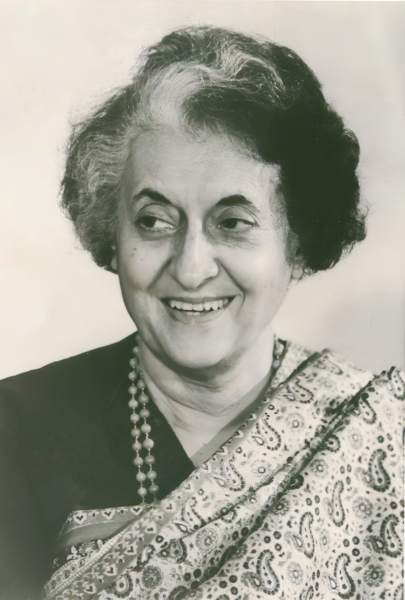
In the 1980s, the call for autonomy by the Sikhs in the Punjab province culminated in the Indian Army's Operation Blue Star on separatists hiding in the Golden Temple, a Sikh holy religious site in Amritsar. Officially, 400 died in the operation. However, Sikh groups claimed that thousands perished. The insurgency peaked on 31 October 1984 with the assassination of Indian Prime Minister Indira Gandhi by her Sikh bodyguards for her part in authorising the operation. The backlash from the assassination rocked India, with the Sikhs becoming targets for crimes they never committed.
The incident that propelled the Free Khalistan movement to the international forefront was the bombing of Air India Flight 182 on 23 June 1985. The flight from Toronto, Canada, had stopped at Montreal to remove several suspicious packages before being cleared to fly to Heathrow. About 45 minutes before landing, the plane disintegrated off the coast of Ireland, killing 329 crew and passengers.
India
India views the Free Khalistan Movement as an internal terrorism matter with an international support base. Hence, undoubtedly, they were not happy when Canada refused to arrest and extradite Sikh activists involved with the separatist movement. What's more, the separatist movement successfully assassinated one of their sitting prime ministers, albeit a tenuous link. As they cannot act using a diplomatically viable method, the following possible path is via the cloak-and-dagger method.
Assassinations - Tools Against Dissent
The adage that one man's freedom fighter is another man's terrorist is very true. Men like Hardeep Singh Nijjar are heroes to the Sikhs who want to see their homeland obtain self-determination. Yet, the people who oppose self-determination see him as a terrorist who tried to destroy their nation and way of life.
To eliminate such threats, countries worldwide have often resorted to dark paths, including assassination, to remove such threats, especially when these perceived threats are out of their sphere of influence. Israel, Iran, North Korea, and Russia have used such methods to eliminate their threat, especially if their host country protects the target.
Pure Criminal Intent?
Yet, there could be even a more straightforward explanation for Hardeep's murder. It could be a robbery gone wrong. But without any further publicly available details, it would be difficult to determine the truth.
But one thing is for sure. India views these separatists, even those holding onto the peaceful path, as terrorists who must be arrested or liquidated. And to the Sikhs, at least in Canada, they hold onto the notion that they would see a free Khalistan one day. Days before Hardeep's murder in Surrey, Canada, a parade in Brampton, Canada, portrayed the assassination of Indira Gandhi with the word "Revenge". An eye for an eye makes the world go blind.
Danny Liew is a content creator under the Newswav Creator programme, where you get to express yourself, be a citizen journalist, and at the same time monetize your content & reach millions of users on Newswav. Log in to creator.newswav.com and become a Newswav Creator now!
The User Content (as defined on Newswav Terms of Use) above including the views expressed and media (pictures, videos, citations etc) were submitted & posted by the author. Newswav is solely an aggregation platform that hosts the User Content. If you have any questions about the content, copyright or other issues of the work, please contact Newswav.
