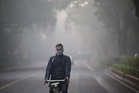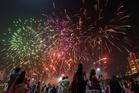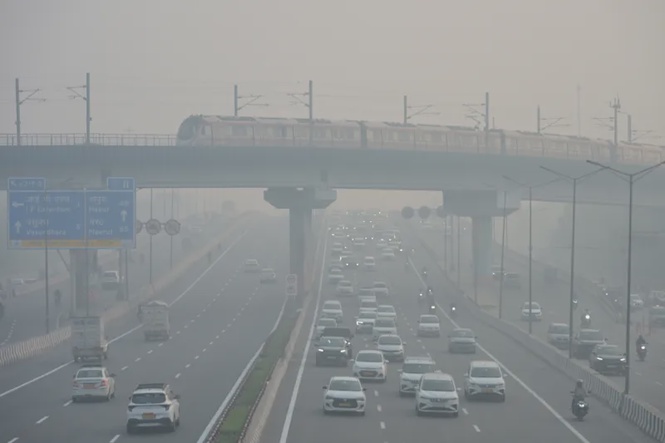
Smog hung over New Delhi as India marked Diwali on November 8, 2026, a day after Swiss air quality group IQAir ranked the Indian capital the most polluted major city in the world.
At 6 a.m. on the morning of the festival, 11 monitoring stations in the city recorded air quality readings above 400, the threshold for the "severe" category on India's official scale, according to Central Pollution Control Board (CPCB) data reported by the IANS news agency. Punjabi Bagh, in west Delhi, posted the highest reading at 450, while the citywide index stood at 384, in the "very poor" band.
Diwali Celebrates the Triumph of Light Over Darkness
Diwali is the most important festival of the year in India, particularly for Hindus. More than one billion people in India and its diaspora celebrate it, the Associated Press noted.
The name comes from "Deepavali," meaning "a row of lights." Families set rows of small clay oil lamps outside their homes to mark the victory of light over darkness and of knowledge over ignorance. The date follows the Hindu lunar calendar, so the festival usually falls in late October or early November.
The stories behind it vary by region. In northern India, Diwali honors the return of Lord Rama, his wife Sita, and his brother Lakshmana after 14 years in exile, while in the south it celebrates Lord Krishna's defeat of the demon Naraka. Many households worship Lakshmi, the goddess of wealth, buy gold for luck, draw colorful rangoli patterns on the floor, and exchange sweets and gifts.
Other faiths mark the day too. Jains remember it as the day their teacher Mahavira attained nirvana, Sikhs celebrate Bandi Chhor Divas for the release of Guru Hargobind from Mughal imprisonment, and some Buddhists commemorate Emperor Ashoka's conversion.
The festival has reached Taiwan as well. On November 7, the India Taipei Association, India's representative office in Taiwan, joined the New Taipei City Government to hold a Diwali celebration at the Sea View Plaza of Tamsui Fisherman's Wharf. The program included an Indian musical medley by the Chenggong High School Concert Band, dance performances, Indian food, and hands-on cultural activities, the association said.
IQAir Reading Doubles That of Neighboring Lahore
IQAir's live ranking placed Delhi first among major cities at 10:35 a.m. on November 7, with a U.S. air quality index reading of 581, Reuters reported. That was roughly double the reading of 285 in Lahore, across the border in Pakistan.
IQAir's figure is calculated differently from India's official index and cannot be compared directly. The CPCB put Delhi's own index at 363 that morning. Air quality on November 6 was the worst in the run-up to Diwali in eight years, Indian media said, citing official data.
Delhi, home to about 20 million people, battles smog every winter. Cold, heavy air traps vehicle exhaust, construction dust, and smoke from burning crop waste.
Emergency Curbs Hit Schools, Builders, and Older Cars
The Commission for Air Quality Management (CAQM), the federal body that oversees pollution in the capital region, invoked the third stage of its emergency response plan on November 6 after the index reached 382. The order cited forecasts that air quality could fall into the "severe" category in the coming days.
The stage three rules ban dust-generating construction and demolition across Delhi and surrounding districts and restrict older petrol and diesel cars, Outlook India reported. Delhi's education department moved students up to Class 5 to a hybrid system from November 7, letting them attend school in person or online. The commission also asked governments in the region to consider allowing half of office staff to work from home.
Delhi Environment Minister Manjinder Singh Sirsa warned on November 6 that conditions would deteriorate. "From tomorrow, the weather is going to become worse, winds will completely stop, which will worsen the AQI," he said, according to Reuters.
Firecrackers Threaten to Deepen Delhi's Winter Smog
Fireworks are part of the celebrations, and their widespread use during the festival usually makes Delhi's air worse, Reuters noted.
The air was nearly still on the morning of the festival. At 8:51 a.m. on November 8, private monitoring platform AQI.in recorded a wind speed of 3.6 kilometers per hour (2.2 miles per hour) in Delhi, alongside a U.S. air quality index reading of 534, which it rated "hazardous."
The same reading put fine particulate matter, known as PM2.5, at 342 micrograms per cubic meter, nearly 23 times the World Health Organization's 24-hour guideline of 15. With the CAQM's forecasts already pointing to "severe" air in the coming days, smoke from Diwali night may have little chance to clear.
You've read it. Now join the conversation — follow us on X, Facebook and IG. Editor: Penny Wang