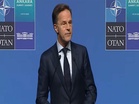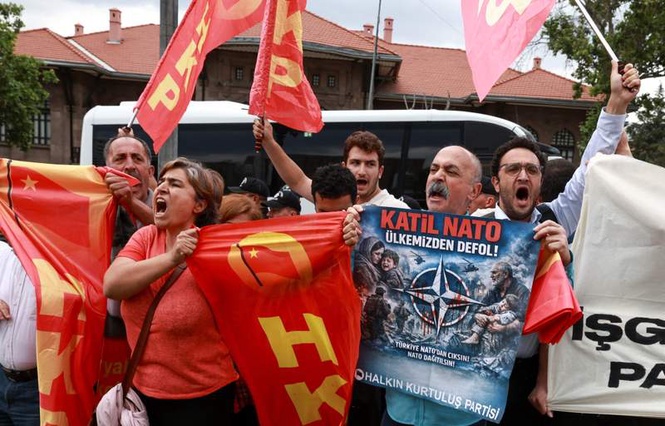
THE 36th NATO summit (July 7-8) is being held in Türkiye at an unusual moment. For many of its European members, the alliance’s biggest strategic uncertainty today lies not in Moscow. It lies in Washington. Questions about US reliability, transatlantic cohesion and the future of NATO (North Atlantic Treaty Organisation) will weigh as heavily as those about Russia. Yet the consequences of NATO’s decisions will extend far beyond Europe, making the Ankara event more than just a transatlantic summit. Founded in 1949 as a defensive transatlantic alliance in response to Cold War exigencies, NATO has persisted well beyond the dismantling of the Soviet Union. Its remit has steadily expanded since its first out-of-area operation, enforcing a no-fly zone in the Bosnian War during 1992-95. In 1999, it conducted a 78-day aerial bombing campaign against Yugoslavia. Closer home, NATO participated in counter-piracy operations in the Gulf of Aden and the Indian Ocean during 2008-16. Today, its decisions transcend Europe, increasingly shaping global defence markets, military deployments, technology controls and even Indo-Pacific security. Four issues will dominate NATO discussions: implementation of the Hague commitment to raise defence spending to 5% of GDP by 2035; sustaining support for Ukraine in the fifth year of the war; the direction of US policy under President Donald Trump; and the fallout from the Iran war. Taken together, they reveal that NATO must confront its adversaries while adapting to a changing America and asking whether an alliance built for consensus can still move at the pace that strategic competition demands. From New Delhi, the answers to these questions look rather different than they do from Washington or Brussels. As regards the Ukraine war, NATO acknowledges that it has become less a test of military manoeuvre than of industrial endurance, with the resulting war of attrition placing growing strain on allied resources. India’s consistent position, that only dialogue and diplomacy can produce a durable settlement, remains sound. India has a direct interest in seeing the war end. A prolonged conflict will continue to reshape energy and defence markets as well as sanctions far beyond Europe. The most consequential undercurrent at Ankara is the US itself. Threats to annex Greenland, Trump’s musings about making Canada the 51st American state and Washington’s February 28 attack on Iran, which blindsided America’s closest NATO allies, have raised doubts about the predictability of US leadership. In private conversations, many will ask whether the US has itself become a strategic variable that even its closest allies must now manage. India has long held that formal alliances are no guarantee of predictable behaviour, and Trump’s approach unintentionally reinforces that proposition. The irony is striking. While Western capitals long extolled alliance politics, European NATO members are now quietly questioning how much certainty alliances still provide. An equally important question receives far less attention. If Europeans assume greater responsibility for their own defence, Washington will be able to devote more military attention to the Indo-Pacific. Every additional euro Europe spends on its own defence potentially releases American resources for the Indo-Pacific. That, in turn, will influence China’s strategic calculations, regional military balances and the Indian Ocean environment. India welcomes a stable multipolar Asia, but has no interest in NATO’s institutional extension into the Indo-Pacific. India’s own engagement with the US as a partner is growing, from semiconductors and space to defence and diaspora. Nonetheless, India should dismiss any framing of it by NATO as a balancing partner against China. India chooses partnerships to serve its national interest, consistent with its strategic autonomy and multi-alignment approach. External vindication is neither sought nor needed. As with Ukraine, the repercussions of the Iran conflict directly reach India. Most NATO members declined to join the US campaign against Iran this year, while calculating how to insulate themselves from future disruptions. For India, West Asia is not a distant theatre but a neighbourhood in which it has significant equities: ten million Indians, energy supplies and food security. Disruption to shipping through the Strait of Hormuz would immediately affect Indian interests. NATO discussions on securing maritime routes deserve our close attention. One important implication of the Ankara summit relates to defence markets. As European NATO members substantially raise defence budgets, demand will grow for artillery, air defence, drones and munitions. India’s defence industry has begun moving from buyer-seller relationships towards co-development and co-innovation. European rearmament will create opportunities Indian industry should seize. Hosting the summit has enabled Türkiye to showcase its UAV (unmanned aerial vehicle) industry while advancing its regional ambitions. New Delhi’s ties with Ankara have been strained by the latter’s alignment with Pakistan on questions internal to India. India’s outreach to Armenia, Cyprus and Greece in recent years was a considered response, not a reactive one. Türkiye’s diplomatic moves on the sidelines of the summit and beyond deserve close watching. Coinciding with the Ankara summit, Prime Minister Narendra Modi is visiting Indonesia and travelling onwards to two of the “Five Eyes”, Australia and New Zealand. The contrast is instructive: NATO operates through treaty obligations; India through flexible partnerships, strategic autonomy and issue-based cooperation. India is engaging the same strategic geography, but on its own terms and through a very different diplomatic model. The summit’s communiqué will paper over cracks, as such communiqués invariably do. The real test lies in whether NATO sustains higher defence spending, maintains credible support for Ukraine, manages the fallout from the Iran war and preserves confidence in US leadership. For India, Ankara is not a meeting to influence; it is one to interpret. What it reveals about US leadership, European defence capacity and NATO’s adaptability will impinge on India’s choices on defence industrial partnerships, foreign policy and the Indo-Pacific. Its significance for New Delhi lies less in its communiqué, which will soon be forgotten, than in the strategic choices it foreshadows. The summit reminds us that nothing is eternal. Even the strongest alliances evolve. India’s task is to recognise that evolution before it becomes conventional wisdom, and adapt accordingly. Views are personal