JAKARTA, Oct 1 - Indonesia booked a surprisingly large trade surplus of US$3.55 billion (RM14.50 billion) in August, well above market expectations, but some economists doubted the position was sustainable.
According to LSEG data, the August surplus was the widest since September 2025 and far above the median forecast of around US$630 million (RM2.57 billion) in a Reuters poll.
The large surplus could ease concerns about Indonesia's worsening current account position, after the country posted its biggest deficit since 2018 in the April-June quarter.
But Bank Danamon economist Irman Faiz said that while the surplus provided a near-term foreign exchange buffer, the improvement was "precarious rather than structural".
He attributed it to softer-than-expected imports that he said were temporary.
"We therefore remain cautious on the external outlook, particularly as the terms-of-trade backdrop has become less favourable," Irman said.
Danamon continues to expect the central bank to further tighten monetary policy to navigate external pressures, he said.
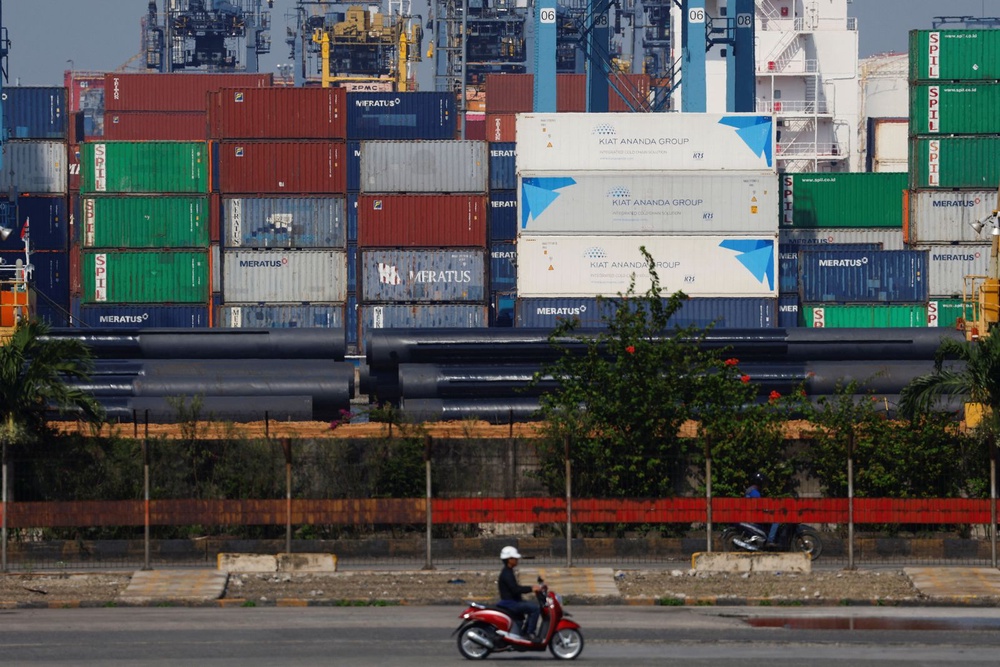
Import growth was below expectations
Indonesia, Southeast Asia's largest economy, is the world's top exporter of thermal coal, palm oil, and nickel, and a major supplier of tin, copper, aluminium, and coffee.
The country has benefited from rising prices of some of its top commodity exports this year, with some gains driven by rising global crude prices due to the Middle East conflict. However, as a net oil importer, its import bills have also soared.
Statistics Indonesia stated that exports rose 6.72 per cent year on year in August to US$26.61 billion (RM108.6 billion), compared with a 4.3 per cent increase expected in the Reuters poll.
The better-than-expected rise was driven by higher shipments of non-ferrous base metal products, nickel, aluminium, copper, and base chemical products.
Imports rose 19.09 per cent year on year to US$23.06 billion (RM94.17 billion), below the 31.14 per cent surge forecast in the poll.
Bank Permata economist Faisal Rachman noted that import growth is expected to remain resilient, with an improvement in the purchasing managers' index in September, while exports could face headwinds from soft demand.
He forecast Indonesia's current account deficit to widen to 2.49 per cent of the gross domestic product in 2026 and stay around that level in 2027, significantly wider than the 0.09 per cent in 2025, with the central bank seen keeping its tighter monetary policy stance.
Bank Indonesia raised policy rates by 100 basis points between May and June to defend the falling rupiah currency.