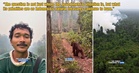
The Indonesian government has been accused of “gross negligence” by civil society and Indigenous groups over its tackling of recurring wildfires.
In a class action lawsuit, the groups are seeking stronger action against fires that have spread toxic haze across several parts of Southeast Asia.
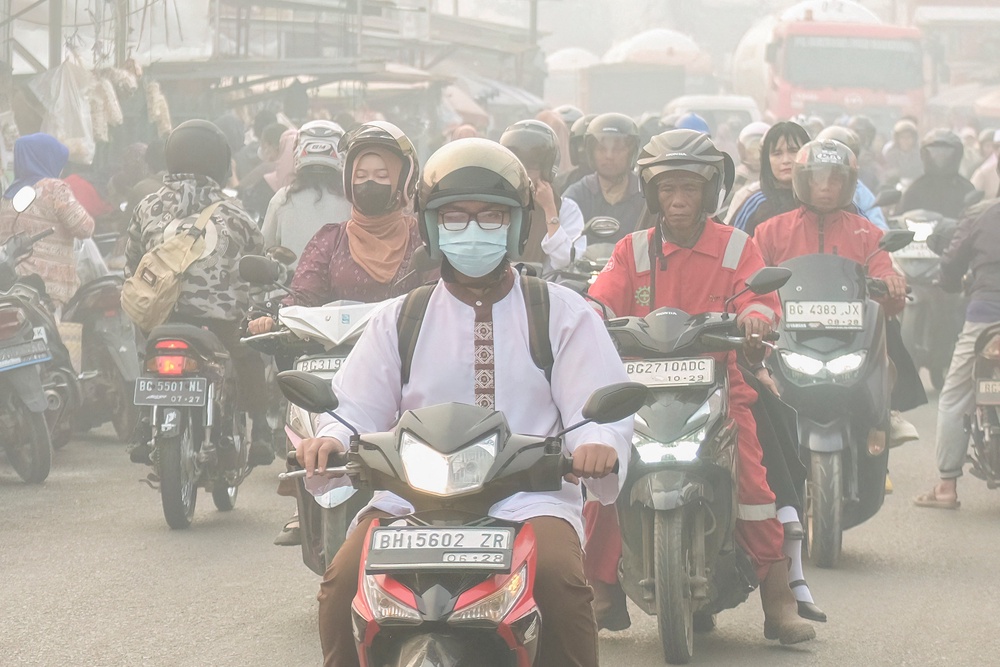
Wildfires across Indonesia have been burning for weeks, blanketing parts of the country in smoke that has drifted into Malaysia, Singapore, and the Philippines.
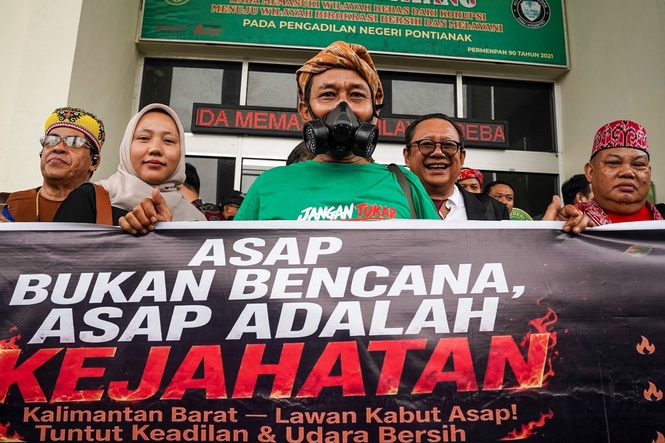
The case opened on 7 October at a court in Pontianak, the capital of West Kalimantan province on the island of Borneo. President Prabowo Subianto, the provincial governor, and eight other officials are among the 10 defendants named in the lawsuit.
The four plaintiffs, including a local chapter of Indigenous organisation AMAN and a Catholic youth group, argue that authorities failed to adequately prepare for a crisis that returns almost every year. They want the government to declare the fires a national disaster and provide comprehensive rehabilitation measures, including healthcare for people affected by the smoke.
None of the defendants attended the opening hearing, prompting the court to adjourn proceedings until 21 October.
The plaintiffs’ lawyer, Glorio Sanen, said their absence was disappointing.
“We feel sad and regretful about their absence … But on the other hand, we also understand that perhaps this haze condition caused them to be unable to land in Pontianak,” he told reporters.
Mr Sanen said the lawsuit was “a step to address the problem” of fires that have repeatedly affected Indonesia and neighbouring countries. He argued that authorities should have been better prepared, given that the El Nino weather phenomenon and the resulting drought had been forecast.
“They did not show up. This is a way of the central government teaching the people that violating the law is okay,” Yakobus Kumis, a plaintiff representing a Dayak ethnic group, was quoted as saying by Reuters.
The haze has contributed to hazardous air quality, school closures and respiratory illnesses, while also disrupting hundreds of flights.
Indonesia’s health ministry recorded nearly 175,000 respiratory infection cases linked to the fires between August and September, according to official figures. The unusually intense El Nino has worsened dry conditions, increasing the risk of fires spreading across forests and peatlands.
Environmental groups say land-clearing practices, including burning vegetation to make way for oil palm plantations, are a major cause of the recurring blazes. Indonesia is the world's largest producer of palm oil.
Mr Sanen said the plaintiffs were prepared to substantiate their claims.
He said: “If we’re asking law enforcement authorities to enforce the law on forest and land fires in a transparent and fair manner, how could they object to that?
“That’ their job. Even if we hadn’t filed a lawsuit, that would still be their responsibility.”
The government has said its priority is protecting communities and containing the fires, citing coordinated ground and aerial operations involving military personnel, police, disaster-management officials and volunteers.
In neighbouring Singapore, the haze has pushed air pollution to record levels just as it hosts its Formula One Grand Prix, and several Malaysian states have temporarily closed schools over concerns about air quality.
The fires mark one of Indonesia’s most severe wildfire seasons in recent years. Illegal land-clearing practices, in which vegetation is burned to prepare land for agriculture or other uses, are a major cause.
Police said in August that they had identified 196 people suspected of starting forest fires and were investigating 96 companies in connection with blazes that had burned more than 25,000 hectares. Authorities also announced administrative sanctions against 26 corporations, including permit suspensions and revocations, as well as orders to restore damaged land.
The latest case follows earlier attempts to hold the government accountable for its response to the fires. In 2016, seven residents sued the administration of former president Joko Widodo over the handling of the 2015 wildfire crisis. A district court initially ruled in their favour, but the decision was overturned in 2022. A separate lawsuit filed in South Sumatra in 2025 was dismissed.
Read MoreEl Nino is now hottest ever recorded and still growing in strength, announces Japan
This underrated island is Southeast Asia’s most romantic beach escape
Indonesian haze makes Singapore the most polluted city in the world
Malaysia hosts Myanmar junta leader as criticism grows over repatriation of refugees
Satellite images show attack jets at Chinese military facility in Laos
Former Buddhist monk jailed for 50 years in £7 million embezzlement case