
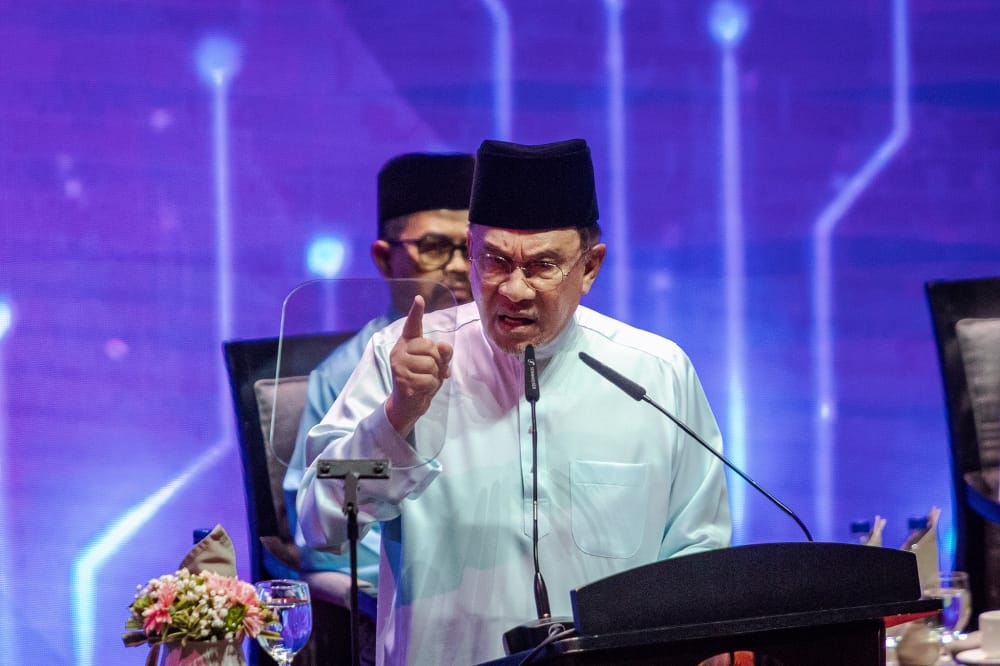
Every Monday morning, the gleaming, jade-domed complex of Perdana Putra in Putrajaya plays host to an elaborate theatrical display. Ministers from factions that once openly despised one another the progressive multi-ethnic reformers of Pakatan Harapan (PH) and the traditionalist, Malay-nationalist stalwarts of Barisan Nasional (BN) sit across a polished mahogany table. They trade handshakes, approve economic circulars, and smile for the cameras. Yet, beneath this veneer of bureaucratic harmony, the air is thick with a palpable, exhausting tension. This is the daily reality of Malaysia’s "Madani" administration: a government born out of an unprecedented constitutional crisis, sustained by political survival, and now staring into a profound existential abyss.
For Prime Minister Datuk Seri Anwar Ibrahim, this arrangement is more than just a governance strategy; it is a grueling emotional and spiritual reckoning. For over two decades, Anwar was the fiery icon of Reformasi, enduring imprisonment, political exile, and character assassination in his quest to dismantle the entrenched, patron-client system of the United Malays National Organisation (UMNO). Today, he sits at the apex of power precisely because he invited those former adversaries into his tent. It is a Faustian pact that saved Malaysia from an institutional vacuum in late 2022, but mid-way through 2026, the structural architecture of this alliance is fracturing. The recent declaration by the UMNO-led Barisan Nasional that it intends to contest all 56 state seats in Johor independently has blown the facade wide open, forcing Anwar to publicly contemplate dissolving Parliament and calling for snap national elections if internal divisions deepen. This unfolding drama is not merely a dispute over seat allocations; it is a battle for the very soul of Malaysian democracy, leaving a highly polarized electorate wondering if stability was ever anything more than an illusion.
The Weight of the Crown: Reformasi and the Cost of Compromise
To understand the emotional toll weighing heavily on the Prime Minister, one must contrast the Anwar Ibrahim of 1998 with the Anwar Ibrahim of today. The young, charismatic orator who shook the streets of Kuala Lumpur with cries for justice and institutional reform has been replaced by a pragmatic, consensus-driven statesman. Analysis of his recent public addresses reveals a leader constantly performing a delicate high-wire act, forced to temper his progressive promises to appease conservative coalition partners who hold the keys to his survival.
This compromise has triggered immense friction within Anwar’s own political family. The ideological core of Pakatan Harapan built on multiculturalism, secular governance, and anti-corruption feels increasingly hollowed out. The administration's decision to drop high-profile graft charges against key establishment figures, despite established prima facie cases, remains a deep wound that continues to undermine the government's moral authority among its core urban supporters. For many Malaysians who braved tear gas and political persecution to vote for a clean government, seeing reformist icons defend old-guard politicians feels like a betrayal.
Furthermore, the internal cohesion of Anwar's own party, the People’s Justice Party (PKR), has entered a highly volatile phase. Deep-seated factionalism, worsened by highly contentious internal elections, has culminated in a dramatic political fracture. Prominent figures like Rafizi Ramli and Nik Nazmi Nik Ahmad have severed ties with the party leadership to helm the little-known Malaysian United Party, posing a direct and unprecedented grassroots challenge to Anwar's authority. When a leader's foundational political vehicle begins to splinter, it suggests that the compromises made to maintain the prime ministership are beginning to consume the very movement that built it.
The Johor Fault Line: When the Local Fractures the Federal
While Putrajaya struggles with ideological erosion, the most immediate threat to the alliance is structural and geographic. In Malaysian politics, local dynamics possess a unique capability to derail federal stability. The recent escalation of tensions in the southern state of Johor serves as a critical case study of this systemic fragility.
Johor has historically been the birthplace and ideological heartland of UMNO. Following a decisive supermajority victory in the 2022 state polls, the local BN machinery has grown increasingly reluctant to cede political ground to its federal PH partners. When Barisan Nasional abruptly announced its intention to sweep all 56 Johor seats alone, it effectively shattered the electoral pact established during the 2025 Sabah state elections. Analysts assume this aggressive posturing is a calculated maneuver by UMNO's rank-and-file, who are anxious to prove they can still win back the Malay majority without being anchored to a progressive, multi-ethnic coalition.
Anwar’s sharp counter-warning that PH is fully prepared for a "full-scale" nationwide electoral showdown signals an administration pushed to its absolute limits. No longer content to quietly manage internal dissent, the Prime Minister is using the threat of a snap election as political leverage. However, this high-stakes brinkmanship carries immense risk. A leaked internal PKR electoral analysis shockingly revealed that out of the party's 66 parliamentary seats, only seven are deemed entirely safe, with Anwar’s own seat of Tambun classified as highly vulnerable. If these figures are accurate, a premature general election could trigger political suicide rather than provide a stabilizing mandate.
Economic Vulnerabilities in an Era of Volatility
Compounding these political fractures is a harsh economic reality that leaves little room for governance errors. The Madani administration is currently trapped in the classic middle-income stagnation, worsened by deep structural challenges. Chief among these is an overreliance on government-linked companies (GLCs), persistent wealth inequality, and severe exposure to global inflationary pressures.
The economic stakes are poised to escalate significantly by the end of 2026. Domestic experts project that if current global economic crises persist, the nation’s crude petrol subsidy bill alone could balloon to an unsustainable 24 billion ringgit. To safeguard long-term fiscal health, Anwar must execute aggressive subsidy rationalization. Yet, slashing fuel subsidies is a notorious political third rail. Pruning these benefits right before crucial state assembly dissolutions in Melaka and Johor would give the opposition an incredibly potent weapon to whip up working-class fury.
To balance these pressing domestic vulnerabilities, the administration has pivoted heavily toward foreign direct investment and strategic cabinet realignments. The December 2025 cabinet reshuffle was meticulously engineered to place key allies and skilled technocrats into vital roles, notably promoting UMNO’s Johari Abdul Ghani to lead the Ministry of Investment, Trade, and Industry (MITI) to steer Malaysia through an intensifying US-China trade war and massive Chinese import surges. While these maneuvers show a high degree of administrative competence, they do not resolve the primary ideological contradiction at the heart of the government: a reformist leadership tethered to an establishment base that resists institutional change.
East Malaysia and the Rebalancing of Power
As Peninsular Malaysia fractures along ethnic and ideological lines, the geopolitical center of gravity is shifting decisively eastward. The states of Sabah and Sarawak, grouped under their regional coalitions Gabungan Parti Sarawak (GPS) and Gabungan Rakyat Sabah (GRS), are no longer passive observers in Putrajaya’s power struggles. Instead, they have emerged as the ultimate kingmakers, deeply conscious of their leverage.
Under the 2021 constitutional amendment that restored the East Malaysian states to equal status, negotiations regarding the landmark 1963 Malaysia Agreement (MA63) have advanced significantly. Out of 21 core demands regarding autonomy over gas supplies, land rights, and judicial administration, 11 complex policy areas have been successfully resolved. This represents substantial progress, but it also underscores a structural rebalancing of power.
Political insiders whisper that if the alliance between PH and UMNO collapses entirely before the next general election, East Malaysian leaders could look to form a completely new alignment. There is a tangible mathematical possibility that Local Borneo parties could leverage their unified bloc to back a neutral compromise figure such as Deputy Prime Minister Datuk Seri Fadillah Yusof for the premiership. For many conservative regional parties, backing an East Malaysian leader would allow them to bypass the toxic, polarized debate surrounding Pakatan Harapan’s partnership with the secular DAP, offering an attractive alternative to their constituents.
What do you think? I’d love to hear your opinion in the comments section
Ultimately, politics is not just about numbers in parliament; it is about the shared narrative of a people. For decades, Malaysians were fueled by a clear, albeit simplistic, story: a heroic opposition battling an entrenched establishment to salvage the nation. Today, that script has been completely rewritten. The hero and the antagonist share the same table, drink the same coffee, and sign the same pieces of legislation.
This reality leaves ordinary citizens experiencing a profound sense of political exhaustion. The emotional reckoning confronting Anwar Ibrahim in the quiet corridors of Putrajaya mirrors a quieter, more pervasive disillusionment spreading across the towns of Johor, the suburbs of Selangor, and the longhouses of Sarawak. If alliance politics means that institutional reform must be permanently sacrificed to maintain power, then the soul of the nation remains deeply fractured. Anwar may have secured his place in history as Malaysia's tenth Prime Minister, but the true cost of that achievement is still being calculated by an anxious, waiting nation.
Do you believe Anwar Ibrahim should call for immediate snap elections to secure a definitive mandate, or should he continue to maintain this fragile coalition at all costs to preserve economic stability? Let's get the discussion started below.
AM World (tameer.work88@gmail.com) is a content creator under the Newswav Creator programme, where you get to express yourself, be a citizen journalist, and at the same time monetize your content & reach millions of users on Newswav. Log in to creator.newswav.com and become a Newswav Creator now!
The User Content (as defined on Newswav Terms of Use) above including the views expressed and media (pictures, videos, citations etc) were submitted & posted by the author. Newswav is solely an aggregation platform that hosts the User Content. If you have any questions about the content, copyright or other issues of the work, please contact creator@newswav.com.