When Patrick Sullivan heard a car horn blaring nonstop at 3 am while up feeding his infant son one night this summer, he was convinced a "crazy neighbor" was responsible.
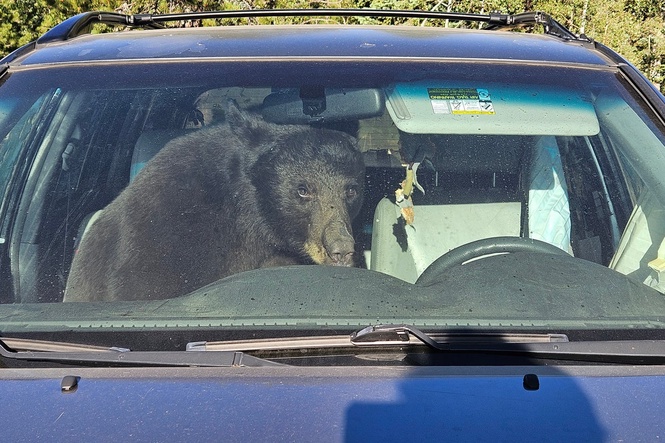
It turned out to be a neighbor of a different kind. A black bear had opened the door of a Toyota SUV and gotten trapped inside the vehicle in Gold Hill, Colorado, northwest of Denver.
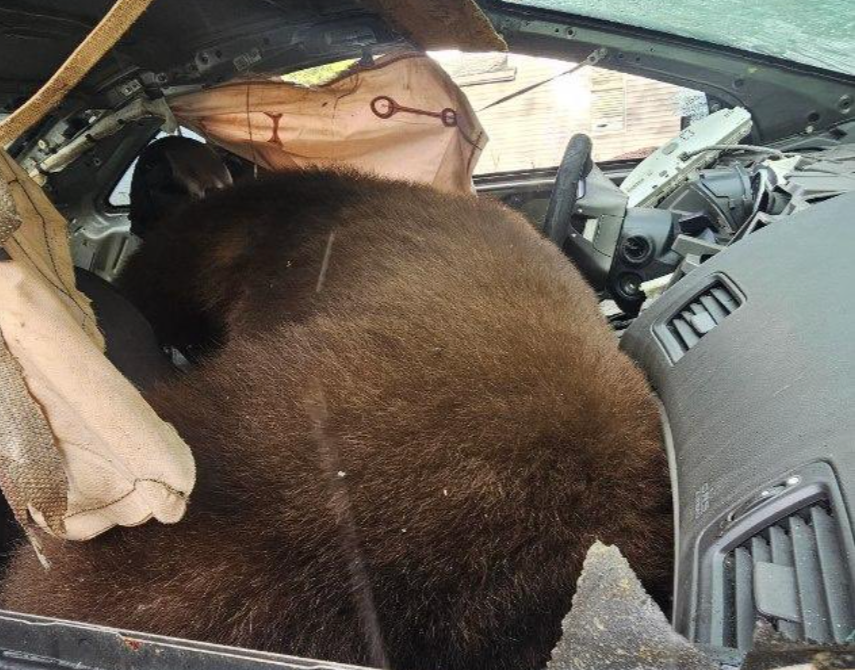
As the animal desperately attempted to escape, it repeatedly bumped the horn while ripping apart the interior—one of hundreds of instances of bears causing unusual trouble across the parched Rocky Mountains this summer.
"It’s totaled. It’s unfit to drive," Sullivan said of the car.
Millions of people live in or near bear habitat across the Rockies, where widespread drought has reduced supplies of nuts, berries, and plants that bears eat. This is prompting the animals to roam far and wide for food.
Sullivan's brother-in-law eventually freed the trapped bear. But such encounters can prove fatal for the animals. One bear recently stuck in a car in Colorado Springs died from the heat, and wildlife officials have killed dozens of others that could endanger people.
Unsecured garbage bins have become the leading driver behind a recent spike in bear encounters, according to figures from Colorado Parks and Wildlife. Beyond waste, residential areas offer other lures, including open garages with pet food, yard bird feeders, and grease collection traps beneath barbecue grills.
While officers often sedate and relocate animals that wander into populated zones, bears that learn to associate humans with a meal risk being euthanized.
Wildlife authorities repeatedly emphasize their core warning: "A fed bear is a dead bear." They strongly advise residents to safely store any potential food sources out of reach.
Although black bears usually avoid human contact and are considered far less hazardous than the larger grizzly bears found across the Northern Rockies, conflict can still turn violent.
In June, a black bear trailed, attacked, and scratched a hiker in Golden, Colorado. State officials have recorded at least four additional encounters since then, such as an incident near Vail on Aug. 17 where a man was scratched outside his apartment complex laundry room.
Just five days afterward, a young bear tackled and bit an angler in the mountain region southwest of Denver. Officers subsequently tracked the animal down and killed it.
Property owners in New Mexico and Utah have set records for bear killings this year
More than 36 bears have been killed in Utah this year—surpassing the total from the previous three years combined, according to data from the Utah Division of Wildlife Resources. In New Mexico, wildlife officials and permitted property owners have killed 187 bears, marking the highest toll since 2011.
The increase in bear deaths coincides with the worst snowpack on record across the Upper Colorado River Basin, which spans Wyoming, Colorado, Utah, and New Mexico. Scientists indicate that human-caused global warming significantly increased the likelihood of these low snowpack levels.
"Human-animal conflicts in the context of climate change haven’t really been fully researched yet. And we’re still starting to kind of tease out what this means for us and what this means for all the species that we share the ecosystem with," said Samantha Miller, senior carnivore campaigner at the Center for Biological Diversity.
Record wildfires have also destroyed expansive areas of bear habitat, compounding the environmental pressures.
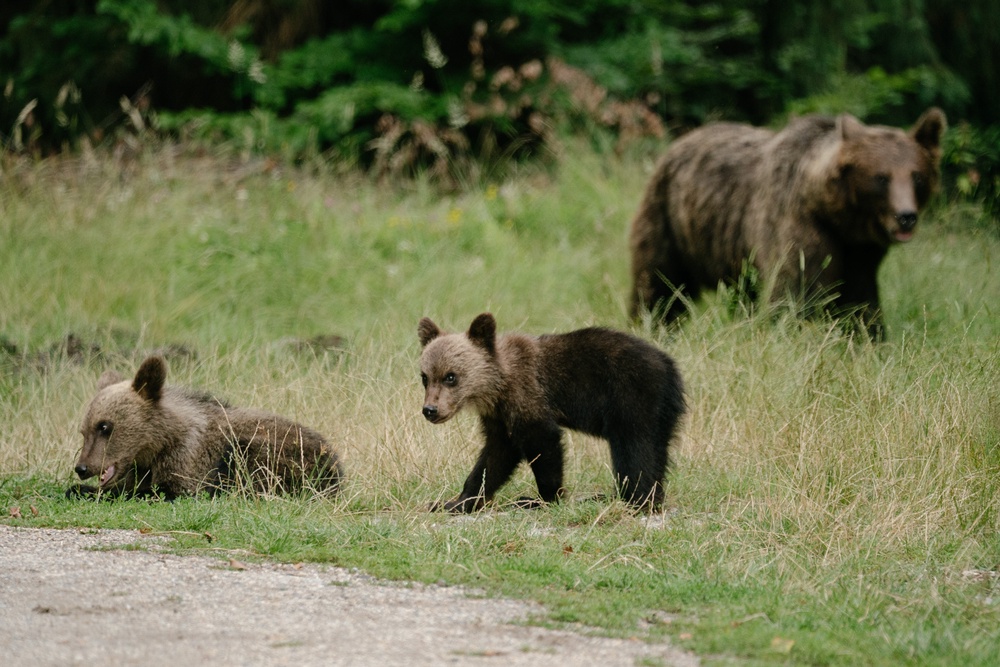
Not all encounters with bears end poorly; some prove heartwarming, like orphaned cubs returned to the wild after rescue facilities teach them to live independently without raiding human property.
"We’ve got to rescue a lot of bear cubs out of trees, including standing on some pretty shaky ladders to pull a bear cub that’s sleeping in a tree," said Sauder.
While working on a deck in Steamboat Springs, Colorado, this summer, Andy Kerrigan found a cub inside his truck after it entered through a window. He banged on the vehicle to scare it away.
"But it had found my lunch in the seat. And it was like, ‘I’m not going anywhere,’" said Kerrigan, who eventually chased it away with a piece of wood trim.
In Gold Hill, Sullivan's brother-in-law freed a bear trapped in a Toyota by pulling a rope tied to a door handle, letting it bolt for the woods.
"It was just sitting there waiting for someone to help him, basically," Sullivan said. "So I’m glad we could have done that for him."
Read MoreMost states prompt schools to teach about 9/11, but the details differ, AP finds
Parched summer in the Rockies sends hungry bears into urban areas and confrontations with people
Trump fuels feuds with post showing American flag map over all of North America
Trump pitches a rename for New Mexico. ‘Oh hell no,’ the state’s officials fire back
Hurricane Lowell: Hawaii braces for heavy rain as schools set to close
Trump’s job cuts blamed for crippling FDA response to explosive diarrhea outbreak