Integrity: The Most Popular Commodity During Election Season
By Mihar Dias November 2026
There is something wonderfully reassuring about election campaigns. Politicians suddenly discover virtues they may have overlooked during the rest of their political careers. Integrity makes a comeback. Accountability becomes fashionable. Public welfare is elevated to the status of national priority. And every candidate seems to have been personally appointed by heaven to serve the people.
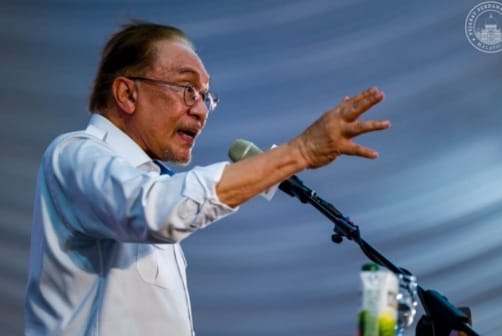
As Melaka prepares for its November 14 state election, Prime Minister Datuk Seri Anwar Ibrahim has called for leadership grounded in integrity, accountability and public welfare. https://newswav.com/A2611_PLpSLv?s=A_bc08X7j&language=en
He says Melaka deserves leaders who are trustworthy, principled, hardworking and dedicated to the well-being of the people.
Beautiful words. Almost poetic.
One wonders why we need an election campaign to remind ourselves of these elementary requirements of leadership. Surely integrity, accountability and public service are not seasonal decorations to be brought out whenever voters are required to make a decision.
Perhaps they are.
The problem with political promises is that they are remarkably inexpensive to make. They cost nothing to pronounce, require no immediate financial allocation and can be delivered with a straight face, preferably in front of a cheering crowd.
Integrity, however, is an entirely different proposition.
It is easy to declare oneself trustworthy. It is considerably more difficult to demonstrate it when nobody is watching, when a lucrative contract is on the table, when a political associate needs a favour, or when an inconvenient question is asked by someone who refuses to be impressed by one's position.
In my decades as a management consultant, I have encountered enough organisations to appreciate one fundamental distinction: leadership is not measured by what leaders say about themselves but by what their organisations permit them to get away with.
A chief executive can hang ten motivational posters about integrity in the boardroom. But if promotions depend on loyalty rather than competence, if wrongdoing is overlooked because the offender is well connected, and if those who raise uncomfortable questions are treated as troublemakers, the posters are merely expensive wallpaper.
Governments are no different.
A leader may sincerely advocate accountability, but accountability becomes meaningful only when it applies to everyone, including friends, political allies, party members and those who occupy positions of influence.
Otherwise, we have what I would call selective integrity: a wonderful arrangement in which everybody is expected to behave honourably, particularly those who have no access to power.
There is also the curious Malaysian political tradition of treating integrity as an election campaign product. Before polling day, candidates promise transparency, clean administration and public service. After polling day, the public discovers that the meaning of public service can become rather elastic.
Of course, this is not an accusation against any particular candidate or political party. It is a reminder that the standards demanded of leadership must apply universally. No political coalition should enjoy a monopoly over the vocabulary of integrity.
Malaysia's own governance record illustrates why these issues deserve more than campaign speeches. Transparency International Malaysia reported an improvement in the country's 2025 Corruption Perceptions Index, but cautioned that progress remained incomplete. It highlighted continuing concerns over political financing, procurement transparency and the protection of whistleblowers.
In other words, there is progress to acknowledge, but also unfinished business.
And perhaps that is where the real test of leadership lies.
Can a government establish systems that make corruption more difficult, regardless of who happens to occupy the ministerial chair? Can it protect people who expose wrongdoing rather than punish them for embarrassing powerful individuals? Can it make public procurement transparent enough that taxpayers do not have to rely on investigative journalists to discover where their money has gone?
These are not unreasonable expectations. They are the minimum requirements of responsible government.
There is a difference between having an honest leader and having an honest system. The former depends on the character of an individual. The latter ensures that even a less-than-honest individual cannot easily abuse the office.
That distinction matters because governments change, political alliances shift, ministers come and go, and yesterday's opposition can become tomorrow's government.
Integrity should therefore not be a personality trait that voters are asked to admire. It should be an institutional requirement that citizens can demand and independently verify.
For the people of Melaka, the coming election is an opportunity to examine the candidates, their records, their commitments and their understanding of public responsibility. The Election Commission has fixed November 14 as polling day, with early voting on November 10.
They might want to ask a few questions beyond the usual promises of development, prosperity and meaningful change.
What happens when a political friend breaks the rules? Who gets investigated when public money goes missing? Are contracts awarded on merit? Are mistakes acknowledged? And, perhaps most importantly, does accountability begin at the top or conveniently stop just below it?
I would also suggest that political leaders should be careful about promising integrity on behalf of their candidates. Integrity is not transferable through party membership, just as incompetence does not disappear merely because someone receives an election nomination letter.
A party logo is not a certificate of good character.
Ultimately, the rakyat do not need another collection of politicians who can recite the virtues of good governance. They need institutions that enforce those virtues, leaders who submit themselves to the same standards they demand of others, and public representatives who understand that winning an election is not the acquisition of a personal entitlement.
Perhaps we should introduce a new political performance indicator.
Forget the number of ceramah attended, the number of hands shaken, the number of selfies taken with elderly voters or the number of promises delivered through a loudspeaker.
Measure how much power a leader is willing to subject to scrutiny.
That would be interesting.
Because integrity is not what a politician promises before an election. It is what remains of his principles when he no longer needs your vote.
And that, folks, is when the real election of character begins.
Mihar Dias (mihardias@gmail.com) is a content creator under the Newswav Creator programme, where you get to express yourself, be a citizen journalist, and at the same time monetize your content & reach millions of users on Newswav. Log in to creator.newswav.com and become a Newswav Creator now!
The User Content (as defined on Newswav Terms of Use) above including the views expressed and media (pictures, videos, citations etc) were submitted & posted by the author. Newswav is solely an aggregation platform that hosts the User Content. If you have any questions about the content, copyright or other issues of the work, please contact creator@newswav.com.