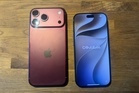
Apple’s new iPhone 18 Pro camera includes a quiet feature that is aimed at addressing one of the biggest problems with AI.
The new phone was unveiled last week, at an event in which Apple touted the camera as one of its main features. The company pointed to a new variable aperture feature that lets the camera work much better in low light, for instance, as well as new software tools to give more control over photos.
But one feature was mentioned only in passing, and might represent a more significant change to the ways that photos are shared online: a tool that the company calls Apple Reference Image. It aims to allow photographers to create an unedited and verifiable version of images from the iPhone’s camera, so that they can prove that a photograph shows something that they really saw.
It aims to address the widespread and increasingly difficult problem of actually proving that a photograph is real, and shows what it claims. As artificial intelligence tools become more capable and widely available, it has led to increasing distrust of any kind of visual image at all, including photographs, since they can be easily and convincingly faked.
Apple itself already includes some tools that allow for that kind of editing. The company’s recent phones include a “Clean Up” tool that lets people remove distractions from the background of a photo, for instance.
The problem is further complicated because many of today’s phone cameras have such complex processing and editing tools that the photographs they produce might not actually be reliable at all. In 2023, for instance, Samsung users found that AI-powered processing tools that aim to improve the look of a photo could actually substitute something entirely fake – so that the phone would spot when someone was trying to take a picture of the Moon, for instance, and swap in a false, synthetic version of it instead.
In a white paper on Apple Reference Image published today, Apple recognised that the easy availability of AI tools allowed for “helpful features” such as those included in its own phones. But it also said that those same tools “make it difficult to distinguish between photographs that depict real events and synthetic images that are heavily altered or entirely generated”.
“This is not a simple problem to address,” the company writes. It notes that modern cameras include a host of “sophisticated image-processing algorithms to produce the final viewable image”, so that any system to check a photograph would need to be able to cover the software used to process the picture as well as the data that actually arrives from the camera’s sensor.
Some solutions have already been proposed to the problem of unverifiable photos, but Apple said they come with problems. The most prominent version attaches data to a photograph after it is taken so that the history of edits can be checked – but the system can be compromised and changed at any point without a viewer knowing, and also can create privacy risks by tying the photo to a person or individual.
There are similar solutions for images that have been generated with artificial intelligence, such as Google’s SynthID, which allows for a watermark to embedded into a picture when it is made using an AI tool. But that only proves that an image was made with AI – and the absence of it is no guarantee that what it shows is real.
The company is aiming to address those problems with Apple Reference Image, which it says “offers a trustworthy, scalable guarantee that a reference image is what it claims to be: a real photograph, captured by a real sensor in an iPhone camera, at a specific time”.
It works by capturing a technically complex “digital negative” alongside the photo, as it is taken. That photo stores the photo and information about how it was taken in an encrypted way, so that it can be checked and not altered, and it is then sent to Apple’s secure and private servers to check that it is authentic.
That complicated process is then stored alongside the photo. That means that anyone who wants to check the photo is real can check the data and see that Apple’s own hardware confirms that it was taken with an iPhone and not altered.
Because of the complicated hardware requirements to make it work, Apple Reference Image is limited to the iPhone 18 Pro’s main camera. It also requires that a user actively switch the feature on – which resets the camera’s sensor into a special, secure mode.
That means that the feature is clearly not intended as a way to test whether a suspect image was actually made by artificial intelligence, since it can only prove that a photo is real, not that it was fake. Apple is pitching the feature primarily as a way for users – particularly photographers, and especially those using their cameras as a way of documenting news events – to prove that their photographs are authentic.
The feature “allows [photographers] to attest to what their iPhone actually captured, without requiring them to expose a public identity or place trust in a third party,” Apple’s white paper reads. “The result is a verification model that offers photographers, newsrooms, and everyday users renewed confidence that an image they’re viewing is a photograph actually captured by a camera.”
As such, Apple’s new feature does little to address ongoing concern that the rise of both generative AI tools that can create entirely synthetic images as well as phones that alter pictures as or after they are taken mean that it is difficult to trust photographs any more, or even to know exactly what a photo is. But it is yet another attempt to address the problem that arises from that concern, by allowing photographers to prove at least that their photos are authentic.
Read MoreMark Zuckerberg addresses panic about killer AI – and gives an urgent warning
ChatGPT boss Sam Altman says you are ‘right’ to be afraid of AI
Joe Rogan thinks AI running the government would ‘stop all wars on the planet’
The future of AI depends on Donald Trump, says ex-national security adviser
US court dismisses 4chan’s lawsuit against Britain’s media regulator Ofcom
AI powerhouse boss to join Trump and Xi at White House as fears over technology grow