India could become one of the most important countries in the global car business over the next decade, with the potential not just to sell millions more cars, but to develop, build and export them too, according to Skoda CEO Klaus Zellmer.
In an exclusive conversation with The Independent, Zellmer said India offers “possibly the biggest car market that has got the biggest growth potential in the next 10 years” while also warning that succeeding there will be far from easy.
India’s potential goes far beyond becoming another big market for car makers, though. With a young population, rising incomes and relatively low levels of car ownership, it has the chance to provide the scale that manufacturers need to develop, build and sell affordable vehicles in serious numbers.
For the rest of the world, that could mean more competitively priced small cars, SUVs and electric vehicles designed around real-world needs, rather than simply adapted from expensive models developed elsewhere.

India already has a deep supplier base, engineering talent and growing export network, and its Automotive Mission Plan 2047 is aimed at turning the country into a global centre for manufacturing, technology and sustainable mobility. The opportunity is not just to build more cars there, but to use Indian engineers and R&D teams to create vehicles, batteries, software and components that can be sold worldwide.
One of India’s most respected automotive experts, Siddharth Vinayak Patankar, editor-in-chief of Acko Drive, told us how India’s car market is maturing, with its own home-grown brands ready to take on the world.
“India now has some of the best engineering talent, huge software prowess, and now also design capabilities,” said Patankar. “This is being leveraged more and more of late by global auto makers. Mercedes-Benz, Daimler Truck, Renault, Hyundai, Kia, and Suzuki have massive R&D investments in India – over and above their manufacturing investments. But those who understand India hold the greatest overall potential, not simply with cheaper manufacturing costs or an alternative to China approach – they’re the ones who can truly benefit from the opportunity.”
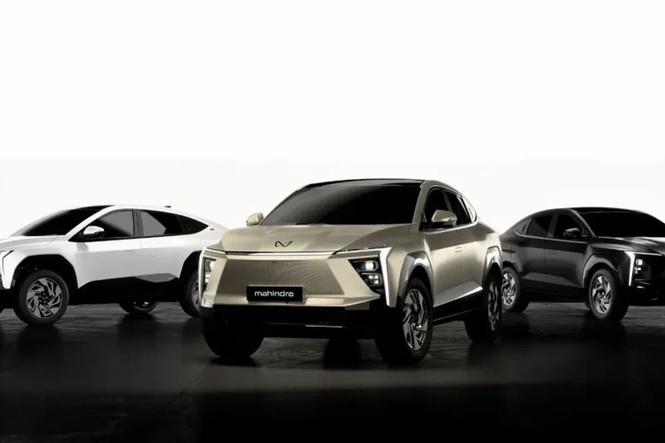
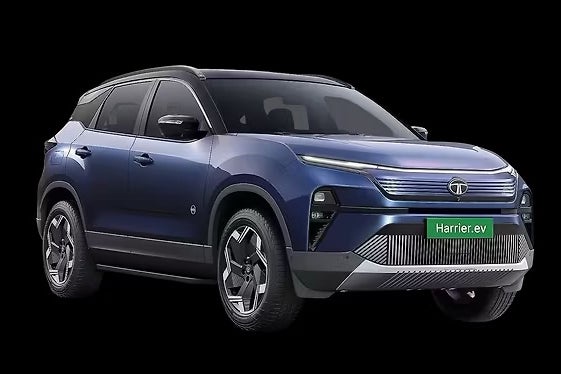
Of the native car makers, two hold the greatest potential outside of India, according to Patankar. “Mahindra and Tata both hold huge potential in the car space, while Bajaj, TVS and Hero have already done so credibly in the bike space.
“Mahindra’s opportunity has been catapulted by its tier-one supplier approach and also its ‘good-fit’ SUVs resonate with buyer aspirations in many markets.
“In India both players have gone from stagnating and at a distant number three and four in the market (Tata and Mahindra respectively) to overtaking Hyundai which was number two – with a considerable lead at that.
“That said, Mahindra and Tata can (and should) explore export markets more aggressively – especially with the opportunities that Latin America, South East Asia, and Africa present. However, they also need to be wary of when the floodgates open to Chinese brands in India.”
Skoda is already taking India very seriously, not just as a local market but as a potential export base for cars that could be sold in other parts of the world, including Europe.
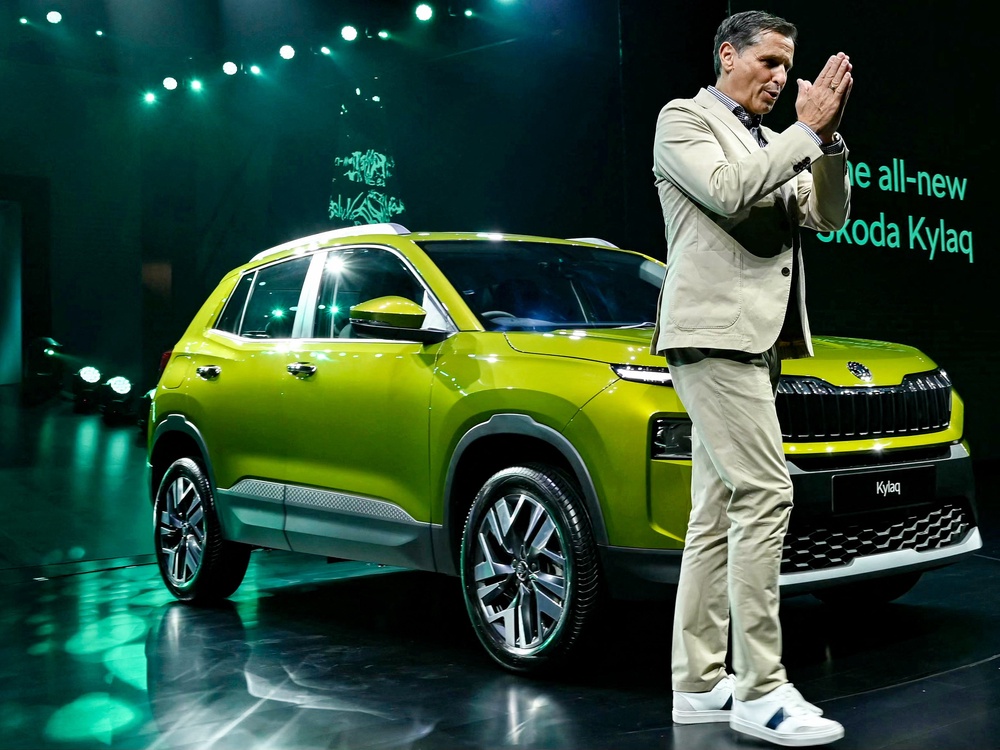
Zellmer recently told The Independent that bringing the Indian-built Skoda Kylaq small SUV to Europe was “very much on the table”, after the model helped Skoda double its sales volume in India. Now he has gone further, explaining why India is becoming a strategic priority for the Czech brand and its Volkswagen Group parent company.
“I think India gives you a couple of lessons,” Zellmer said. “The first one is it’s possibly the biggest car market that has got the biggest growth potential in the next 10 years – and there are no free lunches.”
Zellmer sees India as a huge opportunity, but it is also one of the most price-sensitive and competitive car markets in the world. European brands have often struggled there, while local giants, along with Japanese and Korean car makers, have built strong positions by understanding what Indian buyers want and what they are prepared to pay.
Patankar sounded a warning for Skoda and others by saying: “Just doing India-specific, cheap products out of India that may have volume potential in, say, Africa is not going to be a winning strategy. The product must fire in India as its home market. And the extremely demanding and shrewd, value-conscious Indian consumer is aware that India-specific can also mean ‘not as good as Europe’ for example.”
That’s something that Zellmer is all too aware of. “If you go there, you can’t turn up with conventional outdated technology,” he said. “It’s a totally unforgiving market; it’s fierce competition and if you want to be successful in India, you have to give the best you have in your company, not just in the Indian region.”
In the past, some global car companies have treated emerging markets as places where older products could be reworked and sold cheaply. Zellmer’s view is that India now demands the very best engineering, but at a much lower cost base.
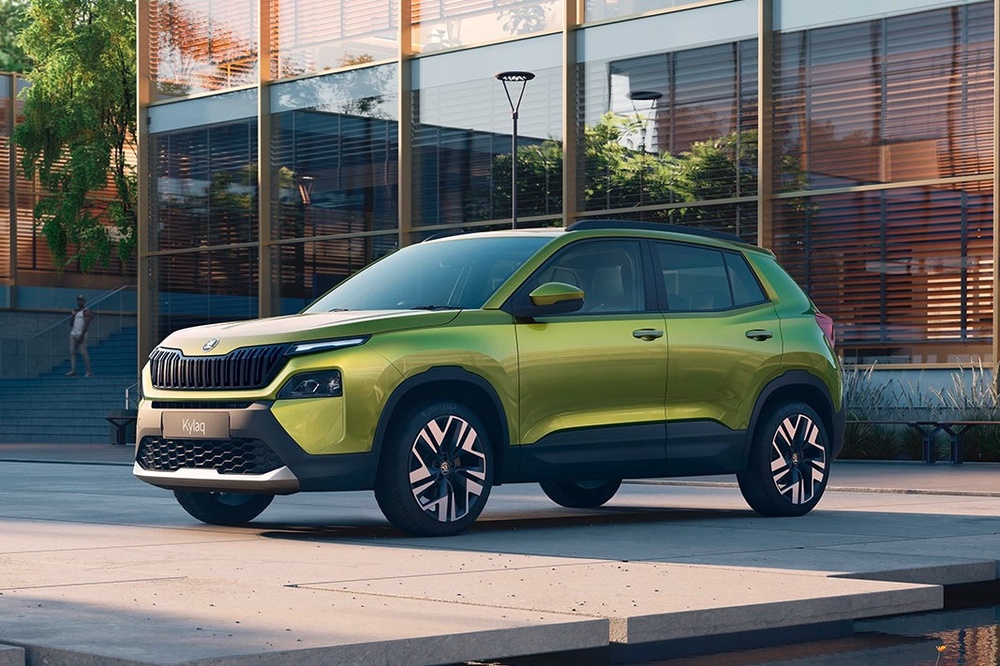
Skoda is already moving in that direction. Zellmer says the company is taking a platform developed by Volkswagen Group in China, called CMP21, and localising it fully in India.
“What we are doing in India is that we will bring a platform from China,” he said. “It’s called the CMP21 and we will fully localise it in India – to also hedge whatever happens in China.
“We know if in terms of innovation, capability and cost efficiency, the platform is competitive in China, it will be competitive anywhere in the world,” he said. “And that’s why that’s a perfect starting point to take that to India and be competitive.”
That could have big implications beyond India itself. Zellmer says the platform could potentially be used in other regions too, including the southern hemisphere and the Middle East. And, when asked whether that could include Europe, his answer was clear. “It could also be Europe,” he said.
That brings the conversation back to the Kylaq, Skoda’s small SUV developed specifically for India. In his previous interview with The Independent, Zellmer said the Kylaq was a “fantastic car” and pointed out the huge price gap between a European-built small car such as the Fabia and the Indian-built SUV.
“There are opportunities out there we’re looking at,” he said at the time. “Take the Kylaq. Kylaq is a fantastic car – it’s a sub-four-meter car that helped us double our sales volume in India from 2024 to 2025. That car is, if you look at the design and technology and quality fit and finish, it could potentially work in Europe – that is something we are looking in to.”
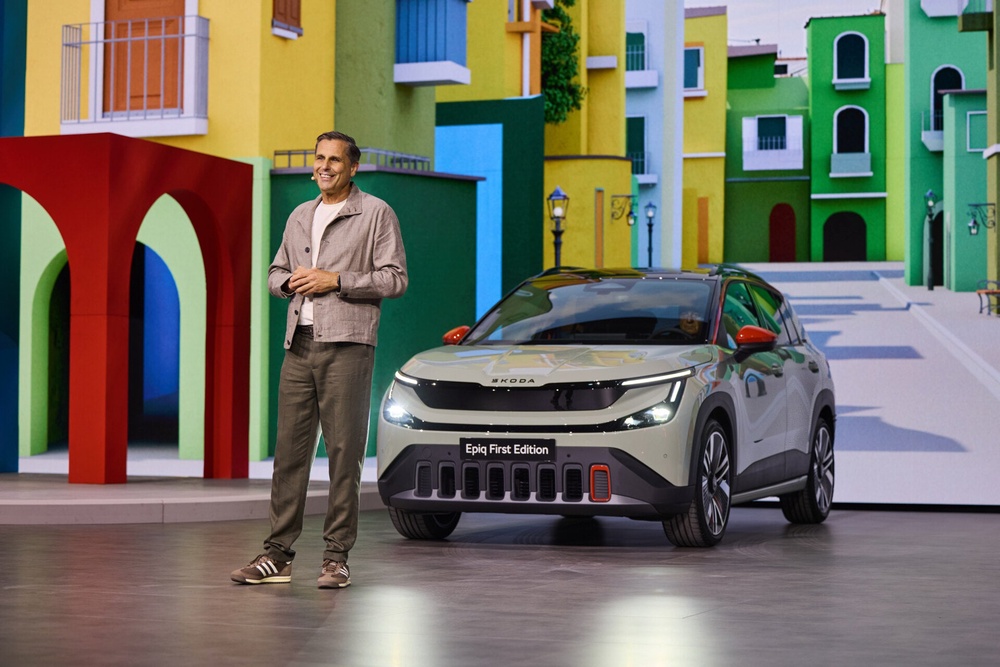
The attraction is obvious. Europe is crying out for more affordable new cars, especially as Chinese brands arrive with aggressive pricing and plenty of equipment. A well-built, low-cost Skoda from India could give the brand a new weapon in that fight.
But Zellmer is not pretending it would be easy. Bringing a car from India to Europe would mean meeting European regulations, safety rules, emissions requirements and customer expectations. Even if the headline Indian price looks tempting, the business case is not necessarily simple. “It would not be a walk in the park to bring it over,” he said.
That caution is important. Skoda has not yet decided to bring the Kylaq to Europe, but Zellmer says the potential is interesting because the car was developed in India for India, with the kind of cost discipline that could be useful elsewhere.
There is also a wider strategic point. Zellmer has described India as the second big pillar for Skoda outside Europe, alongside markets such as Vietnam, Southeast Asia and the Middle East. Currently, Skoda is still heavily dependent on Europe.
“The aspiration is also to hedge our position with business outside Europe,” Zellmer said. “If anything happens to Europe, that happened in the United States or happened in China, we need a second big pillar for our business model – this for us is India, Vietnam, Southeast Asia, Middle East.”
In other words, India is not just about selling more cars. It is about reducing risk, spreading Skoda’s global footprint and building vehicles in a country that could give the company a cost advantage.
“Having the best cost efficiency for producing cars – and we know that from our own factory in Pune in India – puts you in an advantageous situation,” Zellmer said. “Having really good engineers at a lower price than what you get in China is the next one.
“So for a powerhouse to cost competitiveness globally, if you have the right platform and technology and software, it is something that makes India much more important than just the Indian market.”
That raises an intriguing question. Could India become the new China for the car world? China has become the global centre of electric car development speed, technology and production scale. India’s advantage may be different: cost, engineering talent, huge local demand and the chance to build cars that can work in price-sensitive markets around the world.
As Patankar suggested, Zellmer thinks Indian car makers themselves will also look outward. Asked whether Indian brands could follow Chinese brands into export markets, including Europe, he said: “They will certainly do it.”
He pointed to companies such as Mahindra, Maruti Suzuki and Tata, while noting that India’s government also wants exports to grow.
“I’m sure all their strategy departments are full of export fantasies also because the Indian government wants that,” he said. “They know it’s not just the Indian market that will increase the quality of living in India for the whole, we all need to look at export. And so, everybody’s doing that.”
Skoda may have an advantage, though. It already has European dealers, experience of complex regulation and an established brand. That could make it easier for Skoda to use India as an export base than for a purely Indian brand trying to build awareness from scratch.
“I think our advantage as an established manufacturer in many markets, including Europe, is that from a legal point of view, from a footprint, dealers and so on, I think we have a headstart,” Zellmer said. “But that doesn’t mean we’re the only one in the race.”
For European car makers, the message is clear. India is no longer just a distant growth market that sits somewhere in a global presentation. It is becoming a place where cars can be designed, engineered, built and potentially exported at prices Europe may struggle to match.
China has been the car industry’s big talking point for years. But if Zellmer is right, India may be the next country every car company has to take seriously.
Read MoreVolkswagen’s ID Cross small electric SUV has been revealed – and I’ve already driven it
I compared three supercars to a Skoda in a drag race – and the winner might surprise you
I drove the Škoda Peaq, a new seven-seat electric SUV with 390 miles of range
Best electric cars 2026: The top 13 EVs on the market
Range Rover Sport Electric – my verdict on next year’s new electric Range Rover model
Volkswagen’s ID Cross small electric SUV has been revealed – and I’ve driven it
Are the drawbacks of electric cars being ignored? This is my view as an EV expert
.jpg?width=1200&auto=webp&trim=0%2C100%2C0%2C100)