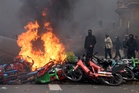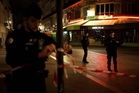
Cities across France have been under curfew this week following a weekend of nationwide protests, some of which turned violent and destructive, leading to more than 2,400 arrests.
The French government imposed overnight curfews in areas of Paris, Nice, Lille and Marseille on Monday night. Cities such as Lyon and Paris extended curfews through Tuesday night in certain neighbourhoods.
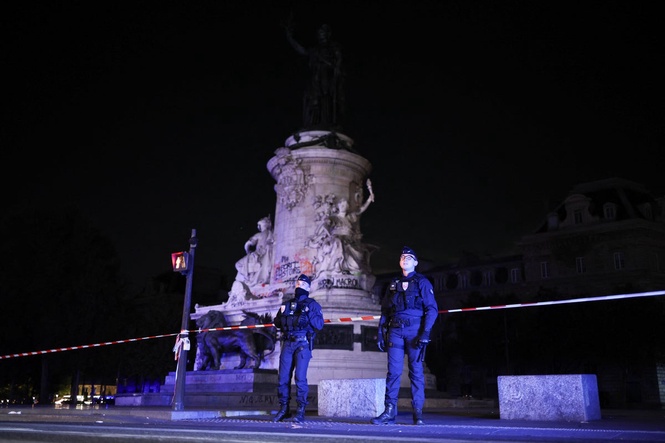
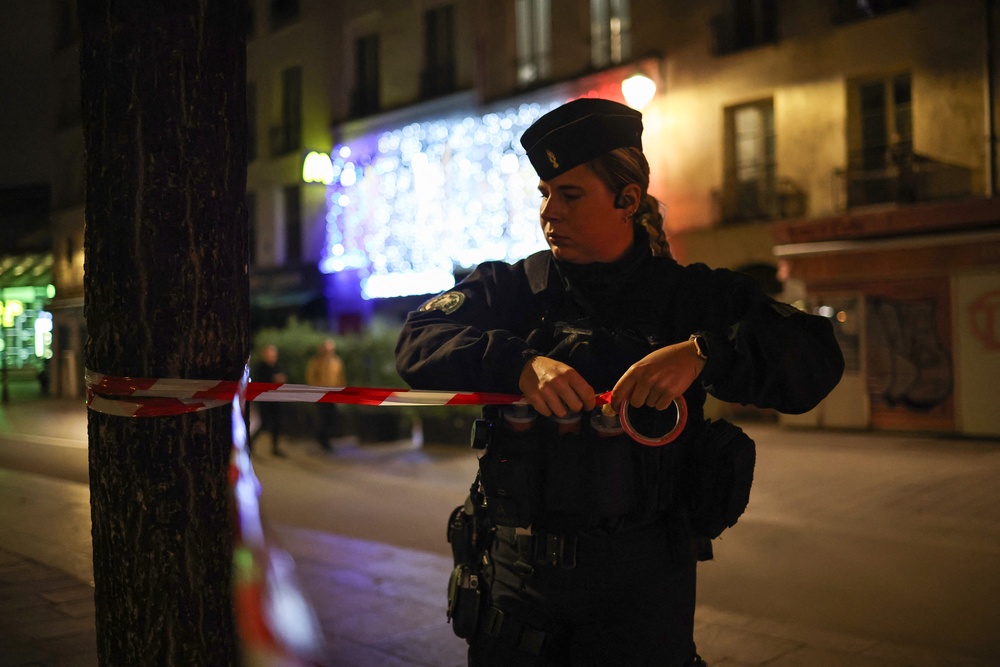
Helicopters were seen patrolling over central Paris, while police were on the ground taping off parts of the city.
“These localised curfews are efficient,” prime minister Sebastien Lecornu told parliament on Tuesday. “They helped to restore calm last night.”
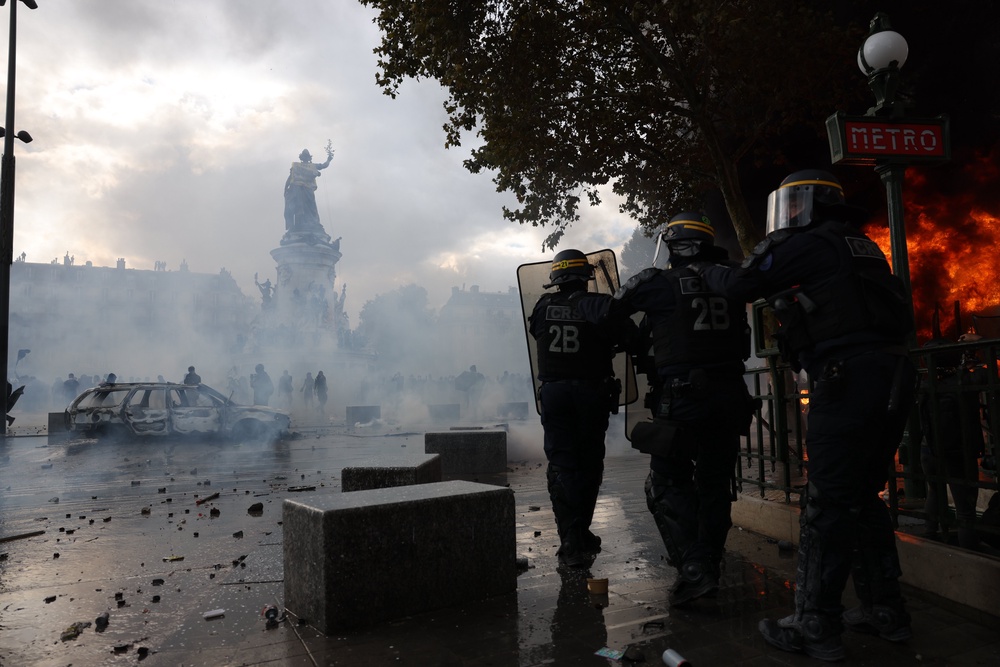
One area under curfew was Paris’ Place de la République square, where over the weekend cobblestones were dislodged, the fountain vandalised, kiosks burned and storefronts shattered.
Paris’ police force said on Tuesday that “public peace was restored” in locked-down areas and that the measures will continue “for as long as it proves necessary”.
It is unconfirmed when and where more curfews could take place this week, but the UK’s Foreign Office advises that it could happen at short notice, and that people should check local media for updates.
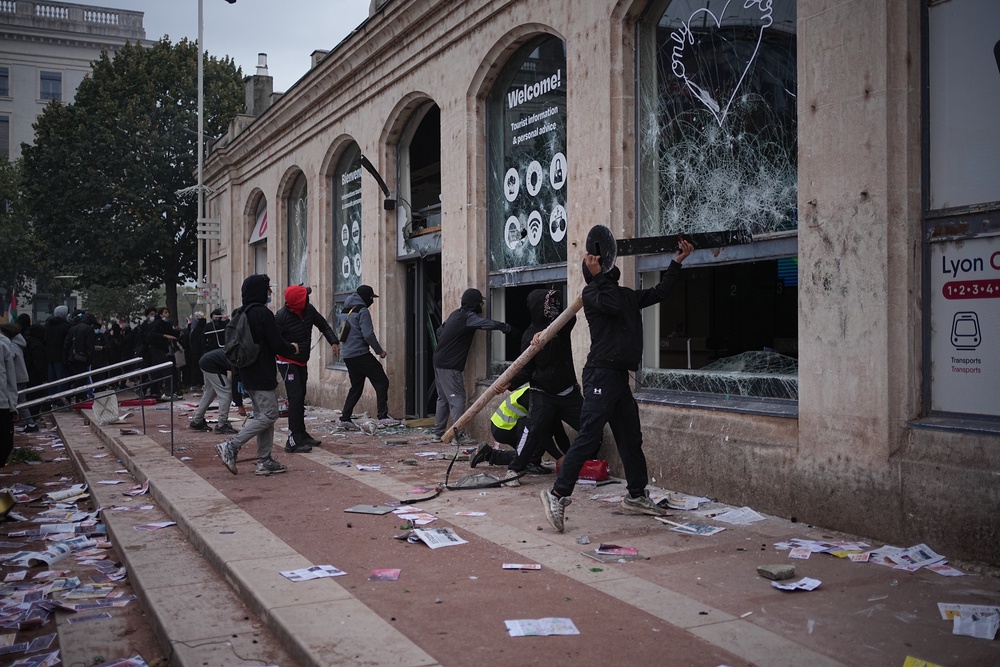
The violent rioting across the country saw businesses looted, buildings set on fire, and streets pillaged over the weekend.
Nearly half a million people took to the streets protesting rising living costs on Saturday, the Interior Ministry said, adding that violent fringe groups used the opportunity to set fire to buildings, ransack shops and attack police vehicles.
Videos from the city of Limoges showed flames engulfing the 19th-century City Hall, causing its roof to collapse, while looting occurred at hundreds of businesses in Paris, Marseille, Lyon, Bordeaux, Rennes, Strasbourg, Grenoble, Nice and other cities.
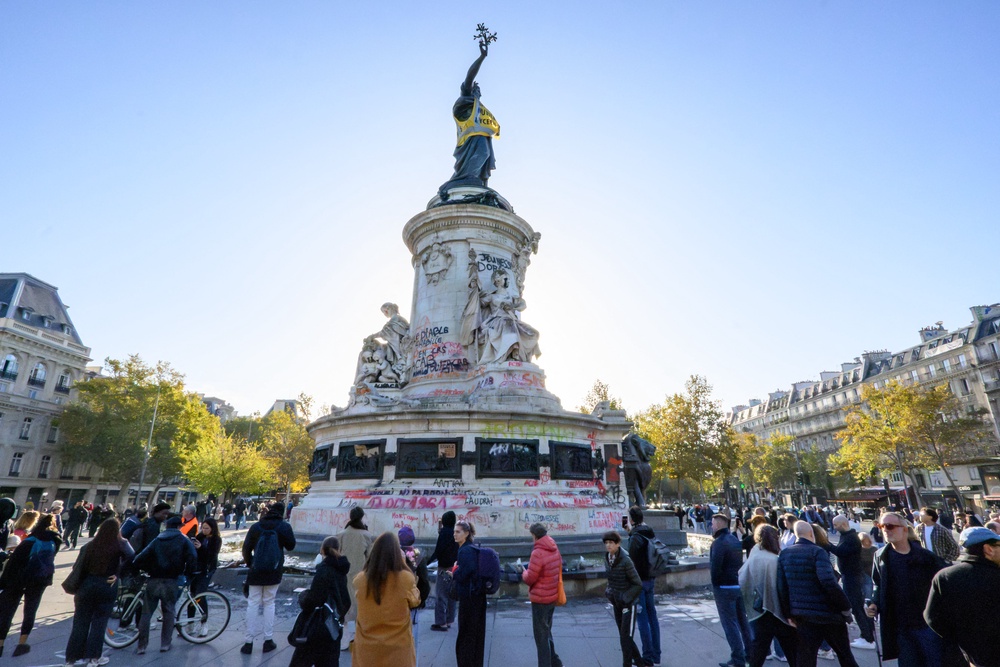
One protester died after suffering a cardiac arrest during a protest in Paris.
In Lyon, demonstrators set fire to the tourism office and smashed its windows, before trying to prevent firefighters from tackling the blaze.
Riot police were seen charging at crowds with batons and firing tear gas as they clashed with protestors across France.
Why are the protests happening?
The protests began last month at high schools in Paris' suburbs over lack of staff and failing facilities, before spreading nationwide.
The French government has claimed the protest movement was hijacked by outsiders and morphed into urban violence.
The movement gained traction on Saturday as other groups started protesting France’s high cost of living, arguing that the welfare system is deteriorating.
Macron has called for calm, saying “we all feel anger and shame” after “unprecedented violence” nationwide. He vowed to “make examples if need be” of the rioters, warning that “those who want to spark violence and create unrest in our country, we will not yield”.
Will the protests continue?
Organisers in France have already announced an “Act II” demonstration for Saturday, 24 October.
"The deployment next Saturday will be massive," prime minister Lecornu said, adding that the immediate priority was to restore order after rioting and looting swept Paris, Marseille, Lyon and other cities.
Interior minister Laurent Nuñez said the military would be deployed alongside police.
What does the UK government say?
The UK’s Foreign Office (FCDO) have warned British nationals that the French government said local curfews may be introduced at short notice.
“To find out if you are in an affected area, check local media. Follow the instructions of local authorities,” the FCDO said.
General advice on its safety and security page for the country says frequent industrial action, demonstrations, political gatherings, and marches can occur with little to no warning.
“If you’re due to travel to or within France, monitor the media, check your operator’s advice and follow the advice of the authorities,” it says.
“Whilst most demonstrations are peaceful, if you’re near areas where they are taking place, you should remain aware of what is happening around you and follow the advice of the police and local authorities.”
Should I cancel my holiday?
As the FCDO has not warned against non-essential travel to France, there are no special circumstances in place to cancel a trip for a full refund.
The conditions for cancelling your trip depend on your holiday provider, so it’s best to contact them if you’re looking to postpone.
Companies are not obliged to refund bookings if you want to cancel, and you will not be able to claim on your travel insurance due to safety concerns unless government advice changes.
If you do have travel insurance, some policies include natural disaster cover for an event that prevents you from reaching your holiday destination. Check your insurance policies and speak to your insurer to see where you stand.
Read more: ‘We are the shame of Europe’: France imposes curfews to stop growing riots
Read MoreWhy this luxury hotel has cracked down on influencers’ photo shoots
France’s highest hotel just reopened after 30-year closure
Snake on plane leads to cancellation of flight in Japan
Charities call for hotel safety policies to do more to protect women
Ryanair CEO tells Europe to brace for ‘biggest airfare increase in history’
Is it safe to travel to Spain? Latest advice after floods strike holiday destinations