I recently came across an article in which Malaysian Chinese-Muslim filmmaker Michael Ang addressed the claims that Yee Sang is haram for Muslims. In an Instagram post (@michaelang38), Michael shared an experience where he was about to eat Yee Sang when his 13-year-old nephew mentioned something about the tradition. The nephew told him that an Ustaz on TikTok had said Yee Sang was haram for Muslims and asked him not to eat it. Michael paused, put down his chopsticks, and Googled the claim to verify its validity. Here’s what he found online: “Yee Sang isn’t even a traditional or ancient Chinese dish from Imperial China. I’m not sure whether it was created by Singaporeans or Malaysians, but it only became widespread in Asia after its creation in either Malaysia or Singapore.” Michael was not pleased with the unnamed preacher’s baseless claims about the halal status of Yee Sang.
It raises an important question: How often do we take claims from TikTok videos at face value without critically examining their origins or context? With so much information at our fingertips, it's essential to question narratives rather than accept them blindly, especially when they affect cultural practices that hold significant meaning for people. For the sake of this article, let’s explore the origins of Yee Sang, what it is made of, and whether it is truly haram for Muslims to consume.
Origins of Yee Sang
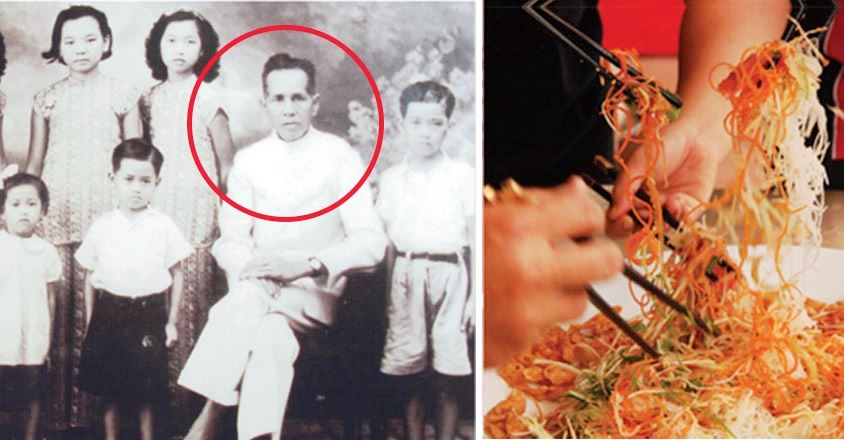
The original Yee Sang was created by Loke Ching Fatt, a Cantonese immigrant from China and the grandfather of Malaysia’s Minister of Transport, Anthony Loke. In the 1940s, Loke ran a small catering business called Loke Ching Kee in Seremban. As Malaya was recovering from World War II, Loke decided to expand his business by creating Sup Kum Yee Sang (Ten Senses Yee Sang), inspired by the Chinese celebration of Ren Ri (人日)—the 7th day of the Chinese New Year. This day holds significance in Chinese mythology as the day humanity was said to have been created. Since it was a tradition for Cantonese people to eat raw fish on this day, Loke crafted the dish we now recognize as Yee Sang, drawing influences not only from Cantonese culture but also from Hokkien and Teochew traditions.
Although Chinese communities in Guangdong, China, have a tradition of eating raw fish during Chinese New Year, the Yee Sang served in Malaysia is entirely unique. According to Adrian Lim Chee En, Chinese communities in China, Taiwan, Hong Kong, and Indonesia don’t eat Yee Sang during the Chinese New Year and are often unfamiliar with it. Yee Sang is distinctly Malaysian, recognised by people from various ethnic backgrounds—Malay, Indian, Chinese, and others.
Ingredients of Yee Sang
According to Loke Chee Chow, Anthony Loke’s father, the original Yee Sang contained 20 to 30 ingredients, including freshwater fish (usually Grass Carp), fresh vegetables, ginger, pomelo, Chinese cucumber, and pickled papaya. This recipe was passed down from Loke Ching Fatt to Loke Chee Chow, who went on to open his own eatery in 1974.
Today, the most common ingredients in Yee Sang (jyu saang, 魚生) include raw fish (with salmon being a modern variation), carrots, daikon, cucumber, pickled ginger, pomelo, peanuts, sesame seeds, crispy crackers, five-spice powder, pepper, oil, and plum sauce.
Is Yee Sang haram?
Fortunately, the Federal Territories Mufti Office has addressed the question of whether Yee Sang is haram in their Bayan Linnas Series 48: Islam and Chinese New Year. You’ll be pleased to know that Yee Sang is NOT haram. According to the Mufti Office, "From an Islamic perspective, if the food is halal and good, there is no objection to consuming it. Yee Sang, as a cultural practice, is not related to creedal matters." They further clarified that "It is permissible for Muslims to participate in Yee Sang ceremonies as long as the food served is halal and there is no connection to creedal issues, both in terms of speech and belief in the ceremony. Additionally, there should be no elements of sin involved." The Mufti Office also emphasized, "In a country with religious diversity, ethnic plurality, and distinct customs like Malaysia, the society's openness and tolerance, without compromising fundamental Islamic principles, becomes evident."
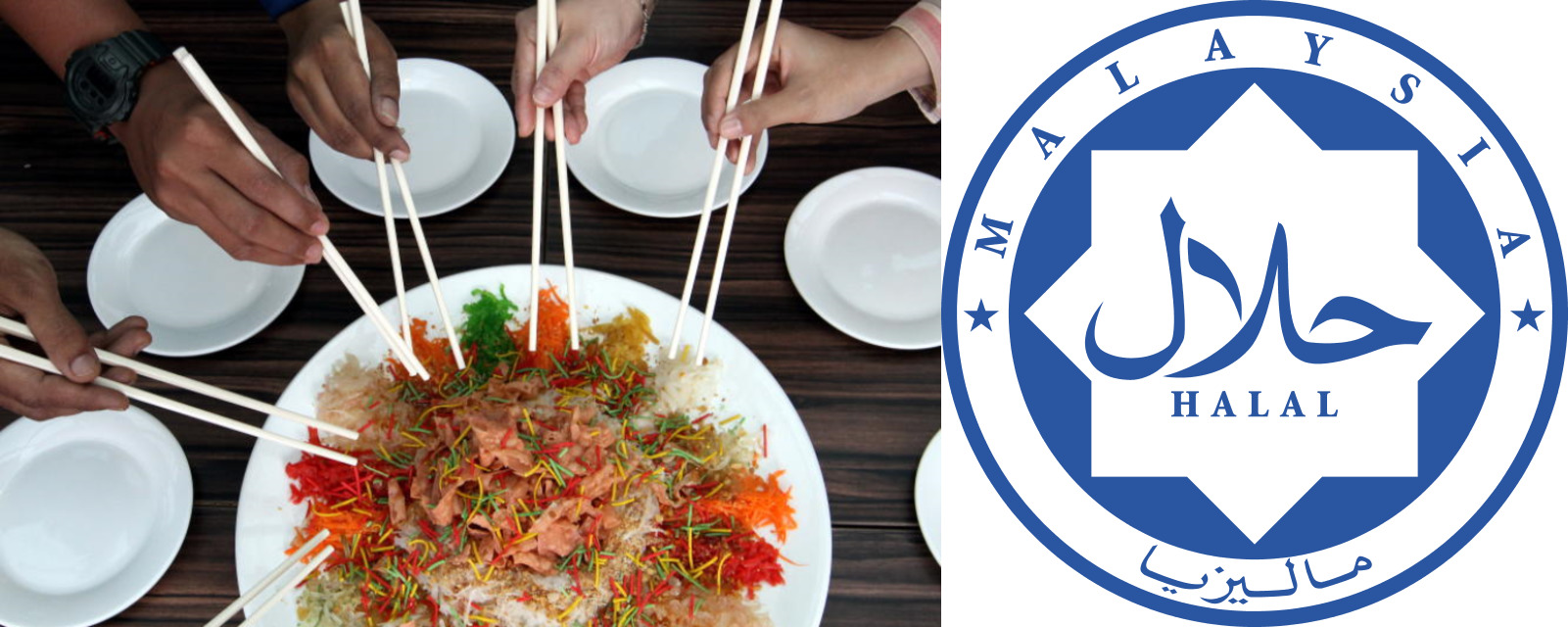
In conclusion, the debate surrounding whether Yee Sang is haram highlights a broader issue about how we approach information in today’s digital age. While social media platforms like TikTok offer quick insights, they can also spread misinformation without context or accuracy. It’s essential to critically assess such claims, especially when they challenge long-standing cultural practices. According to the Mufti Office, Yee Sang is permissible for Muslims, as long as the food is halal and no sinful elements are involved. As Malaysians, we should continue embracing the cultural richness that unites us, respecting both our traditions and the values of diversity and tolerance. Let’s move forward with an open mind, questioning assumptions while celebrating the practices that make us who we are.

Submit any #CNY2025-related content for a chance to win grand prizes and claim up to RM6,888 from the Prosperity Pool! T&C apply. Find out how you can participate here.
Aaron Colt is a content creator under the Newswav Creator programme, where you get to express yourself, be a citizen journalist, and at the same time monetize your content & reach millions of users on Newswav. Log in to creator.newswav.com and become a Newswav Creator now!
The User Content (as defined on Newswav Terms of Use) above including the views expressed and media (pictures, videos, citations etc) were submitted & posted by the author. Newswav is solely an aggregation platform that hosts the User Content. If you have any questions about the content, copyright or other issues of the work, please contact Newswav.