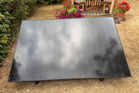
Plug-in solar panels promise to make generating your own electricity considerably simpler. Instead of paying thousands of pounds for a conventional rooftop installation, a compliant system can be positioned in a suitable outdoor space and connected directly to a household socket.
But consumers shouldn’t assume that every home is automatically ready for the technology, according to electrical safety charity Electrical Safety First.
The organisation has raised concerns about the way plug-in solar interacts with some older electrical safety devices and says households with certain types of residual current device (RCD) should consider upgrading their electrics before connecting a system.
“Because of this, it is our view that not every home will currently be suitable for plug-in solar,” said Luke Osborne, technical director at Electrical Safety First.
Get a free quote for solar panels for your home
What is an RCD and why does it matter?
An RCD is a safety device designed to cut off electricity quickly if it detects a fault, helping protect people from electric shock.
Plug-in solar introduces a new consideration because electricity generated by the panels is fed back into the household circuit rather than electricity only travelling from the grid towards appliances.
Electrical Safety First is particularly concerned about older Type AC RCDs. It says households intending to use plug-in solar should have at least a Type A bidirectional RCD protecting the circuit concerned.
The charity recommends that homes with Type AC RCDs do not use plug-in solar until the protection on the relevant circuit has been upgraded.
If you don’t know which type you have, Electrical Safety First advises getting the installation checked by a competent electrician before buying a system, particularly in an older property or where the condition of the electrics may be uncertain.
The government’s own plug-in solar specification also tells manufacturers to advise consumers to check that their electrical installation has modern RCD or RCBO protection and is in good condition. Homes relying on older fuse protection may need to be inspected and upgraded by an electrician.
Is plug-in solar safe?
The warning doesn’t mean the government considers plug-in solar inherently unsafe. Before introducing the new rules, the Department for Energy Security and Net Zero commissioned laboratory testing of representative systems under a range of operating and fault conditions.
That study concluded that plug-in solar could operate safely under the conditions tested. It found protective devices operated effectively and found no evidence of sustained unsafe energisation or unacceptable heating. However, it also found variations between products and recommended a UK-specific product specification.
Electrical Safety First believes the government testing was too limited to fully resolve its concerns about the possible effect on older RCDs, which is why it is recommending additional precautions for households.
Under the new rules, only systems that meet the government’s Interim Product Specification qualify for the simplified plug-in route.
Other plug-in solar safety rules to follow
Electrical Safety First also warns consumers never to connect a plug-in solar system through an extension lead, cable reel, multiway adaptor, travel adaptor or plug-in RCD adaptor, as these can become overloaded or overheat.
Only one plug-in solar system is currently permitted per household under the new rules.
Shoppers should also check that the exact system they are considering is approved for use under the new rules rather than assuming anything described as “plug and play” or “balcony solar” can be connected to a household socket.
Electrical Safety First recommends buying from reputable retailers and being particularly cautious about products sold by third-party sellers on online marketplaces.
For those who are unsure about their existing electrical installation, ESF’s main message is that the panels may be designed to plug in without an installer, but it’s still worth making sure the socket and the electrics behind it are suitable first.
7 common heat pump myths – and the truth behind them
Buying a house with solar panels? 7 things to check first
Good Energy launches 10-year solar finance as energy bills set to rise
How much electricity solar panels produce for your home, according to an expert