By Aathi Shankar
Putrajaya should embark on proactive, not reactive, policies to revitalise and accelerate Malaysia’s post-Covid socioeconomic recovery process.
Such proactive socioeconomic policies should be planned and implemented soon to achieve short, medium and long-term goals.
The federal administrations since the 14th General Election (GE14) in 2018 are yet to implement a single proactive policy to tackle and resolve any issue with a permanent solution,
The federal government has merely been only reactive by providing an ad-hoc measure to counter a problem with a quick fix solution.
Quick fix solutions will only help to damage control arising problems temporarily.
It’s not a permanent solution and does not give any guarantee that the problems won’t recur.
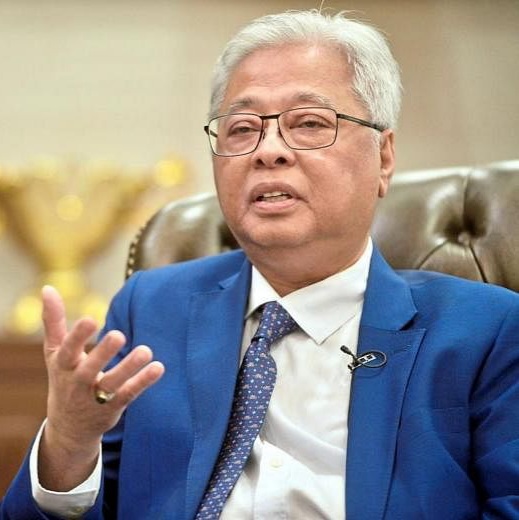
Like his immediate predecessors, current Prime Minister Datuk Seri Ismail Sabri Yaakob’s federal government has so far failed to implement any proactive policies to cushion the impact of Covid-19, nor to speed up the socioeconomic recovery process.
For instance, the federal government was so short-sighted that it failed to foresee the sudden surge in prices and shortage of essential goods and services.
Ismail Sabri’s government only reacted to counter the problems after the country faced a severe shortage in supply of essential items and an exorbitant hike in prices of goods and services.
The federal government should have seen it coming as many other countries were already reeling badly from the post-Covid socioeconomic impact.
Instead, Ismail Sabri’s administration had incompetently sat and watched like a lame duck and let the economy negatively impact the people.
It only started to react to address the issue when there was a public outcry.
Even then the government’s so-called countermeasures failed to eliminate the problems.
The federal government has also not been proactive in handling the emerging country’s bank loan repayment issue.
Currently, many borrowers, from laymen to small and medium entrepreneurs (SMEs), are struggling to meet their ends, let alone service their monthly loan repayment instalments, made of capital and interests, in full.
The government by now should have directed Bank Negara to initiate a proactive policy for the private banks to allow debtors to service only the monthly loan interests, not the capital sum until the economy had markedly recovered and grown.
Perhaps the loan moratorium can be enforced for the next three years.
The debtors should be allowed to repay their loan in full monthly instalments only when and after stabilising the economy.
But the government has so far failed to understand the hindsight of the problem and the negative socioeconomic impact it can cause.
If the government failed to implement an immediate proactive loan policy, many businessmen would go out of business, causing a chain effect on the whole socioeconomic recovery process of the country.
Currently, however, Ismail Sabri’s government seems more interested to play politics than helping the people.◾️
Wednesday | August 17, 2022
Aathi Shankar is a content creator under the Newswav Creator programme, where you get to express yourself, be a citizen journalist, and at the same time monetize your content & reach millions of users on Newswav.
Log in to creator.newswav.com and become a Newswav Creator now!
Newswav is solely an aggregation platform and hosts the content. The views expressed and content above including media (pictures, videos, etc) were provided by the author. If you have any questions about the content, copyright or other issues of the work, please contact Newswav.