Polls have opened in Israel as Benjamin Netanyahu faces his first election since the October 7 attacks, against a backdrop of a deeply divided society.
Opinion polls late last week put the governing far-right coalition almost level with the main opposition bloc around the hawkish former military chief Gadi Eisenkot, with half a million first time voters due to cast their ballot.
The election marks the first chance for voters to deliver a verdict on the worst security failure in generations as well as the wars that followed, with almost all Jewish-led parties now opposed to the “two-state solution” that has long defined diplomacy with the Palestinians.
Netanyahu, 77, boasted of his endorsement from Donald Trump on the eve of the election, suggesting that the US president was willing to “finally remove the Iranian threat” but only so long as Netanyahu himself remains in power.
But the White House said that the United States would not be attacking Iran “at any time prior to the midterm elections” in November.
Key Points
- Polls open in Israel
- Netanyahu touts Trump's blessing ahead of election
- Israelis on frontlines of October 7 say politics has shifted 'two clicks to the right'
- Arab voter turnout will be political wildcard, determining up to 15 seats
- Preview: Survivalist Netanyahu faces another test after 19 years in office
The full story: October 7 terror attacks loom large over Israel elections
08:40 , James ReynoldsPrime minister Benjamin Netanyahu faces one of the toughest tests of his tumultuous political career to date as Israel prepares to vote in the first national elections since the 7 October terror attacks.
With around four million voters expected to cast their ballots on Tuesday, public reckoning over the 2023 Nova massacre remains front and centre. Recent polling by the Israel Democracy Institute found 68 per cent of Jewish Israelis consider October 7 a central factor in deciding which party to vote for.
Netanyahu has spent the better part of three decades branding himself Israel’s “Mr Security” but questions remain over his handling of the worst civilian attack in Israel’s history.
Read the full story:

October 7 looms large over Israeli elections as Netanyahu fights for political future
Israeli president Herzog casts vote in election
08:05 , James ReynoldsIsraeli president Isaac Herzog and his wife Michal cast their votes for the Knesset in the neighbourhood of Rehavia.
“A true holiday for democracy—no one can be allowed to spoil or undermine it,” he told reporters.
“We are all equal today—this is our day to go and make an impact and vote.”
Good morning and welcome to our coverage of the Israeli elections
08:00 , James ReynoldsGood morning and thank you for joining us in our coverage of the Israeli legislative elections.
Today will be a test of Benjamin Netanyahu’s far-right government after three years of conflict, and as Israeli society continues to grapple with the aftermath of the country’s biggest security failure in generations, the October 7 attacks.
Israeli politics have moved to the right since then but any challenger will still struggle to form a stable coalition government, and Netanyahu is a proven survivalist. The main challenge is coming from former IDF chief Gadi Eisenkot.
Polls opened today at 7am local time, 5am in the UK, and will run until 10pm local time. Exit polls will then give the first indications of the outcome, but it could still take days or weeks for a final result to become clear.
What happens after the results are published?
07:00 , Adam WithnallAfter the final tally is in – the formal and final results must be published one week after the election, on 4 November – president Isaac Herzog will consult party leaders on whom they want as prime minister and then tap the candidate he believes has the best chance of forming a government.
That nominee has up to 42days to form a government. No single party in Israel has ever won an outright majority, so governments are formed by a coalition of parties, and negotiations on forming a government often take weeks. Every Knesset seat counts and small parties can have a big impact by becoming kingmakers.
If the nominee fails, others can get a chance to try. If no government emerges, another election is called, with the present cabinet staying on as a caretaker government.
Tensions high as voting gets underway
06:00 , Adam WithnallAlready, emotions were running high for some as polls opened this morning.
In Kiryat Shmona, a Netanyahu stronghold near the border with Lebanon, one man kicked and tore down a poster of his main rival Gadi Eisenkot, the AP reported.
For some Israelis, this election presents the first chance for the country to change course after Netanyahu's latest, and especially turbulent, four-year term.
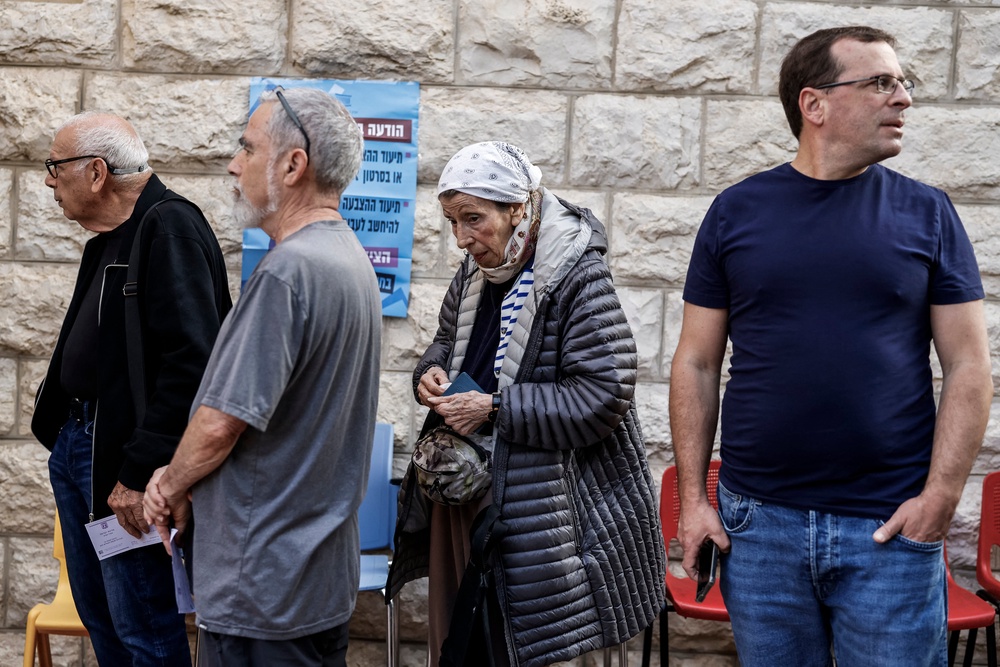
Netanyahu's supporters see him as a steady hand and a consummate statesman who they believe has triumphantly guided Israel through multiple wars.
His detractors see him as a polarising leader who, beset by an ongoing corruption trial, dragged on the war in Gaza and its hostage crisis for political reasons. They say he is undermining Israel's independent judiciary and weakening its democratic underpinnings.
Eisenkot is viewed by supporters as a capable leader with sterling security credentials who, along with his likely governing partners, could act as a bulwark against creeping illiberalism. As someone personally touched by the conflict – his son and two nephews were killed in Gaza – his backers believe that he feels deeply the pain that still courses through Israel three years after the attacks.
Parties that would likely throw their support behind Eisenkot have vowed to improve Israel's international standing and work to conscript ultra-Orthodox men while bolstering the independence of the judiciary.
Polls open in Israel
05:00 , Adam WithnallIt's 7am in Israel, meaning voting has now begun in the country's first parliamentary election since the Hamas attack on 7 October 2023 that shook the country and plunged the Middle East into turmoil.
Prime minister Benjamin Netanyahu's hold on power is at stake, with centrist rivals promising to usher in a new era.
Voting runs until 10pm, Israeli TV channels will air exit polls giving the first indications of the outcome.
But it could take days or even weeks for the final result of the election to become clear if no party or group has an outright majority.
The final tally is expected by 30 October and official election results are formally published a week after the election, on 4 November.
Recap: Netanyahu faces fight for survival as Israel votes
04:00 , Adam WithnallIsraeli prime minister Benjamin Netanyahu faces a fight for his political survival in today's election, with voters weighing his leadership after the 2023 Hamas-led attacks, wars in Gaza and with Iran, and Israel's deepening international isolation.
Yet Netanyahu, Israel's longest-serving leader with 19 years in office, remains a formidable survivor, with nationalist politics increasingly entrenched and Israel's fragmented system potentially leaving him best placed to form a government.
Opinion polls show a close race between Netanyahu's Likud party and its right-wing allies and a rival alliance led by Gadi Eisenkot, a former military chief of staff and security hawk with backers on the right and in the centre.
Netanyahu is campaigning on his wartime leadership and his alliance with US president Donald Trump, who has endorsed him and joined Israel in waging war on Iran. He may again depend on far-right leaders Itamar Ben-Gvir and Bezalel Smotrich to form a government. Both have faced sanctions from some Western countries that accuse them of inciting violence against Palestinians, while Ben-Gvir's Jewish Power party has gained support in opinion polls.
Neither Netanyahu nor Eisenkot has a clear path to power. If neither can form a governing coalition in the 120-seat parliament, Netanyahu could stay on as caretaker until another election is held next year.
Polls open from 7am to 10pm.
IDF deploys 850 military polling stations across West Bank, Lebanon, and Syria
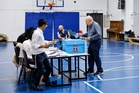
03:00 , Daniel KeaneThe IDF has deployed more than 850 military polling stations — including mobile ballot units operating inside active operational zones in the West Bank, southern Lebanon, southwestern Syria, and Gaza — ahead of Tuesday’s national election.
Around 3,000 soldiers, mainly young conscripts, are serving as polling station staff, according to the military.
Around 25 percent of the stations are mobile, designed to reach outposts, bases, and remote deployments beyond Israel's borders so combat troops and reservists can cast ballots under strict double-envelope secrecy rules.
Early military voting commenced last Wednesday and runs through the close of national polls at 10:00 PM on Tuesday.
Arab voter turnout will be political wildcard, determining up to 15 seats
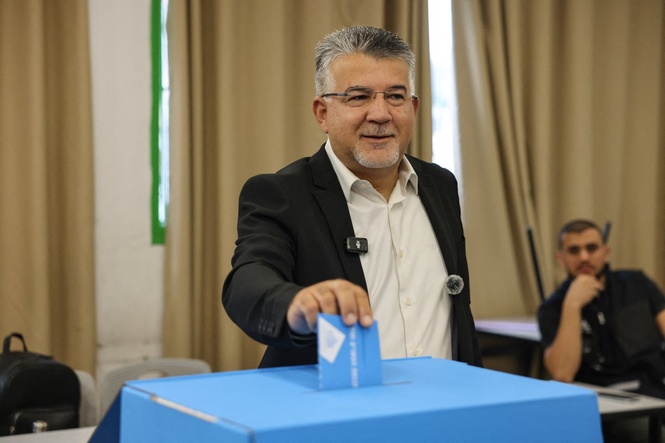
02:00 , Daniel KeaneTurnout among Israel’s 1.2 million eligible Palestinian citizens could determine whether either major political bloc can form a government following Tuesday’s elections.
Polls suggest Arab turnout could reach 60 percent, with grassroots organisers pushing for a 70 percent surge — a level unseen in decades that could lift the Joint List and Ra’am to a combined 15 seats. Such a spike would raise the overall vote threshold, threatening smaller fringe factions on both ends of the political spectrum.
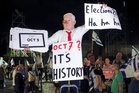
The surge follows a contentious pre-election battle in which the High Court of Justice overturned a Central Elections Committee ban on the Arab slates, while disqualifying Balad leader Sami Abu Shehadeh over comments describing the October 7 attacks as an "important historical event."
While both major Jewish coalitions have publicly ruled out partnering with the Arab lists, their final seat share could effectively deny either bloc a workable 61-seat majority. (edited)
Poll trackers point to Knesset deadlock
00:01 , Suha KidwaiWith voting less than 24 hours away, consensus across major Israeli broadcasters points toward another parliamentary impasse, with neither Netanyahu’s right-religious coalition nor the opposition bloc holding a clear path to a 61-seat majority.
Across final weekend polls from Channel 12, KAN 11, and Maariv, Netanyahu's loyalist bloc — comprising Likud, Otzma Yehudit, Shas, United Torah Judaism, and the Religious Zionist alliance — averages in at roughly 49 to 50 seats.
The primary opposition bloc, led by Gadi Eiskenkot stands between 54 and 56 seats, leaving the remainder split among Arab parties and unaligned factions who refuse to sit with either side.
The ultimate balance of power will hinge on whether fringe lists — including the joint Reservists-Economic ticket and Ofer Winter's Amcha Yisrael list — can clear the 3.25 percent electoral threshold needed to enter the Knesset.
Netanyahu touts Trump's blessing ahead of election
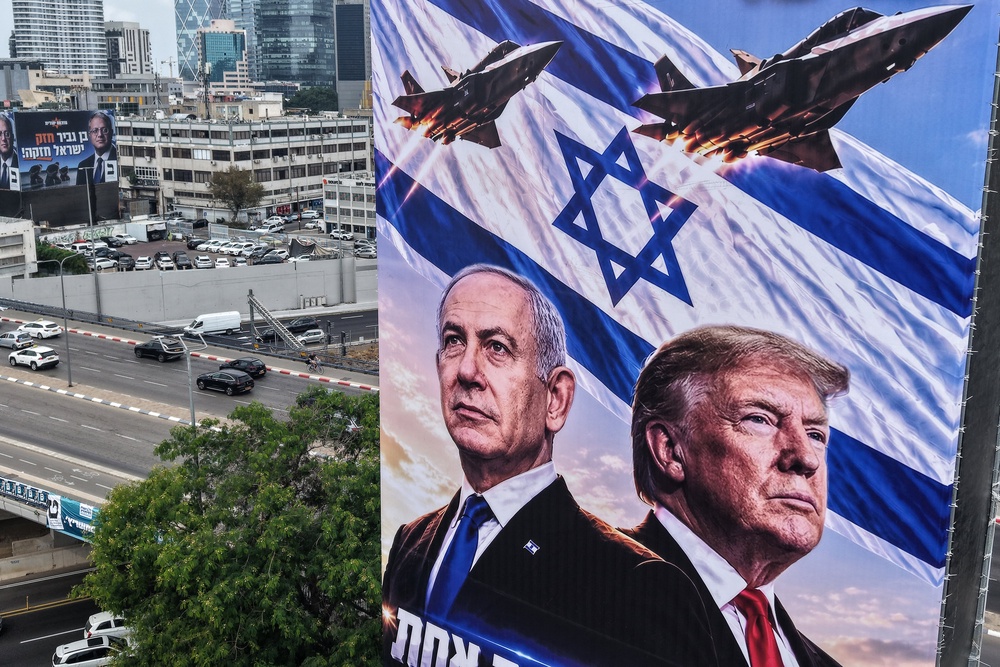
Monday 26 October 2026 23:00 , James ReynoldsBenjamin Netanyahu boasted of his endorsement from Donald Trump on the eve of Israel's election, suggesting the two leaders could restart their war against Iran if he wins.
Netanyahu said on Sunday that Trump was willing to take action "that would finally, finally, remove the Iranian threat", but only as long as Netanyahu himself remains in power.
"And I have already instructed the Mossad and the IDF (military) to bring down this regime, to bring down this regime because that is the only way to put an end to this threat," Netanyahu said, referring to Israel's main intelligence service and military.
But asked for comment on Netanyahu's remarks, White House Deputy Press Secretary Anna Kelly said: “The United States will not be attacking Iran at any time prior to the midterm elections.”
Israeli elections poll tracker: Three scenarios that could play out
Monday 26 October 2026 22:00 , James ReynoldsExclusive: A poll of 4,000 Israelis shows that it is unlikely that Netanyahu’s bloc will hold on to power when the country votes

Israeli elections poll tracker: Three scenarios as Netanyahu faces losing power
Israelis on frontlines of October 7 say politics has shifted 'two clicks to the right'
Monday 26 October 2026 21:00 , James ReynoldsIsrael’s in frontier kibbutz Be’eri said on the eve of the election that politics have shifted “two clicks to the right” since the October 7 attacks three years ago.
One-in-ten residents in the community were among the 1,200 people killed in Hamas' surprise attack. Dozens were among the 251 taken hostage to Gaza. It was Israel's deadliest single day.
A collective community established in 1946, now with around 1,000 residents, Be'eri exemplifies the socialist values that dominated Israel's politics in its early decades.
Nearly all its votes went to the centre-left in the previous 2022 election, when only around 4% voted for parties in Netanyahu's nationalist-religious coalition.
But ahead of Tuesday’s vote, Gal Cohen said the attack has made residents question longstanding views that there could be peace with the Palestinians in this generation.
"Everyone in Be'eri has made two clicks to the right. But I still think that most of us will stay with the opposition, the parties that want to replace this government," he said.

Preview: Gadi Eisenkot launches a challenge to Netanyahu's reign... but is yet to find a clear path to power
Monday 26 October 2026 20:00 , James ReynoldsFormer military chief Eisenkot has presented himself as one of the possible outlets for change.
Eisenkot, who lost a son in Gaza, has projected an image as a political outsider and security hawk whose humble background and family sacrifices stand in vivid contrast to Netanyahu's decades in high office and lingering corruption cases.
Both Eisenkot and Netanyahu, along with the leaders of nearly all other Jewish-led parties, oppose the establishment of a future independent Palestinian state alongside Israel.
They both say that Israel must retain ultimate security control over all territory between the Jordan River and Mediterranean Sea. And they agree that Israeli troops must not withdraw from Gaza until Hamas is disarmed.
Eisenkot has framed the continued rule of Hamas in Gaza as a failure of state, vowing that within 18 months of taking office he would ensure the administration had been replaced, either through a US-brokered plan or through military force.
But to unseat Netanyahu, he is likely to rely on the support of the Democrats, including the rump of the once dominant centre-left Labour Party that has has withered as the country has shifted to the right.
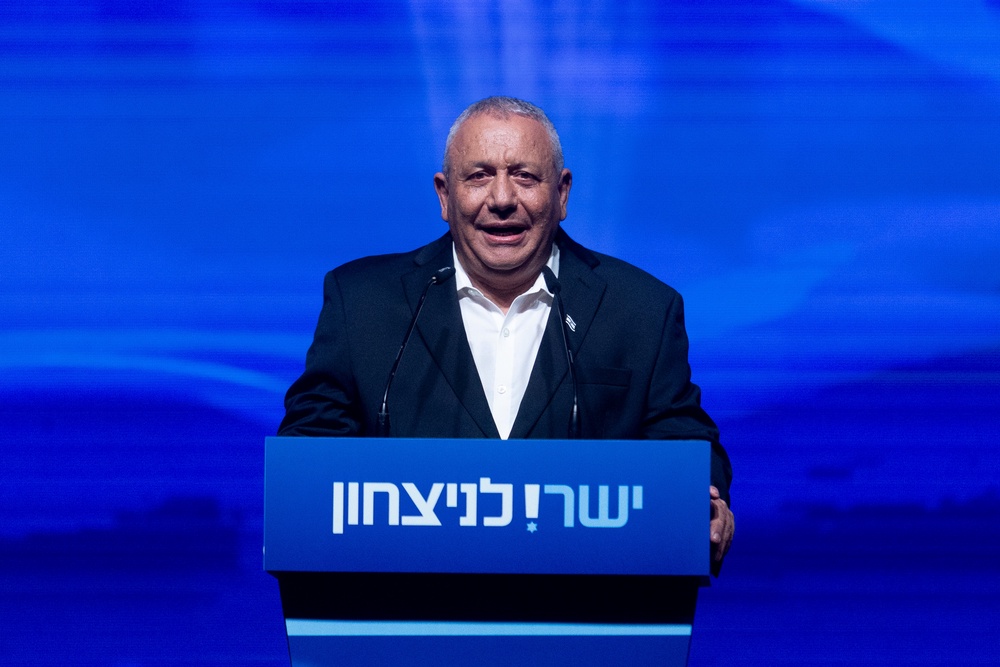
Preview: Survivalist Netanyahu faces another test after 19 years in office
Monday 26 October 2026 19:00 , James ReynoldsNetanyahu heads into this election with 19 accumulated years in office since he was first chosen as prime minister in 1996.
The office has no term limits and a prime minister can serve an unlimited number of four-year terms so long as they maintain the confidence of a majority in the Knesset, or parliament.
Since his last election in 2022, ‘Bibi’ has led Israel through its response to the October 7 Hamas attacks, the subsequent war in Gaza and hostage crisis, a ground invasion of Lebanon, strikes on Syria, attacks from and against Iran, and, most recently, into the ongoing conflict with Tehran alongside the United States.
Domestically, he is still embroiled in a long-running corruption case, after being indicted in 2019 on charges of bribery, fraud and breach of trust in three cases, accused of receiving expensive gifts in exchange for political favours. The 77-year-old has called the case a witch hunt and proceedings stalled during the war in Gaza.
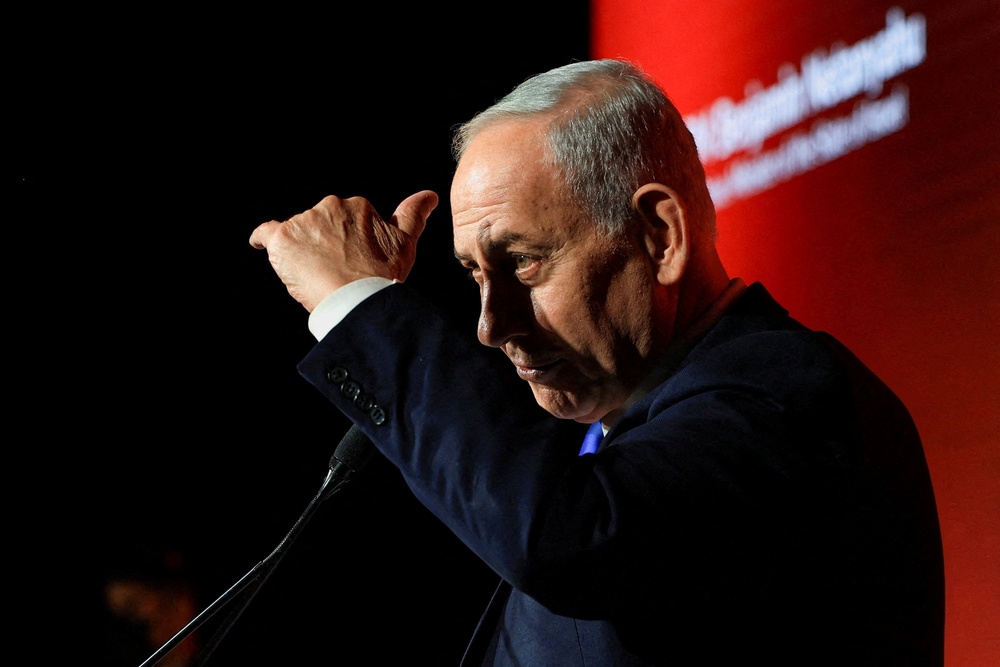
Netanyahu is also under an arrest warrant issued by the International Criminal Court (ICC) for suspected crimes against humanity and war crimes, and faces criticism from abroad for presiding over a rapid expansion of settlements in the West Bank.
Many Israelis now say it is time for a change in the seat of government. A poll of 4,000 Israeli voters this month predicted that Netanyahu’s Likud party would secure only 19 seats, down from 32 currently, while the opposition, led by Yashar’s Gadi Eisenkot, could secure the most with 20.
The key players in Israel’s first election since October 7
Monday 26 October 2026 16:06 , James ReynoldsIsraelis are set to vote on October 27 in the first national elections since the deadly October 7 attacks, and the devastating Gaza war that followed.
The Independent looks at the key figures in the looming election:

Key players in Israeli election as Benjamin Netanyahu fights for his political life
Good evening and welcome to our coverage of the Israeli election
Monday 26 October 2026 16:05 , James ReynoldsBenjamin Netanyahu’s far-right government faces an existential election on Tuesday as voters deliver their verdict three years since the country’s greatest security failure in generations.
The opposition is clustered around centrist former IDF chief Gadi Eisenkot. But he and an array of other parties ranging from the rump of the centre-left to the right, also have no clear path to unseat the survivalist Netanyahu.
Follow along for our coverage of the Israeli legislative elections
Poll: October 7 remains central factor in Israeli voting decisions
Monday 26 October 2026 21:27 , Suha KidwaiThe handling of October 7 remains a decisive factor for the majority of Israeli voters heading into Tuesday’s general election, according to an Israel Democracy Institute (IDI) poll.
The results find that roughly 62 percent of respondents consider October 7 central to their ballot decision, with foreign affairs and national defence ranking as top priorities among Jewish voters.
Despite the enduring impact of the attacks, the political landscape remains deeply polarised, with the divide between supporters and opponents of Prime Minister Benjamin Netanyahu’s government largely unchanged.
The survey also recorded widespread erosion in national morale, with public optimism declining across democratic governance (down to 36%), national security (34%), the economy (27%), and social cohesion (19%).