
Walk into any local coffee shop in Kuala Lumpur, and you can feel the quiet anxiety written all over the financial pages. For months, ordinary Malaysians have watched the ringgit ride a brutal rollercoaster, a direct casualty of the severe maritime blockades and explosive volatility rattling the Strait of Hormuz. When news broke that the United States and Iran had quietly sat down in the secluded Swiss village of Obbürgen to sign a groundbreaking Memorandum of Understanding (MoU), a collective sigh of relief rippled through global markets. The deal was supposed to be a diplomatic masterpiece: a 60-day window to dismantle Tehran’s nuclear tensions in exchange for lifting crushing secondary sanctions, freeing frozen oil assets, and clearing the nearly 80 underwater mines choking global trade routes.
But diplomacy in 2026 is a fragile glass ornament, and it took less than 24 hours to shatter. Just as technical delegations prepared to finalize the implementation framework, Israeli airstrikes tore through southern Lebanon and the Bekaa Valley, plunging the region back into a state of total war. Visibly furious, the Iranian delegation refused to board their flights to Switzerland, rendering the highly anticipated peace pipeline completely dead in the water. For Malaysia a nation deeply intertwined with global shipping and fiercely defensive of Middle Eastern sovereignty the collapse of these talks is not merely a distant political headline. It is a sobering reminder that a single military command in Tel Aviv can disrupt livelihoods thousands of miles away in Southeast Asia.
The Secret Oasis That Never Was
The collapse of the Swiss talks represents one of the most stunning diplomatic failures of the modern era. According to senior regional officials speaking to The Guardian, the Bürgenstock negotiations were designed to translate a fragile peace framework into a permanent reality. Under the brokered terms, the U.S. Treasury was actively preparing a crucial 60-day waiver to lift sanctions on Iranian oil and petrochemical exports. This would have allowed Tehran to legally sell crude to its primary buyers, significantly easing the hyperinflation crippling its internal economy. In return, U.S. Vice President JD Vance confirmed that Iran had agreed to the historic return of UN nuclear inspectors for the first time since the previous year's direct bombardments.
The logistics of the treaty were meticulously calibrated. The economic relief was designed to funnel unfrozen Iranian assets directly into purchasing humanitarian goods, such as agricultural products from American farmers, providing a political victory for the White House. Yet, beneath the polished veneer of the joint communiqués lay an unresolved structural flaw: the complete omission of the ongoing war in Lebanon from the core text of the agreement. While international mediators from Pakistan and Qatar operated under the assumption that a broader de-escalation was understood, Israel’s security apparatus viewed the U.S.–Iran thaw not as a path to peace, but as a direct threat to its northern campaign.
The Dawn of Operation Eternal Darkness
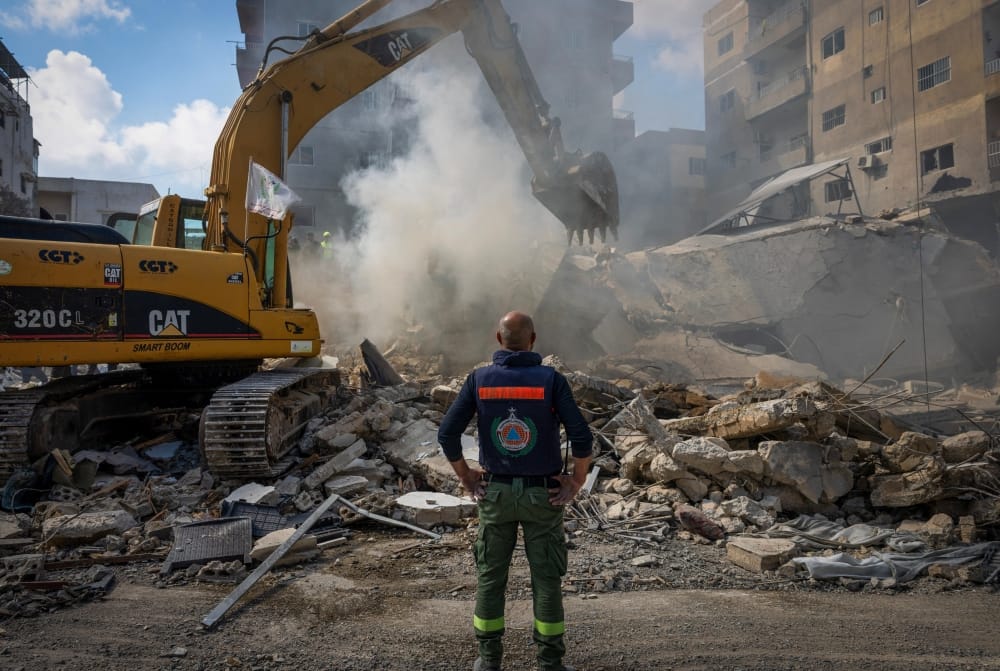
The immediate catalyst for the diplomatic breakdown occurred when the Israeli military launched an aggressive escalation against Hezbollah targets near Nabatiyeh and the eastern village of Douris. Dubbed a response to "blatant ceasefire violations," the heavy bombardment quickly escalated into a wider offensive reminiscent of the devastating 8 April 2026 attacks on Lebanon, historically known as Operation Eternal Darkness. During those prior April raids, over 50 Israeli fighter jets dropped dozens of munitions within a ten-minute window, striking densely populated residential neighborhoods in central Beirut and killing 357 people.
The latest round of violence mirrored that structural brutality. Reports from the Lebanese Health Ministry confirmed that recent overnight strikes killed at least 21 civilians and wounded dozens more, while Israel acknowledged the loss of four soldiers, including a lieutenant colonel, when an anti-tank missile struck a vehicle. Analysis of the military timing strongly indicates that Israel’s operational objective extends far beyond simple border defense. By deliberately intensifying military pressure on the ground exactly when the Iranian delegation was scheduled to travel, Israel effectively forced Tehran's hand. Because Hezbollah remains Iran’s premier regional proxy and its ultimate defensive bulwark against foreign invasion, the Islamic Republic could not logistically or culturally afford to sign an economic pact while its most critical ally was facing structural dismantling.
An Institutional Rift in the Western Alliance
From an institutional perspective, this collapse highlights a historic and widening fracture between Washington and its closest Middle Eastern ally. In an unusually blunt public address reported by The Guardian, Vice President JD Vance rebuked Israeli critics of the deal, stating that the American administration was virtually the only powerful ally Tel Aviv had left in an increasingly hostile global arena. The White House had hoped to use the 60-day negotiation window to implement a joint "deconfliction body" to handle rogue drone and artillery exchanges without triggering full-scale wars.
However, Israeli Prime Minister Benjamin Netanyahu quickly countered this diplomatic maneuver. He asserted that Israeli forces would permanently remain deployed inside a designated "security zone" in southern Lebanon for as long as national defense requirements dictated, entirely disregarding the U.S. State Department's emphasis on preserving Lebanon’s territorial integrity. This institutional divergence highlights a profound systemic reality: the United States can no longer dictate the geopolitical parameters of its partners. By acting independently to preserve its own security doctrine, Israel effectively vetoed the White House's grand strategy for Middle Eastern normalization, leaving American diplomats to blame "logistical issues" for an obviously political disaster.
The Geopolitical Ripple on Malaysian Shores
For the average Malaysian reader, the structural failure of these secret Swiss talks can seem like a world away. Yet, in our hyper-connected global economy, the social and cultural fallout is immediate. The ongoing conflict has caused extreme disruption to maritime traffic through the Strait of Hormuz, forcing international shipping conglomerates to reroute vessels around the Cape of Good Hope. This massive logistical diversion has drastically driven up freight insurance premiums and caused widespread fuel and consumer goods shortages across major Asian hubs, directly impacting manufacturing costs right here in Selangor and Johor.
Culturally and socially, the Malaysian public has historically maintained a deep, collective empathy for sovereign nations caught in the crosshairs of aggressive military occupations. The images of Lebanese families fleeing Nabatiyeh with their belongings piled into pickup trucks evoke intense domestic solidarity and widespread condemnation of international double standards. When major Western powers spend months engineering complex financial treaties only to watch them get obliterated overnight by unilateral military campaigns, it erodes trust in global governance institutions, reinforcing the perception among Southeast Asian nations that international law is selectively applied.
What do you think? I’d love to hear your opinion in the comments section.
Ultimately, the sudden cancellation of the Obbürgen summit leaves the international community facing an incredibly perilous future. The 80 sea mines floating in the center of the world's most critical oil chokepoint will remain uncleared, global energy markets will continue to fluctuate wildly, and the residents of southern Lebanon will bear the horrific human cost of ongoing airstrikes. The illusion that a nuclear agreement can be neatly separated from regional proxy conflicts has been definitively shattered. As long as localized military campaigns are permitted to override broad diplomatic frameworks, true stability will remain completely out of reach.
The burning question that remains is whether global diplomacy can ever truly recover its leverage when major military powers feel entirely entitled to operate outside the boundaries of international consensus. We are left watching a cycle of violence that shows no signs of slowing down, leaving smaller nations to manage the economic fallout.
AM World (tameer.work88@gmail.com) is a content creator under the Newswav Creator programme, where you get to express yourself, be a citizen journalist, and at the same time monetize your content & reach millions of users on Newswav. Log in to creator.newswav.com and become a Newswav Creator now!
The User Content (as defined on Newswav Terms of Use) above including the views expressed and media (pictures, videos, citations etc) were submitted & posted by the author. Newswav is solely an aggregation platform that hosts the User Content. If you have any questions about the content, copyright or other issues of the work, please contact creator@newswav.com.