
Table of Contents
Young Malaysian inventors tackle major issues with creativity
THE best engineering ideas often begin with an ordinary frustration: a patient struggling to control a trembling hand, a remote community unable to obtain clean water or a nurse trying to examine a frightened child.
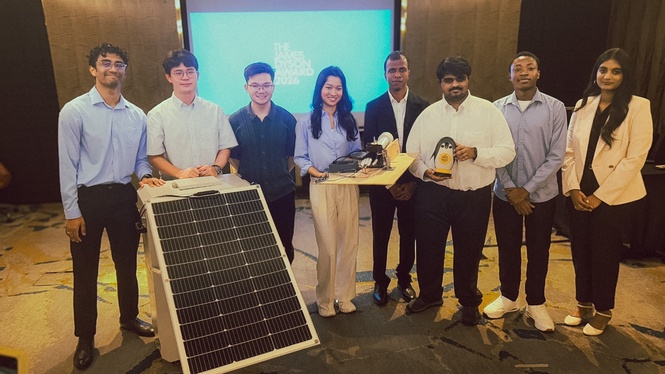
These problems inspired the three Malaysian projects recognised at the 2026 James Dyson Award, where university students presented inventions aimed at improving daily life through practical design.
Malaysia contributed 150 of the competition’s 2,294 global entries this year. The national winner receives £5,000 (about RM27,000) and advances alongside the two runners-up for consideration in the international round.
Steadying trembling hands
National winner Zemor was created by Monash University Malaysia engineering student Hayley Nea Iaduray as her final-year project.
Short for “Zero Tremor”, the wearable orthosis is designed to suppress hand tremors experienced by people with Parkinson’s disease. Hayley drew inspiration from the tuned mass damper inside Taipei 101, which moves against the motion of the skyscraper to stabilise it during strong winds and earthquakes.
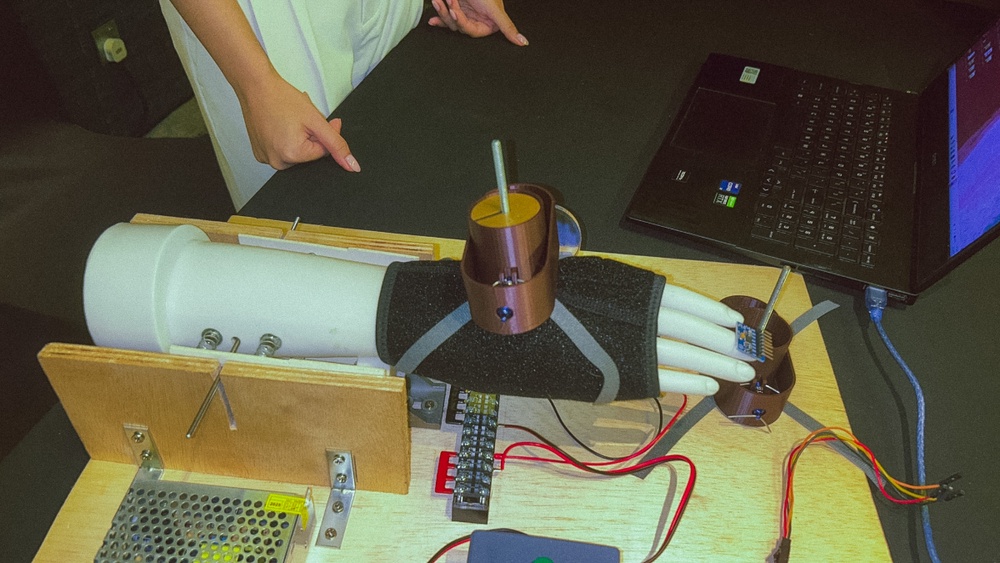
Zemor miniaturises the same principle. Worn on the back of the hand, it contains weights supported by springs and miniature shock absorbers sourced from remote-controlled cars. The internal mass is intended to move against a tremor and absorb some of its energy.
Patients could add or remove brass weights to tune the device to different tremor frequencies. Its casing can also be produced using a 3D printer, reducing reliance on specialised parts.
The current prototype only addresses movement along one axis and has not undergone clinical testing. Hayley also acknowledged that its springs require further refinement and its housing needs more suitable materials.
Her next steps include engineering a multi-axis version and working with doctors and Parkinson’s patients to test its safety, effectiveness and wearability.
“Confidence is never there from the start. It’s sort of built along the way, along the process of it. So, don’t wait,” she said.
Clean water on wheels
Runner-up SLIC approaches another basic need: access to safe drinking water.
Developed by University of Nottingham Malaysia engineering students Jyreh Jiwa, Chin Wen Yang, Abdelmomen Elhadad and Kwan Ming Mak, the solar-powered purifier was designed with off-grid communities in mind, including Orang Asli settlements.
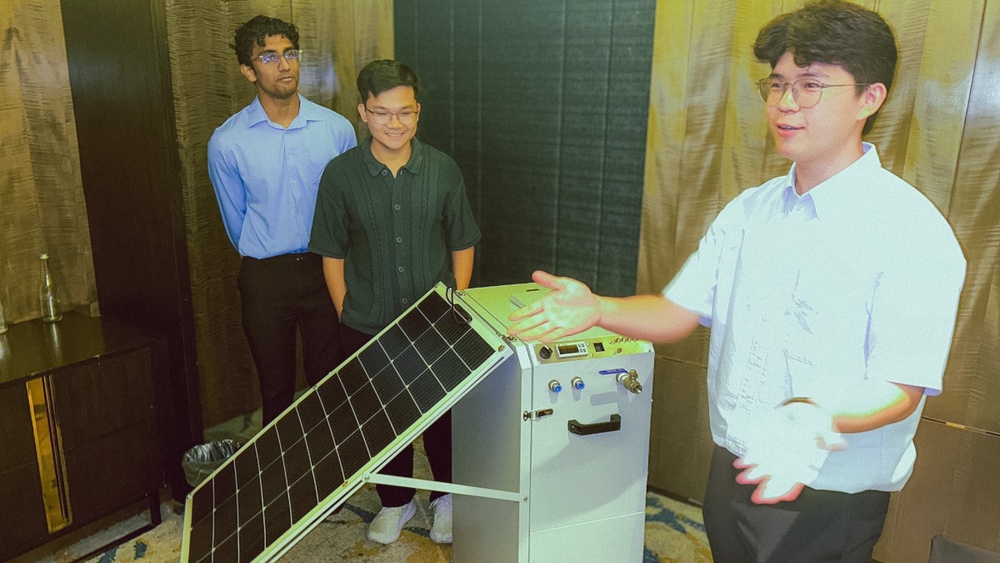
Contaminated water enters through a mesh strainer before passing through sediment, activated carbon and ultrafiltration filters, followed by ultraviolet treatment. The purified water is stored in separate tanks that can provide hot or cold water.
A foldable 100W solar panel charges its battery, while wheels and a handle give the unit the appearance and portability of oversized luggage. Sensors monitor water clarity, temperature and battery levels.
The team said commonly available filters were chosen to simplify maintenance and keep replacement costs down. However, the prototype has yet to undergo laboratory water-quality testing and is not fully waterproof.
Field testing with households in Pos Kemar, Perak, is among the team’s future plans. The students also hope to reduce the unit’s weight and develop a cheaper version without its heating and cooling system.
Jyreh said the engineering project taught the team not to take clean water for granted.
“We use it, we throw it out, we order drinks at a mamak and we just leave it there. And seeing how actually important it is to people, I think it’s a really important issue for us to solve and tackle effectively,” he said.
Penguin helps nurses
Asia Pacific University engineering students Gayatri Reshma Penjarla, Jeremiah Sibalwa, Harshayn Vythilingam, Mwila Chibesa and Yaswanth Komatineni took a more playful approach with “Pillay”.
The penguin-shaped screening device is designed to measure a child’s temperature, heart rate and breathing while also detecting coughs and unusual cries. Cameras, radar, a thermal sensor and microphones collect readings while the child looks at its illuminated eyes.
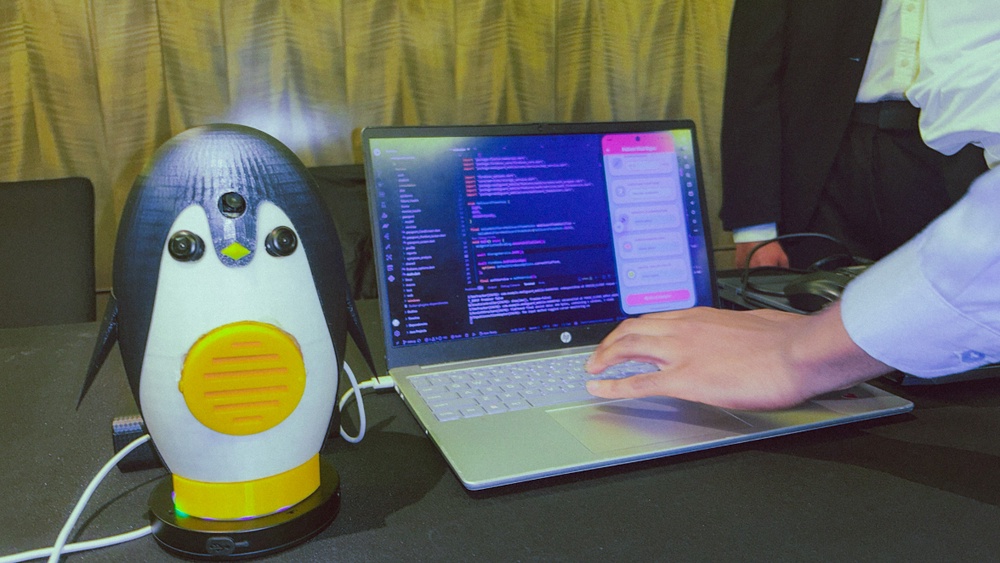
The idea began as a sensor-filled rattle, but a trial quickly exposed its weakness when a toddler placed it in her mouth. Reviewing the footage, the team noticed that the child had been staring at the rattle’s painted eyes. This led them to build a device that attracted attention without requiring physical contact.
Pillay remains a screening prototype rather than a diagnostic instrument. The team plans to compare its readings against medical equipment before conducting supervised trials in Malaysian community clinics.
Together, the three engineering projects show future engineers looking beyond grades and exhibition tables. Their inventions remain works in progress, but each began by paying close attention to a problem people face every day.
READ MORE:
Meet the innovative students solving everyday problems
