
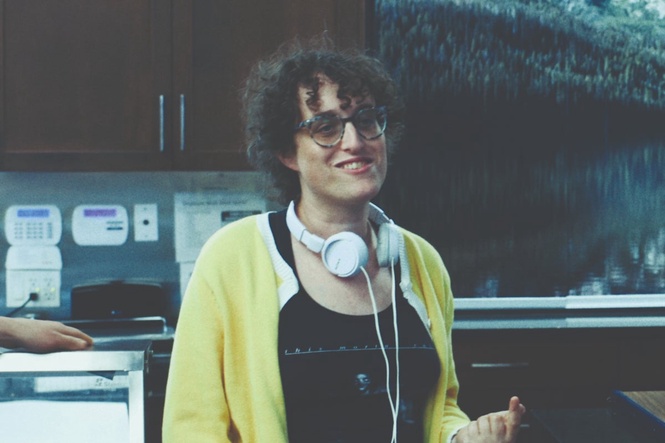
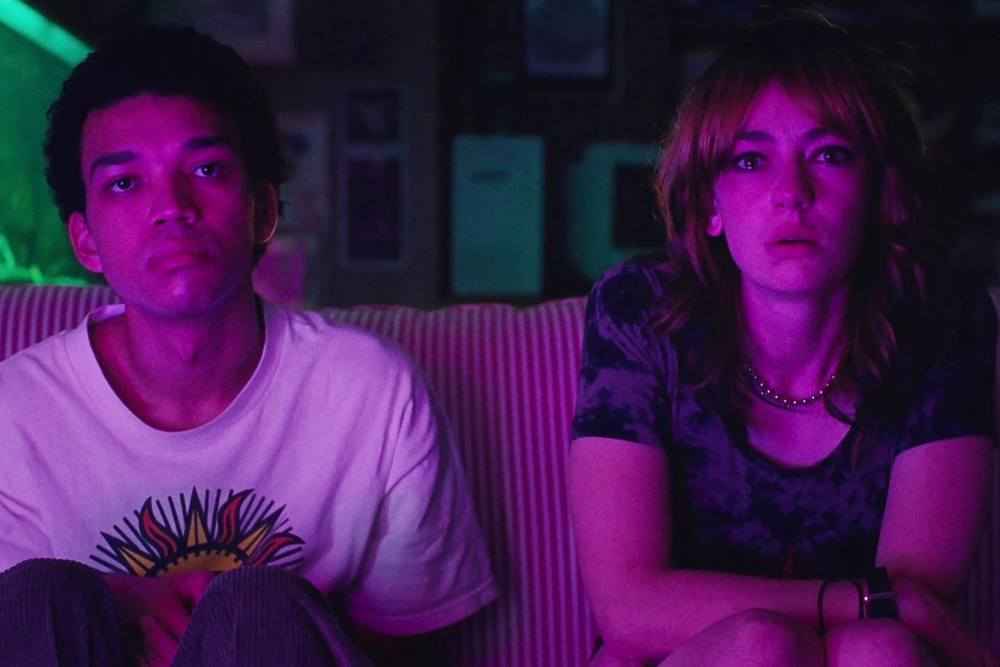
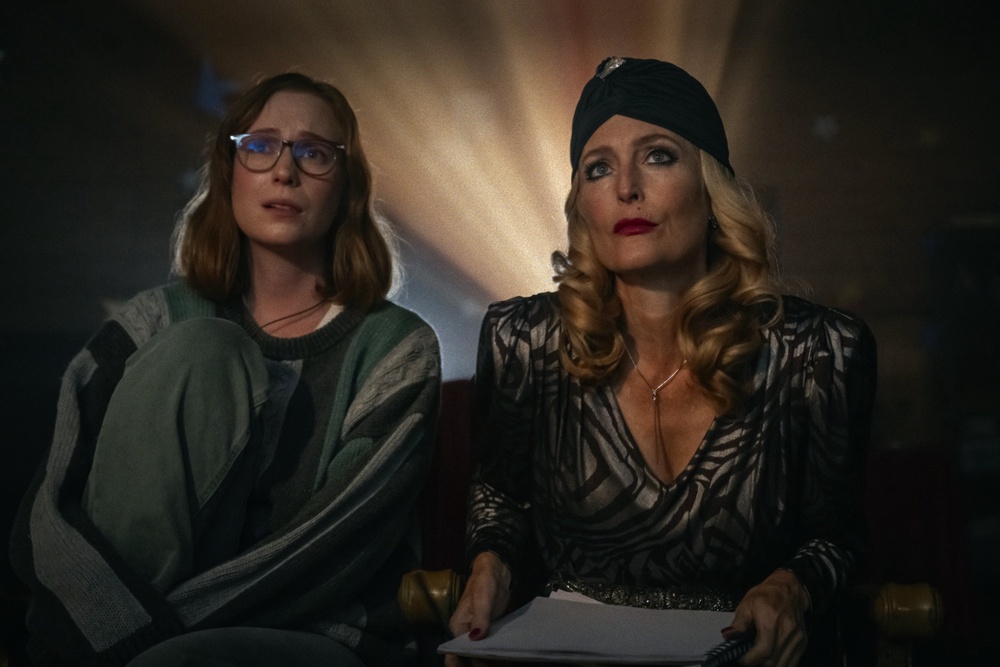
Earlier this year, Jane Schoenbrun met with the estate of late horror icon Wes Craven, to pitch a reboot of A Nightmare on Elm Street. It was, on paper, a perfect marriage of author and subject. Schoenbrun, the buzzy 39-year-old filmmaker behind the modern trans classic I Saw the TV Glow, knows the genre inside and out: their savvy handling of horror nostalgia was on full show in this year’s Teenage Sex and Death at Camp Miasma, which cast Gillian Anderson as the reclusive star of an Eighties slasher. Schoenbrun knows every crack in Elm Street’s pavement.
“But they didn’t choose me,” Schoenbrun says, “which is fine. I kind of saw that coming. I mostly just talked about hauntology, the concept popularised by [the late cultural theorist] Mark Fisher.” (I Google “hauntology” after our interview. It means roughly what it sounds like – the notion of our socio-cultural past haunting our present.) Their pitch for a new Nightmare would have shifted the timeline back to the incongruous ending of the 1984 original, “remaking the first movie, but as if these people are stuck in this dream and haunted by the memory of A Nightmare on Elm Street”.
Schoenbrun laughs at how this sounds. “I don’t know. I have a reputation, I think, for being a little ‘po-mo’ [post-modern] on these pitches,” they say. “They didn’t want to hear a 20-minute lecture on hauntology.”
This, in a nutshell, is Schoenbrun’s whole deal. They are an enthusiast – about horror; about cinema; about television; about The X-Files and Buffy the Vampire Slayer – with the vocabulary and perspicacity of a leftist academic. Over the course of our video call, Schoenbrun throws around terms like “late capitalism” and namechecks people like Canadian philosopher Marshall McLuhan – most impressive, though, is that they do it in a way that never feels lofty or affected. It shows too in their films, which tackle knotty postmodern ideas about media and identity with a deceptive lightness of touch. The same goes for their latest work, Public Access Afterworld, a novel.
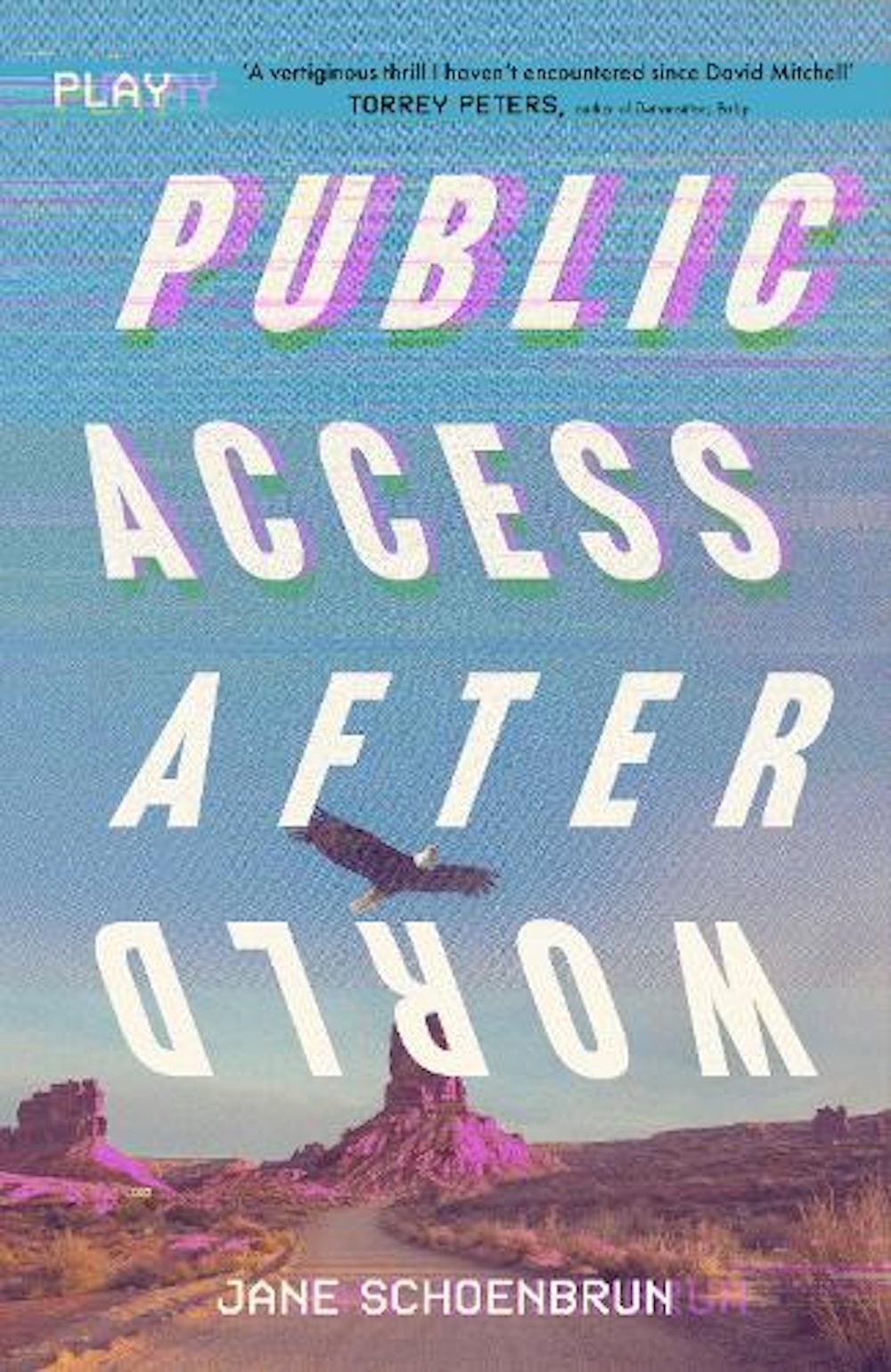
I don’t know quite how to summarise Public Access Afterworld. Schoenbrun has taken to describing it as “a novel about television” and “a beach read for intellectuals”. In the most basic synopsis, it is a book about a televisual netherworld into which people disappear, and a trans woman working as a content moderator for a video platform who uncovers an inter-dimensional conspiracy. (Schoenbrun is trans and nonbinary, having come out in 2020 around the release of their micro-budget breakout film We’re All Going to the World’s Fair.) “I’m not writing something deeply experimental,” they insist. “I’m not writing Ulysses. It’s my attempt at a Game of Thrones, or a Harry Potter, or a Sandman – something of that scope, that is its own world.”
Public Access Afterworld pings between timelines, perspectives, and forms – one brilliant late chapter is told from the perspective of a monster in a over-sequelled horror franchise, forced to live through his own increasingly crappy oeuvre, film by film. There is, I mention, a bit of Infinite Jest about this – particularly one of David Foster Wallace’s endnotes, which obliquely tells the story of a man through a fictional filmography. “It’s funny,” Schoenbrun says. “In film, I get [compared to] David Lynch and David Kronenberg constantly. When I was first taking meetings with some publishers about this novel, I was getting David Foster Wallace and David Mitchell. I was like, ‘Okay, well, I know my film Davids; now I’ve gotten the book Davids.” Schoenbrun grins. They have a great smile, incidentally – wide, unguarded, warm, wry – though speak today with a head cold, sounding “a little more baritone than I should”.
Work began on Public Access Afterworld in 2021, shortly after Schoenbrun finished the script for TV Glow. They spent three months writing alone in their room, and emerged with 1,600 pages of TV scripts – two full seasons of a planned TV show. “Then I was like, ‘No one’s gonna ever let me f***ing make this, because it would cost $100m, and I’ve made one $100,000 film.” So they reworked the first season into a novel, with two further books planned. “It was,” they say, “the first time I felt a sense of control that you don’t have when you’re making a film – when you don’t have final cut most of the time. Your baby, this thing you’re putting your very heart into, is in constant danger of either not existing, or being corrupted.”
This novel was, in other words, a welcome respite from the “business” side of show business. “It sucks,” they say, of the mounting interactions with the suits and moneymen that are unavoidable in film production. “It’s the worst part of my life. And the higher up you go, the worse the feeling gets. It really is pretty simple. To be successful in this rotten system, I don't think you can have a soul. Or if you do, you were born with a lot of privilege, which, you know, will sap your soul in other ways.”
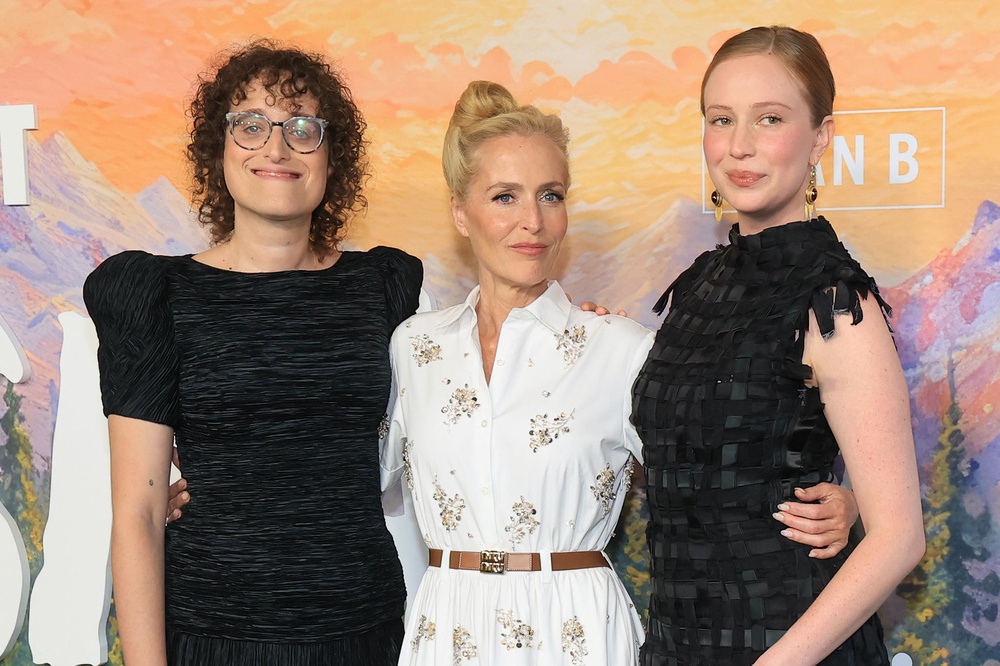
Born and raised in New York, Schoenbrun started out as a production assistant, working on short films by the Safdie brothers during college; after moving back to New York, they began working for the Independent Filmmaker Project, a nonprofit organisation where their job was “trying to help young filmmakers navigate the capitalism” side of things. “I came out of that decade of work with this essential understanding, by my mid-twenties, of art and capital as the two forces.”
I am surprised when Schoenbrun says they did not get final cut on TV Glow or Camp Miasma – both are idiosyncratic, deeply personal pieces of filmmaking; art that only they could have possibly made. “I begged for it, you know, but no,” they say. “I mean, both movies are the movies I want to exist. Within the power structure that I was working, I was able to not have it be corrupted, at least in my mind, although I imagine it’s corrupted in lots of invisible ways. I believe in a notion of soft power and hard power – there’s hard power of, ‘We're taking the movie away from you and recutting it.’ And then there's, like, the soft power of, like, ‘Huh, I kind of know what these guys want. Maybe I should give it to them a little bit so that they get off my back and let me make the thing.’”
There aren’t many filmmakers who talk about their own art like this – and Schoenbrun knows it. “I think it’s almost considered crass,” they say. “ But I really believe in being honest about these things, because I’ve always seen it as a dance – or fight – between capital and art. And I don’t view myself as some pure figure in that. I’m trying to do good work within this fundamentally toxic relationship.”
Public Access Afterworld is, like all of Schoenbrun’s work, acutely interested in the screen as an idea; it is a book that knows exactly what it means to be chronically online. It is both surprising and not that Schoenbrun quit social media in August, retiring the popular, sardonic X/Twitter account they had run for 17 years. The decision was spurred partly by a snarky online smear, but is also the result of a long-gestating unease with the way social media had metastasised. “These platforms on the internet in 2026 are designed to make us angry,” Schoenbrun says. “They are fracking our attention.”
“So much of the promise of the internet,” they continue, ‘“is a world that is illuminated. The promise of a world that had a future. As a young trans kid on the internet, it was like, oh, I can enter this portal where I don’t have to be beholden to these boring rules of this boring town and body that I live in. But it’s been so polluted by the forces of capital.” What’s more, they add, social media platforms are “making us more powerless because they create an illusion of power”.
Success in my mind isn’t like, now we have five trans filmmakers making Hollywood movies instead of one or two
The problem, Schoenbrun adds, isn’t unique to social media, but rather part of a broader corruption of all media; the entertainment industry is no less a tool for maintaining the status quo of late capitalism. “Society is becoming more and more dependent on entertainment because it allows this thing we all know is not sustainable, or logical, or healthy, to continue to exist,” they say. “Because if we thought about actually radically changing the world, maybe we wouldn’t get the next season of Widow’s Bay, you know?
“I also think that in a hundred years people will look back at this unregulated period of capital-driven entertainment in the same way that we look at the opium dens of the past.”
Schoenbrun’s next project has already been announced: a serialised adaptation of Charles Burns’s dark, sexy graphic novel Black Hole, produced for Netflix. Schoenbrun has written two episodes so far, with six more to come. It is, from the sound of it, a loose adaptation, “quite different” and “warmer” than the book, “which at times is pretty despairing”.
The hope, for fans of their work, is that Black Hole might propel Schoenbrun further into the mainstream – at the very least, in the eyes of studio financiers. Schoenbrun is already arguably the most prominent trans filmmaker working today: TV Glow and Camp Miasma are the only two films by a trans filmmaker to be released in more than 100 US cinemas since The Matrix Resurrections half a decade ago.
Despite the paucity of opportunities for trans artists in mainstream Hollywood, there is still “plenty of optimism”, Schoenbrun says. “I don’t think systems are unchangeable, and this system we’re all stuck in is far from the only force driving the world, and culture. Success in my mind isn’t like, ‘Now we have five trans filmmakers making Hollywood movies instead of one or two.’”
“Transness is political. By living as a trans person, I am envisioning a world that is in opposition to the world the normative forces of power want to convince us is the only possible world. And so it will always be inherently oppositional,” they say. “Assimilation into a system is not necessarily the goal, or a sign of progress.”
Schoenbrun quotes a line from the end of Public Access Afterworld’s prologue. In the book, Schoenbrun’s narrator writes: “They don’t give people like us the Sunday night time slot on HBO. They put us in hospitals. They send us to hell.” This, they say, “is at the center of the work I try to do. I don’t measure success in how much money I grift off the system. It’s like the grifting of the money off the system is hopefully a means to an end – an end that is in some way, anti-assimilationist. It’s trying to open portals that don’t exist.”
Portals and screens, and screens-as-portals: these are the images that suffuse Schoenbrun’s world. And there are few artists out there quite so eager to open them up.
'Public Access Afterworld' is available now, published by Hodder
Read MoreTyson Fury admits he 'didn't want to live' in tearful Netflix documentary trailer
Five things we learnt from the moving Matthew Perry documentary on Netflix
Netflix's New Stanford Prison Experiment reveals 'something monstrous' in all of us
I hadn’t read a book in months, until the ACOTAR series reignited my love of reading
Dua Lipa on her desert island reads: ‘I gift that book a lot’