Multiple countries have raised concerns over the changes introduced to a new world map adopted by the UN, which represents Africa more accurately in size.
The UN General Assembly earlier this month voted to adopt a new map of the world, which passed with the support of 164 nations, including France and the UK.
Only six nations abstained from voting, while the US voted against it.
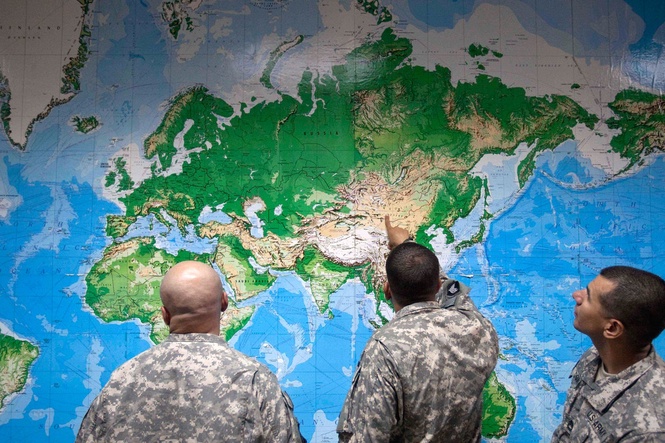
The new map fixed the discrepancy with the Mercator map, which was created in 1569 and showed the African continent as being of similar size to Greenland. The vote encourages governments and institutions to replace the traditional map with the Equal Earth projection that advocates and geographers say shows locations more accurately.
The UN formally retired the Mercator map, but maintained that the body does not impose a replacement, but only encourages the use of the Equal Earth projection.
However, since the resolution was passed, at least three countries apart from the US have voiced their concern regarding the changes reflected in the new map.
Ukraine, which abstained from voting, claimed that the Equal Earth projection shows the Russian-occupied Crimean peninsula in a lighter shade than the rest of Ukraine. Russia illegally annexed Crimea in 2014, years before launching a ground invasion of Ukraine in 2022.
The map shows Crimea shaded differently from both Russia and Ukraine, but the grey-yellow tint appears closer to the shade of colour chosen for Russia.
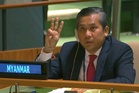
“Ukraine does not in principle oppose the core issue addressed in this draft resolution,” said Andrii Melnyk, Ukraine's permanent representative to the UN.
He said Ukraine had asked for correction before the vote this month, but did not receive a positive response.
The map could be tantamount to opening a Pandora’s box, enabling the “abuse and distortion” of the world map, he said.
“It would be a truly fatal mistake for all of us, and for this General Assembly, to seek to correct a historical injustice in the geographical depiction of countries and continents by simultaneously allowing a deeply troubling interpretation of the text of this draft resolution,” he added.
Estonia, Georgia, Moldova, Serbia, and Lithuania abstained from the vote in solidarity with Ukraine.
Ukrainian lawmaker Kira Rudik wrote in a post: “In 2026, the UN should not need a reminder: Crimea is Ukraine. Shame."
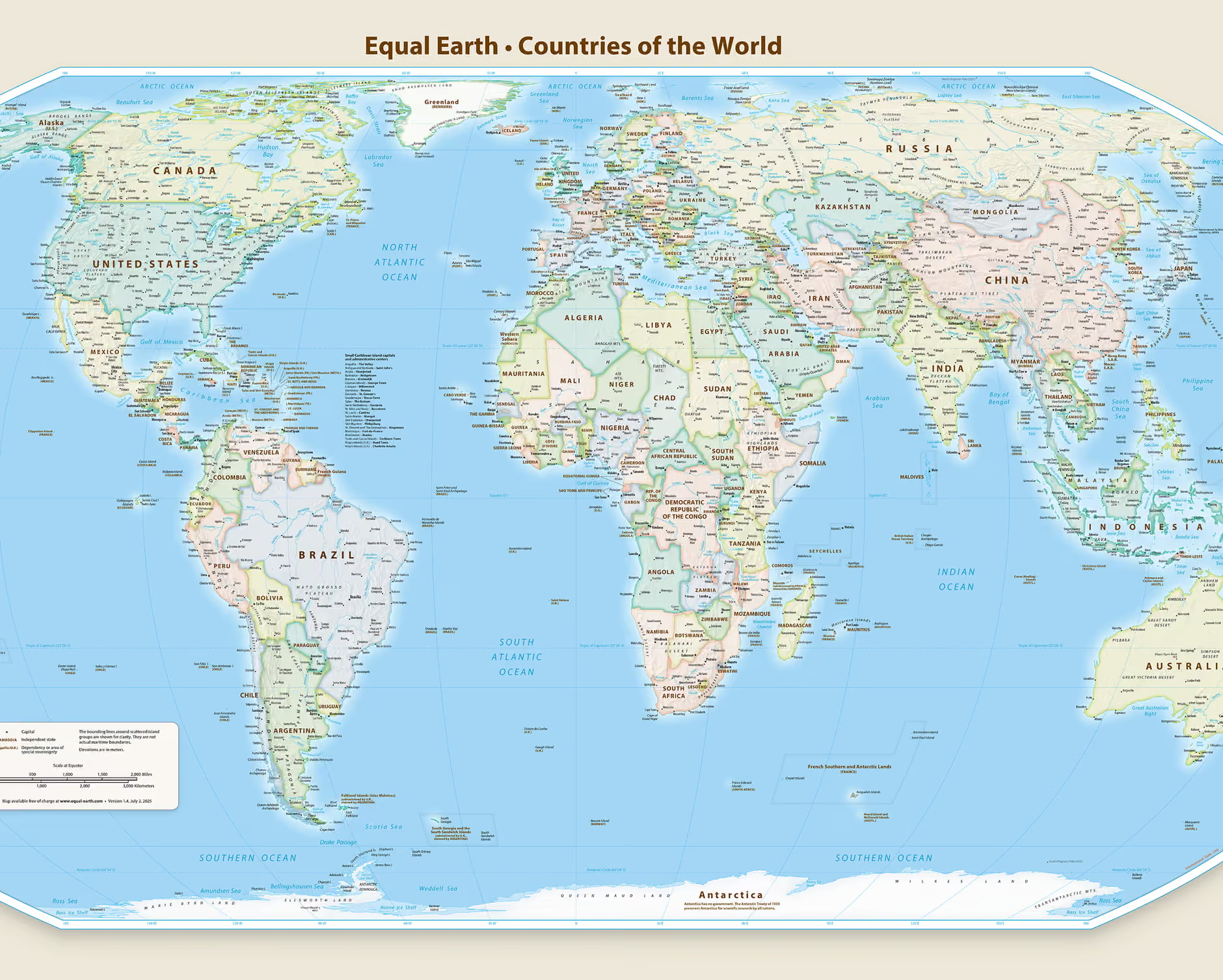
India, which voted in favour of the Equal Earth projection, triggered a row over the depictions of parts of Kashmir, which shares a border with Pakistan in the West and China in the north.
The Himalayan region of Kashmir, one of the most militarised places on earth, is claimed in full but held only in part by both India and Pakistan.
The map depicts India's northeastern state of Arunachal Pradesh and the northern disputed territory of Aksai Chin as separate regions between India and China. India claims Aksai Chin as integral part of its territory but it has been under Chinese control since the 1962 war.
Indian foreign ministry spokesperson Randhir Jaiswal said the resolution was "focused on the principle of having, giving weightage or giving credence to equal-area maps, so that, as we have said, the equal-area maps project or preserve the relative sizes of continental landmarks."
“India’s sovereign territory, including the Union Territories of Jammu and Kashmir and Ladakh, must be depicted in accordance with India’s official map,” he said. “Any inaccurate or misleading depiction is unacceptable.”
He told reporters that the entire federal territory of Jammu and Kashmir and Ladakh, including Aksai Chin, "has been, is, and will always be an integral and inalienable part of India".
The map carried a disclaimer that the final status of Jammu and Kashmir has not been agreed upon by India and Pakistan.
Japan protested and demanded a correction after the world map depicted the disputed Kuril Islands as part of Russia.
Japanese government spokesperson, Minoru Kihara, said the new map “contained a depiction contradicting the Japanese government’s position”.
“We lodged a protest with the map site’s operator through our diplomatic channel to demand the correction of this depiction,” Mr Kihara told reporters. He said Japan “needs to prevent misconceptions of our territories and geographical names from spreading”.
The island has remained a bone of contention between Russia and Japan after a chain of islands was seized by the former Soviet Union in 1945, which then expelled the Japanese population.
Last month, Japan protested after Vladimir Putin made his first visit to the disputed Kuril Island in August. It marked his first visit to the island, sparking condemnation from prime minister Sanae Takaichi, who said the Russian president’s visit “offends the sentiments of the Japanese people”, and that it was “absolutely unacceptable”.
She insisted the islands were “an inherent part of Japan’s territory, both historically and under international law”.
The US, the lone country to vote against the resolution, had claimed that the vote was the “reason this institution [UN] is losing its credibility".
"Instead of focusing on genuine problems... this body is debating map projects from the 16th century and their role in promoting reparations and cognitive justice," US representative, Yaryna Ferencevych, said ahead of the vote.
The resolution was passed following months of lobbying by the African Union, which adopted a new map earlier in February.
The Mercator projection shows Greenland and Africa as appearing to be about the same size, whereas in the Equal Earth projection that shows continents in their true proportions, Africa is 14 times larger than Greenland.
“Maps shape our understanding of the world,” the global body quoted Togo’s foreign minister, Robert Dussey, as saying before the vote. “They guide education, nourish the imagination, and influence collective perceptions.”
Africa No Filter, one of the lead campaigners for the adoption of the new map, hailed the resolution, adding: “We want to see accurate maps in schools, textbooks, newsrooms, businesses and on the digital platforms billions of people use every day.”
Read MoreThe Ebola crisis is the deadliest in DRC’s history – this expert knows what’s next
ICC members vote to dismiss prosecutor Karim Khan amid sexual misconduct allegations
Why Spain’s World Cup glory will be painful for Trump
Farage and the trap of boo-hoo theatrics – history tells us it won’t end well
The Taliban’s new law isn’t about child marriage, it’s child rape
Zionism, antisemitism and the weaponisation of words and meaning