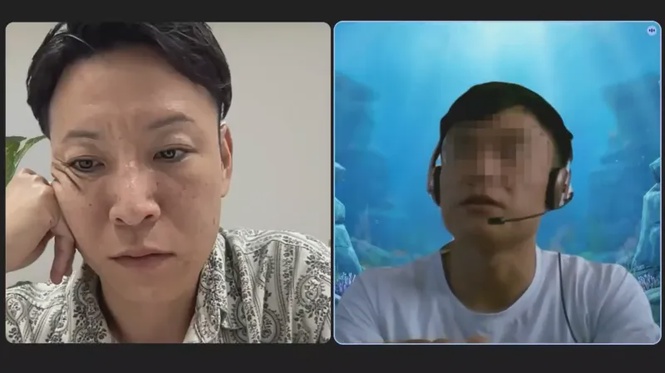
Yuji Harada (原田祐二) thought he was conducting a routine online job interview. Instead, the CEO of Tokyo-based AI startup KOWRO says he ended up trading questions with what he's now convinced was an AI system posing as a human applicant, and he recorded the whole exchange as a warning to other employers.
KOWRO, founded in April 2026, builds AI character chatbot services, which makes Harada more attuned than most hiring managers to spotting synthetic media. He needed that instinct during a recent video interview, when a series of small glitches added up to a conclusion he still finds hard to believe: the candidate on his screen likely wasn't a person at all.
人生で初めてAIが面接に来た動画を公開します。
— 原田 祐二 KOWRO CEO (@1230yuji) September 10, 2026
注意喚起も込めて。
補足すると動画スタートが面談スタートではなく、なんか変だなって思っててCOLOさん?(KOWROや)ってなったあたりから頬杖ついてAIだと確信を持ってます笑
絶賛「人間」の採用を加速しております。ぜひご応募ください↓↓↓ https://t.co/OQftw6Mt9i pic.twitter.com/lArxXFOg8p
A Mispronounced Name, Then A Mouth That Didn't Match Its Voice
The first red flag came almost immediately. The candidate mispronounced KOWRO's own name as "COLO," an odd slip for someone who had ostensibly applied to work there. Harada then noticed something stranger: the applicant's lip movements didn't line up with the words coming through the speakers.
He put it to the candidate directly, saying something to the effect of "your mouth shape and the sound seem misaligned." Rather than settling his suspicion, the answer only deepened it.
Confronted, The Candidate Blamed Network Lag And Called Itself Human
The applicant first suggested the mismatch might be a network problem, offering an explanation along the lines of "the voice might be offset due to a communication delay, though I'm hearing everything fine on my end." When Harada asked outright whether he was talking to an AI, the response was even more telling: rather than a simple, casual denial, the candidate answered in oddly formal, distancing language that roughly translates to "no, you yourself are speaking," using a stilted, honorific way of referring to oneself that a real applicant would be unlikely to reach for in casual conversation.
Harada has said that it was around this point, listening to that response, that he became confident he was talking to a machine rather than a person. He ended the interview shortly after and later posted the footage on social media, explaining that he wanted to raise awareness of the risk. In a wry aside, he added that KOWRO was "aggressively accelerating the recruitment of humans" and welcomed genuine applicants to apply. The clip quickly drew wide attention online, with many commenters noting the irony of an AI company being the one to catch an AI applicant.
A Pattern That Echoes North Korea's Hiring Scams
Harada's encounter is not the only case of its kind to rattle Japan's hiring world this year. In March, a Tokyo venture company in the logistics sector ran into a strikingly similar scare, according to UPI: a video-interview candidate turned out to be impersonating a real Japanese IT executive, Kenbun Yoshii, using Yoshii's publicly available photos and career history lifted from the internet. That applicant claimed to have been raised in the United States and asked for a fully remote position, then abruptly hung up within two minutes of being told the job required working in person. A later technical review flagged classic deepfake tells, including an unnatural hairline, faintly misaligned eyes and lips that didn't quite sync with the audio. Yoshii, on learning his identity had been hijacked, called the experience "creepy and frightening."
Researchers who track this kind of fraud say the March case fits a broader pattern tied to North Korean state-linked operations, in which operatives use AI tools alongside stolen or fabricated identities to land remote jobs at unsuspecting companies and funnel their pay back to the regime. The AI Incident Database, which logs and cross-references reported AI-related harms, notes that the Yoshii case "may be consistent with suspected North Korean IT worker tactics," while the identity-security firm Okta has said it has identified more than 6,500 similar cases worldwide involving suspected North Korean IT workers. No evidence has surfaced tying that March incident directly to the applicant who showed up at Harada's interview six months later, but the resemblance between the two cases, both in Japan within the same year, has added to the unease that Harada's video has stirred up online.
Old Detection Tricks No Longer Work, Experts Warn
Commentators tracking these incidents note that the deception can involve mixed techniques, such as a human voice paired with an AI-generated face, or a voice-cloning tool layered over live responses generated by a language model on the fly.
What's changed, according to those following the trend, is that many of the visual tricks recruiters relied on even a year ago, such as asking a candidate to wave a hand in front of their face or tap their fingers to expose a glitching filter, no longer reliably catch more advanced real-time systems. The emerging advice for employers leans less on spotting visual tells in the moment and more on redesigning the hiring process itself: moving identity verification earlier, asking questions specific to the company that a general-purpose AI wouldn't have context for, and requiring an in-person meeting before a candidate can move forward.
For now, cases like the one Harada posted remain a novelty striking enough to go viral. But with a suspected North Korea-linked deepfake surfacing in Japan just months earlier, and the underlying technology only getting better, the line between a nervous applicant with a bad internet connection and a synthetic one may keep getting harder to draw.