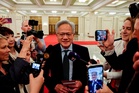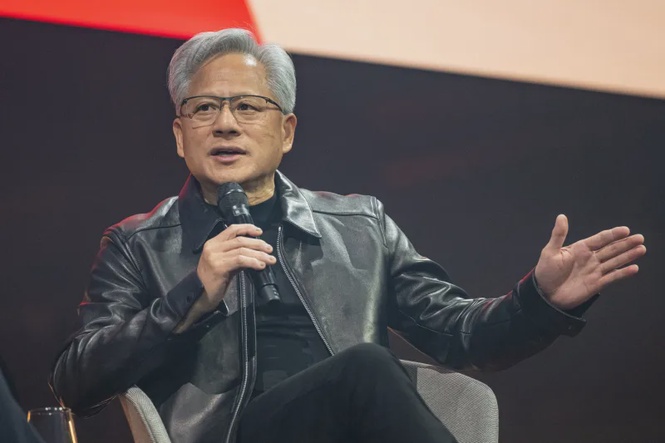
Jensen Huang's resignation from all three of his posts at Nvidia may look like a full stop to the scandal over his extramarital affairs. In truth, it leaves far more questions than answers. For Taiwan's supply chain, one thing is already certain: the goodwill premium that came with Huang's personal ties to the island is gone. Taiwanese suppliers will feel the impact. Only its size remains to be seen.
Huang's affair with Alice Huang, a woman US intelligence agencies suspect of spying for China, shattered his image as a devoted family man and raised national security concerns. Nvidia's board opened an investigation, and three House committee chairs asked him to attend a closed-door briefing. Within days, he was gone.
Resignation does not mean the case is closed. At most, this is halftime. Investigations, hearings and lawsuits from investors still lie ahead.
Remarkably Little Is Known For Certain
Ironically, for an affair that has shaken the global AI industry and the world's most valuable company, pitifully little is known for sure. Huang has admitted the affair. But the most important question, whether Alice Huang is in fact a Chinese spy, still rests on nothing more than the claims, or suspicions, of US intelligence agencies. More absurd still, after Huang stepped down, the US attorney general said no one had confirmed that Alice Huang was a Chinese spy. Shouldn't that have been said at the very start? Or was the timing calculated, because saying it too soon would have made it harder to bring Huang down?
The other near certainty is that this was a deliberate operation. Put simply, someone wanted Huang out. When the news first broke that he had an affair with an alleged Chinese spy, the national security concerns drew attention, but his leadership and his importance to Nvidia were still widely acknowledged. Markets put the odds of his removal as chief executive at just 10%, and the worst case was thought to be a dilution of his powers so that not all authority rested with him.
Then on November 11, The New York Times reported a second affair, this time with a direct subordinate. That was clearly the last straw: from a corporate governance standpoint, it was the more serious offense. On November 12, the board announced that Huang had stepped down as president, chief executive and board member, effective immediately.
Sex scandals involving America's business and political elite are nothing new. But it is hard to recall another case in which the man at the center was branded a national security threat, even a traitor, and hunted down with such urgency. The Economist went beyond criticism to say flatly that Huang had to resign or be fired, its impatience plain on the page.
Who Wanted Huang Gone Remains A Mystery
Who that "someone" is, and the real reason behind it, remain big question marks that may take a long time to surface. Theories abound: a fight between Republicans and Democrats; a power struggle between President Donald Trump and the establishment, or the so-called deep state; Washington's drive to enforce its dominance through chip controls; a nationalist theory that white America could not leave Nvidia, the heart of AI, in the hands of an Asian man; and a geopolitical theory that China hawks wanted him out because he leaned toward China.
Was there a single mastermind, or was this the work of several camps acting together? And why did they want him out? When, or whether, there will ever be a definitive answer is anyone's guess.
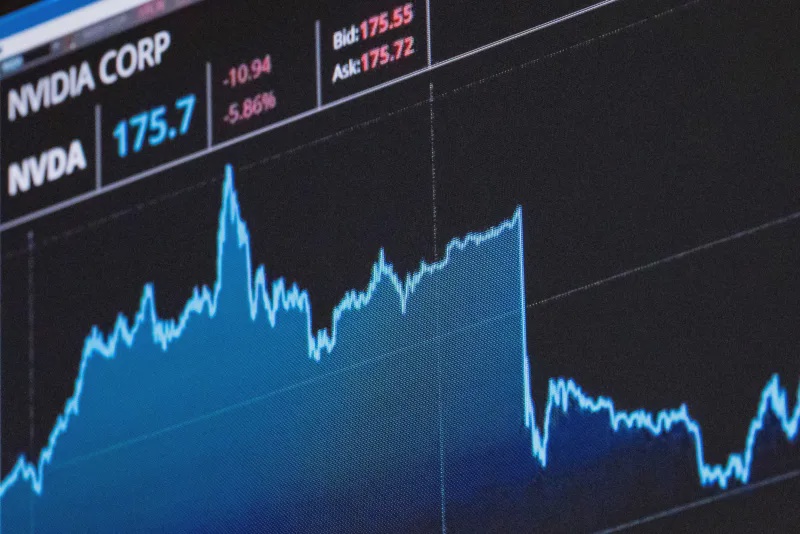
Nvidia And The AI Boom Face An Uncertain Future
Those are the questions about what has already happened. The future is just as uncertain. At the company level, beyond the choice of a successor, the question is what becomes of Nvidia after losing the founder who led it to its peak. Will it repeat Apple's history after it pushed out founder Steve Jobs, sliding until it nearly went bankrupt? Or can it hold on as the helmsman and leader of AI?
On a larger scale, will the global AI wave recede or set new records without Huang to drive it, without the man who became the face of AI and, more importantly, without the customer financing for AI that he championed?
Taiwan's Suppliers Must Brace For A Reshuffle
For Taiwan's AI supply chain, Huang's departure is certainly not good news. He knew Taiwan and its companies well and was genuinely friendly toward them. A new leader is unlikely to make sweeping changes in the short term, but things will inevitably be done differently, and the supply chain will very likely face a new landscape and a reshuffle.
To be sure, Taiwanese companies earned their place in Nvidia's AI supply chain with technology and competitiveness. Their orders are not handouts, and Nvidia will keep working with Taiwan's suppliers. But the goodwill premium that came from their relationship with Huang is gone. Taiwanese suppliers need to read the situation clearly and stay on their toes.
Why China Will Not Be The Biggest Loser
As for what this means for the US-China rivalry and the AI race, Bloomberg has argued that China may end up the biggest loser: with Huang gone, Washington will tighten AI chip exports further, slowing China's AI development. That view is not necessarily right.
China faces a dilemma in the AI race. Using America's most powerful and advanced AI chips, Nvidia's, would let Chinese AI catch up with the US faster, but it would leave no room to nurture homegrown AI chips. China would, in other words, remain at Washington's mercy on chips forever.
Using fewer American chips or none at all, whether because Washington restricts them or Beijing bans them, would slow China's AI development and make it harder to catch up. But it would greatly help domestic AI chips, which can only develop and improve when they have a market and real demand.
This is a tradeoff between long-term and short-term interests, and Beijing has in fact leaned toward the long term, putting homegrown AI chips first. That is why, even after the US government finally approved exports of Nvidia's H200 chips to China, Beijing held back. So far it has let in only 30,000 to 50,000 H200s, while as many as 600,000 sit in warehouses in Hong Kong. Wary of relying too heavily on American technology and determined to push domestic substitutes, Beijing has yet to approve that bulk import.
A sharp tightening of US AI chip exports to China would hurt Chinese AI development in the short run and make the transition more painful. But over the medium to long term, it would force China to go all in on building its own AI chips, helping it break free of America's chokehold. China will not be the biggest loser.
Jensen Huang and the Alleged Chinese Spy: Full Timeline
From the first reports on Alice Huang's visits to Taipei to Jensen Huang's resignation as Nvidia's chief executive, Storm Media tracks every development in the case and updates the page regularly.
► See the full timeline and latest updates
You've read it. Now join the conversation — follow us on X, Facebook and IG. Editor: Penny Wang