
When I was young, my father often spoke about the Death Railway. He told me that, in the beginning, many Malaysians volunteered to work on it, lured by promises of decent wages, better living conditions, and a brighter future. However, as time went on, many were forcibly recruited and subjected to inhumane treatment, often enduring conditions akin to slavery—or worse. Many never returned home.
Thousands of Malaysians, mainly Indians and Malays, lost their lives there. Of the 70,000 sent, a staggering 45,000 perished.
This dark history had always haunted me, and eventually, I decided to visit Kanchanaburi, Thailand where the Death Railway is located, to see for myself what had transpired between 1942 and 1943, during the depths of World War II. What I witnessed left me shaken, both emotionally and physically. The experience was a grim reminder of the lengths to which human endurance can be pushed.
I learned that many survived the harrowing ordeal by mentally conditioning themselves to work like “beasts of burden.” Yet, despite their resilience, thousands still succumbed to the unimaginable suffering.
Getting to Kanchanaburi is quite easy from Don Mueang Airport, Bangkok. From the airport, take the red line MRT to Bang Sue station. From there, transfer to the blue MRT line and disembark at Bang Khun Non station. Once there, it’s a one kilometer walk to the Thonburi railway station, where you can catch the train to Kanchanaburi. Alternatively, you can take a tuk-tuk taxi from the MRT station to the railway station. If you’re traveling by train, Thonburi station is one of the stations where you’ll embark on the Kanchanaburi train.
The train itself is like a journey back in time, with free seating, open windows, and a circular fan. The vintage charm of the train makes the ride an experience in itself.
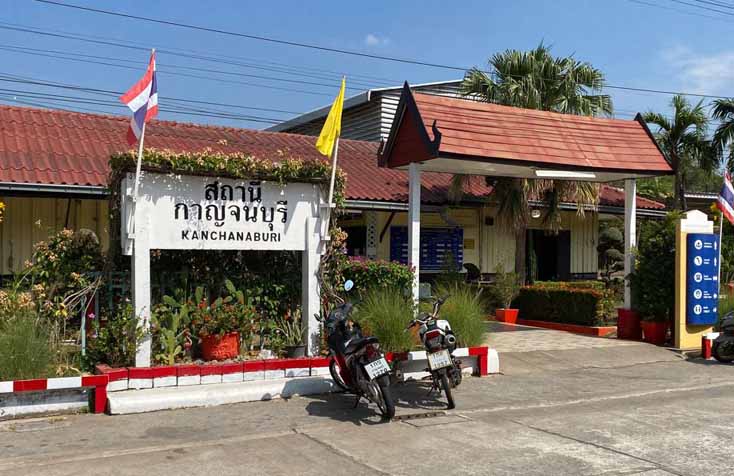
The train ticket inspector is exceptionally friendly, moving from coach to coach to ensure passengers are informed when it’s time to disembark at Kanchanaburi. Upon arrival, you’ll find an abundance of taxis and e-hailing motorbikes readily available to take you to your destination.
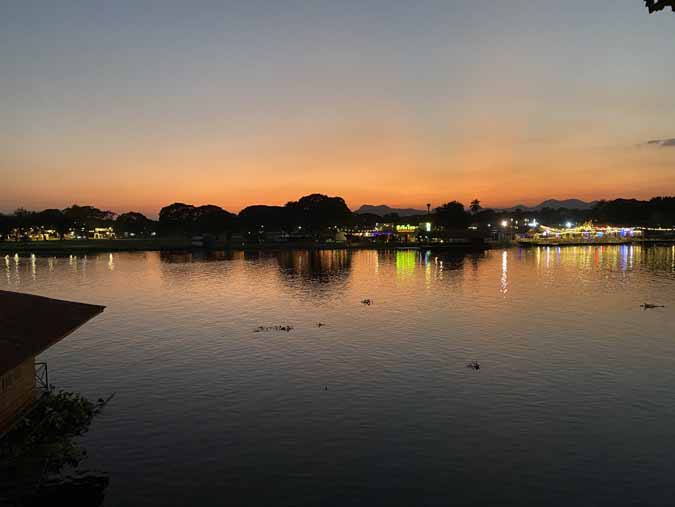
For accommodation, the best option is to stay along the riverbanks, where numerous chalets offer affordable rates ranging from 450 to 900 baht per night. These budget-friendly lodgings are simple yet comfortable, and the breathtaking sunset views over the river make the experience truly memorable.
I wanted to learn about the history of the Death Railway and the people involved before embarking on my tours. So, during the first two days, I focused on visiting two museums: the Thai-Burma Railway Centre and the JEATH War Museum. Both offered a wealth of information, including well-documented realities, preserved in the museum through historical records and interviews with surviving POWs. These testimonies serve as a stark reminder of the resilience and sacrifice of those who endured such horrors but I was devastated to find limited details about the Asians, also known as “Romusha” (a Japanese word meaning “laborer”), who worked on and perished during the construction of the railway.
Most of the information and photographs focused on the POWs from various countries who were brought there by the Japanese. Their conditions and plight were truly harrowing. Later, I learned that the “Romusha” faced even worse treatment because they lacked the organization and support that the POWs had.
When I visited the war memorial graves, I was deeply shocked to see soldiers as young as 23 years old buried there. These men didn’t die in battle but succumbed to brutal torture and appalling work conditions in the prison labor camps.
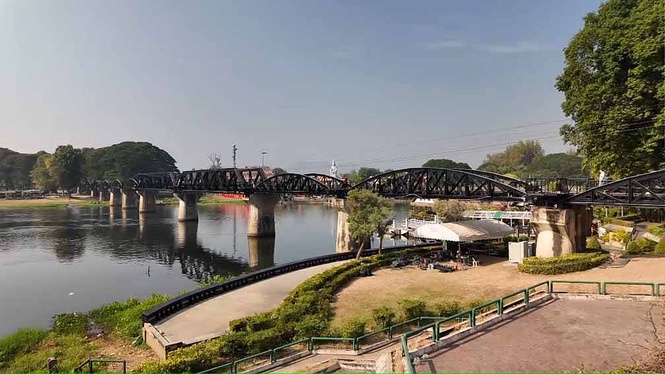
The Bridge over the River Kwai, made famous by the movie of the same name, is another tourist attraction. Although it’s not the original bridge, it remains an impressive site and is definitely worth a visit. You can walk on the tracks which are still being used today.

I then visited the Khao Pun Cave, often referred to as Kasae Cave. This site is significant as it served as a shelter for prisoners and laborers during the construction of the Death Railway. Nestled beside a cliff and overlooking the railway tracks, the cave holds a serene yet haunting atmosphere. Today, it houses a Buddha statue, symbolizing peace and reflection amidst the echoes of its tragic past.
You can even travel on the very tracks that were part of the Death Railway—a truly moving experience and an absolute must-see. The train ride itself is incredibly scenic, with breathtaking views of the cliffs and lush surroundings. It also offers a poignant opportunity to reflect on the resilience and sacrifices of those who endured unimaginable hardships here.
One of the most thrilling moments is when the train passes so close to the mountains that you could, theoretically, reach out and touch the jagged rock face. Of course, that would be a risky move, and I did witness someone trying it—luckily without incident.
The sheer proximity to the cliffs and the dramatic landscape make it a sight you’ll never forget. It’s also important to keep in perspective that this portion of the track was carved out in 1943, during an era with limited machinery. The immense effort, hardship, and sacrifice it took to create this engineering feat amid such challenging conditions add a profound layer of historical significance to the experience.
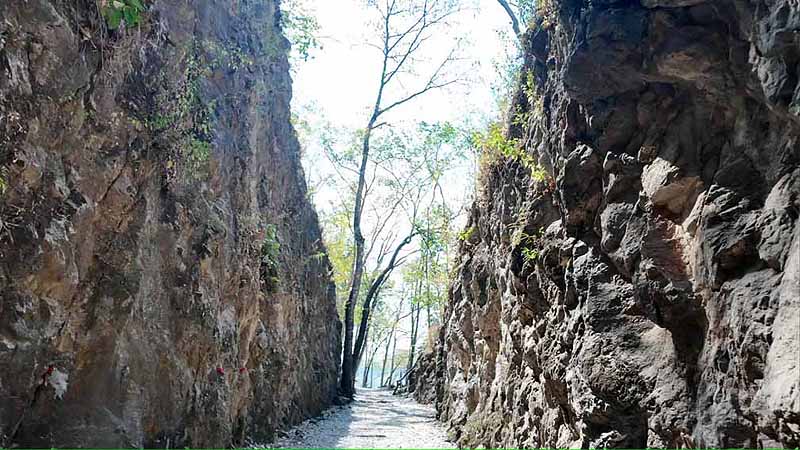
My next visit was to Hellfire Pass (Konyu Cutting), a site steeped in history and somber significance. Admission is free, and visitors can borrow an audio guide at no charge, which provides a vivid narrative as you walk back in time toward the pass.
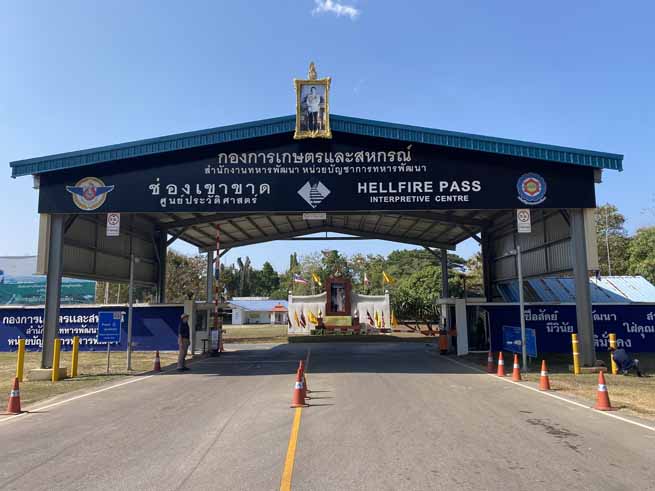
Hellfire Pass was originally a solid mass of rock that was painstakingly hacked and cleared to create a track for trains. Walking through the pass offers a haunting glimpse into the unimaginable suffering endured by the prisoners and laborers who built it.
The name stems from the harrowing scenes witnessed during its construction. At night, emaciated men worked by the light of oil lamps and bamboo torches, their shadows flickering against the massive rock walls, creating an eerie, hellish glow. This grim imagery gave rise to the name “Hellfire Pass,” a stark reminder of the brutal conditions they endured.
The experience of visiting Hellfire Pass is both profoundly moving and deeply humbling. Its rugged beauty, combined with its tragic history, leaves an indelible impression. The audio guide provides a haunting account of the atrocities that occurred there, painting a vivid picture of the appalling conditions endured by the laborers and POWs.
The cruelty was exacerbated by a harsh hierarchy within the Japanese ranks. Korean soldiers, recruited by the Japanese, were consistently placed lower in rank and often bore the brunt of their superiors’ frustrations. This created a vicious cycle: a Japanese soldier’s anger would cascade down to the Korean soldiers, who would, in turn, vent their rage on the POWs and Asian laborers. Inadequate and substandard food, diseases like cholera, dysentery, malaria, dehydration, and the unforgiving environment made it a living hell and contributed to the staggering death toll. Adding to this suffering was the brutal treatment by Japanese soldiers, which cemented its reputation as "hell on earth." Each day they had to get 20 workers and if half of them were sick with cholera then it was the doctor who had to make a decision, sometimes the Japanese soldier would just shaft a bamboo stick into the worker’s anus just to double confirm if they had cholera or just faking.
Standing at Hellfire Pass, it’s impossible not to feel the weight of history. Once a site of unimaginable suffering, where men were pushed to the brink of survival, the pass now stands silent, holding the echoes of their pain. The brutality and dehumanization that occurred here are haunting, yet the strength and resilience of those who endured it leave a powerful legacy. Visiting this place is a reminder not only of the horrors of the past but also of the enduring human spirit—one that survived, remembered, and continues to inspire.
I then decided to visit the Skywalk in Kanchanaburi, a popular attraction known for its breath taking views of the surrounding natural landscape. Situated near the confluence of the Khwae Yai and Khwae Noi rivers, the Skywalk is a glass-bottomed walkway that offers an exhilarating experience as you walk above the picturesque riverbanks.
Standing on the glass walkway was both unnerving and thrilling, as I looked down through the transparent floor to the ground below. At the end of the walkway, there’s a lookout tower that sways slightly with the wind, adding an extra layer of excitement—and a bit of fear—to the experience.
My last stop was the JJ Night Market, located near the Kanchanaburi railway station. It offers a variety of local street food, clothing, souvenirs, and other goods. The market is popular with both locals and tourists and is a great spot to experience the local culture and cuisine.
Visiting Kanchanaburi and experiencing the history of the Death Railway was a profoundly moving journey—one that not only deepened my understanding of the immense human suffering endured during its construction but also reminded me of the resilience and sacrifice of those who lived through it. As I stood at these historic sites, I could feel their spirits—those who endured and those who perished—and left with a renewed appreciation for the value of life, peace, and the importance of remembering.
Ending my trip at the Skywalk and JJ Night Market, I was reminded that despite the dark chapters of history, life continues to pulse through the streets, with people coming together to celebrate culture, food, and community, offering a glimmer of hope amid the shadows of the dark.

#JomTravel — Submit your travel stories and stand a chance to win prizes worth up to RM8,000, including a RM500 Malaysia Airlines voucher!! Find out how you can participate here.
Chris is a content creator under the Newswav Creator programme, where you get to express yourself, be a citizen journalist, and at the same time monetize your content & reach millions of users on Newswav. Log in to creator.newswav.com and become a Newswav Creator now!
The User Content (as defined on Newswav Terms of Use) above including the views expressed and media (pictures, videos, citations etc) were submitted & posted by the author. Newswav is solely an aggregation platform that hosts the User Content. If you have any questions about the content, copyright or other issues of the work, please contact Newswav.
