

Few people have shaped the modern world quite like Bill Gates. As the co-founder of Microsoft, he helped build the world’s leading software company, with its Windows platform becoming the dominant operating system on personal computers across the globe.
In recent years, Gates has stepped away from the company’s day-to-day operations to focus on the Bill & Melinda Gates Foundation - one of the largest and most influential private foundations in the world. Through it, he has directed billions toward improving global health, reducing poverty, and expanding access to education.
But what if the foundation of that success was laid long before Microsoft even existed?
In a recent interview with CNBC, the 70-year-old reflected on the upbringing that shaped him. According to Gates, much of what he achieved can be traced back to a formula from the 1970s—one he credits to his parents, and one he later chose to use with his own children.
Bill Gates admits he wasn’t an easy child to raise. In his memoir Source Code, he recalls frequently clashing with his mother, often refusing to leave his room as he spent hours absorbed in books. When she tried to intervene, he would respond with sharp, dismissive remarks.
His struggles extended to school, where he was distracted and uninterested in assignments. The tension at home became so intense that his parents eventually took him to see a therapist. At one point, Gates remembers telling the therapist plainly: he felt like he was “at war” with his parents.
Amid that conflict, his father took a very different approach. Rather than reacting with anger or harsh discipline, Bill Gates Sr. relied on calm, reasoned conversations. His method was rooted in clear rules, enforced consistently and with minimal emotion.
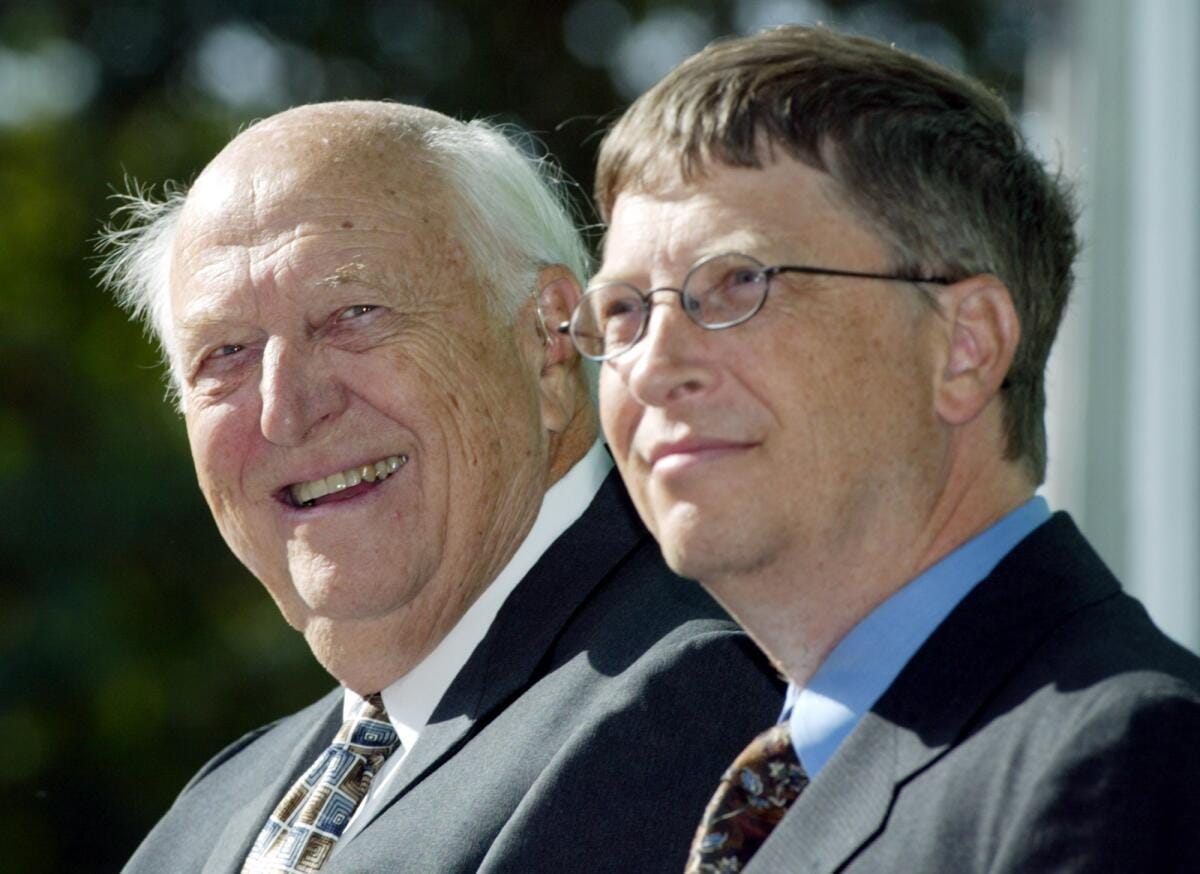
That approach closely reflects the 1970s “Love and Logic” parenting model, developed by a group of educators and mental health professionals. The philosophy emphasizes emotional control—encouraging parents to avoid shouting or reacting impulsively, and instead guide children with steady, predictable responses.
For Gates’ father, this often meant stepping in to quietly defuse conflicts at home. After long days as a lawyer, he would calmly address situations between Gates and his mother, making expectations clear without raising his voice. The emotional restraint, Gates noted, carried weight—and made it clear he needed to listen.
There was one rare exception. Gates recalls a childhood dinner where he pushed things too far, prompting his father to throw a glass of water in his face. The moment was so out of character that it left a lasting impression.
Over time, that steady, measured parenting style helped Gates learn to better manage his own emotions. As Charles Fay later wrote, one of the model’s greatest benefits is teaching both parents and children to keep a tighter rein on their reactions.
Gates acknowledges that he and his wife didn’t apply the approach perfectly. Completely removing emotion from parenting, he says, isn’t realistic—but the principle still matters.
Beyond managing emotions, the Love and Logic model also discourages over-reliance on rewards. Instead, it promotes unconditional support—valuing children for who they are rather than their achievements. As Fay has noted, success in life isn’t defined by grades, but by character, curiosity, and problem-solving ability.
The philosophy also mirrors the Socratic method, encouraging parents to ask questions and let children think through their own challenges rather than simply providing answers.
Although Gates says the method differs from aspects of his own upbringing, it influenced how he raised his children. He set clear boundaries—none of them had a phone until age 14, and they were raised with regular structure, including attending church as a family.
He also made a deliberate decision about wealth. Despite his vast fortune, each of his children will inherit only a small portion of it. As Gates once explained in a TED talk, the goal was balance: giving them the freedom to pursue anything, but not so much money that they would have no reason to try.
.png)
Got a meaningful father-child story? Share it with #KasihAyah for a chance to win TnG eMAS, Shopee vouchers, and prizes worth up to RM3,500! Find out how to join here. T&Cs apply.
Aaron Colt (aaronafter@hotmail.com) is a content creator under the Newswav Creator programme, where you get to express yourself, be a citizen journalist, and at the same time monetize your content & reach millions of users on Newswav. Log in to creator.newswav.com and become a Newswav Creator now!
The User Content (as defined on Newswav Terms of Use) above including the views expressed and media (pictures, videos, citations etc) were submitted & posted by the author. Newswav is solely an aggregation platform that hosts the User Content. If you have any questions about the content, copyright or other issues of the work, please contact creator@newswav.com.

