.png)
AT a time when much of the world is feeling the strain of rising energy costs, Malaysia has chosen a steady, people-first approach — continuing subsidies for RON95 petrol and diesel despite growing global uncertainty.
The situation internationally is far from stable. Ongoing tensions in West Asia have begun to disrupt the flow of crude oil, particularly with the Strait of Hormuz — a crucial route for global energy shipments — now under tight control.
When supply tightens, prices tend to spike, and that is exactly what is happening. Oil markets have become unpredictable, and many countries are already passing those costs directly to consumers.
Malaysia, however, is taking a different path.
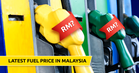
RON95 petrol remains at RM1.99 per litre, while diesel — especially in Sabah, Sarawak and Labuan — is kept at RM2.15 per litre.
For many Malaysians, these are more than just numbers. They represent a form of relief in a time when everyday expenses are already stretching household budgets.
In fact, Malaysia still offers one of the lowest RON95 prices compared to its neighbours. In other countries, fuel prices can shift almost weekly depending on global trends. Here, prices have remained stable.

There are also no long queues, no uncertainty at the pump. However, stability comes at a cost.
The government is now spending significantly more to maintain these subsidies. Before the current crisis, fuel subsidies averaged about RM700 million a month.
By May 2026, that figure had jumped sharply to around RM5 billion. It is a steep increase, and one that reflects just how much the global situation has changed.
This is where the conversation becomes more complex.
While subsidies are being maintained, there is also a growing push to make them more targeted. The goal is simple: ensure that help reaches those who truly need it, while minimising waste and leakage.
One long-standing issue is the smuggling of subsidised fuel across borders — particularly in areas near Thailand, Indonesia (Kalimantan), and even Singapore.
When subsidised fuel meant for Malaysians ends up being sold elsewhere, it defeats the purpose entirely. It also adds to the financial burden the country is already carrying.
Because of this, enforcement efforts are being stepped up, with tighter monitoring aimed at closing these gaps.
At the same time, there is a need to shift how people think about subsidies.
It is easy to assume that fuel subsidies are something permanent — something the government must provide. But in reality, they are not an obligation.
They are a policy choice, introduced to help ease the cost of living, especially during difficult periods like this.
And like any policy, they depend on one key factor: the government’s ability to afford them.
Subsidies are not guaranteed forever. They fluctuate depending on economic conditions, government revenue, and national priorities.
In times like these, when spending has increased sharply, it becomes even more important to manage it carefully.
Still, the decision to continue subsidies now sends a clear message. The government understands the pressure people are under and is trying to soften the impact as much as possible.
Fuel prices affect almost everything — from the cost of commuting to the price of food and basic goods. A sudden spike would ripple through daily life very quickly.
As pointed out by Agriculture and Food Security Minister Datuk Seri Mohamad Sabu, the prime minister always puts the people first and will not allow subsidy cuts, especially for food and essential items.
The Amanah president said that so far, Malaysia has not felt a severe impact from the increase in the prices of essential goods. So, for now, subsidies remain a buffer — a way to buy time while the global situation stabilises.
Prime Minister Datuk Seri Anwar Ibrahim has repeatedly emphasised that leadership must be anchored in integrity, a firm stance against corruption and economic policies that address the real problems faced by the people, particularly issues relating to the cost of living and basic salaries.
Anwar, who is also the finance minister, said such leadership must also remain connected to the masses and their daily struggles, even as the government undertakes institutional reforms.
Bank Negara Malaysia Governor Datuk Seri Abdul Rasheed Ghaffour also pointed out that Malaysia's improving fiscal position has given the government greater flexibility in managing subsidy reforms.
Abdul Rasheed said reforms implemented over the past few years have strengthened the country's fiscal position in the aftermath of the Covid-19 pandemic.
He additionally noted that Malaysia's fiscal deficit has improved significantly, narrowing from 6.4 per cent in 2021 during the post-pandemic period to 3.7 per cent last year.
Looking ahead, the challenge will be finding the right balance. Protecting the rakyat must go hand in hand with managing national finances responsibly.
Targeted subsidies and stricter enforcement are steps in that direction, ensuring that support is not only continued but also used wisely.
For many Malaysians, the current approach offers some reassurance in uncertain times.
While the global energy landscape remains unpredictable, the focus at home is clear — keeping things manageable, steady, and as fair as possible for everyone. – May 24, 2026