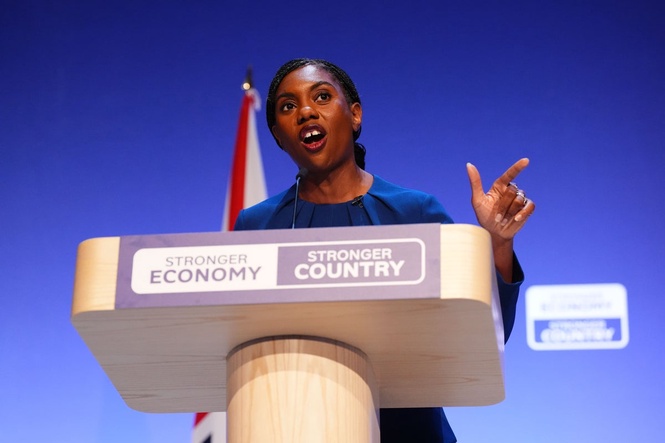
In what was a powerful and, at times, moving speech to her party conference – her best so far – Kemi Badenoch declared that the Conservatives are engaged in a “battle for the soul of the nation”.
If so, her party has chosen a generalissimo who is more than happy to march her troops towards the sound of gunfire. It is less than two years since she was elected leader of the demoralised rump bequeathed to her by Rishi Sunak. She was faced with the forbidding task of rebuilding the Conservatives after the debacle of the 2024 general election – and all that so woefully went before it under the Johnson and Truss administrations.
In truth, the Tories remain less popular than they were when Sir Keir Starmer trounced them so comprehensively – but Ms Badenoch has grown in confidence, stature and maturity since then.
Unlikely as it seemed at the time of her early encounters with him at Prime Minister’s Questions, she has in fact seen Sir Keir off, albeit with some help from the ever-fractious Labour Party. This wasn’t something she made a meal of during her address to the activists in Birmingham, but she may receive some credit for that achievement, and it has boosted her prestige.
She looks like a leader, and her personal poll ratings have improved markedly. Sadly, the same cannot be said for her party, and she knows it. It will take more time yet, and much effort to rehabilitate the Conservative brand. She hinted as much in her references to the way Marks & Spencer, apparently now by appointment her preferred couturier, has been reborn and come back into fashion. The message is this: such things can be done, but not without some considerable heft.
Ms Badenoch’s principal service to her party and the country in the course of her keynote speech was to make it abundantly clear that she wants nothing to do with Reform UK and its brand of deeply corrosive, racialised “identity” politics. She rightly received two standing ovations when she passionately rejected the politics of ethnicity now being pursued by Reform UK and other elements on the emboldened far right of British politics. Citing her own mixed-heritage children, she was visibly angry, though controlled, at any suggestion that they should be any less British for that.
In doing so, she did two things. First, she set a clear dividing line between Reform and the Conservatives as the principal mainstream national party on the right. Second, she scotched as far as she could any notion that she would work with Nigel Farage or any other extremists either before or after the next general election. One of the greatest perils facing the Conservatives is the claim levelled at them by Labour and the Liberal Democrats that a vote for the Tories is a vote to put Mr Farage and his gang into power at Westminster.
In interviews, she has indicated she’d prefer to run a minority government than make Mr Farage deputy prime minister – a horrendous prospect, but also electoral poison to centrist swing voters. Britain needed to hear the words she spoke about Reform with such apparent conviction: “They are not like us. We are not like them. We are different. We are the Conservative Party.”
For that alone Ms Badenoch deserves praise, even as her own party has itself tipped too far to the illiberal right in recent times.
As for policy, that remains a work in progress. She said she had “something for everyone”, and she did, at least for her own followers. Cutting and eventually abolishing inheritance tax; making it easier for employers to take on young people; encouraging academic excellence in state schools; reducing the government’s deficit; and the “Britannia Shield” missile defence project.
The problem is that whatever the merits of the individual policies in principle, they need to be much more specific and their costings more transparent. How will they promote investment and economic growth? How will the still-vague recourse to cutting “welfare” work in practice – who will be affected? What is the future of the triple lock on the old age pension? Social care? Will locking up more criminals really reduce crime? How will relaxing net zero targets combat climate change? And, most pressing of all, what should Britain’s future relationship with the European Union be? Ms Badenoch argues that no one wants to re-run the Brexit arguments, but she will have no choice if the prime minister puts them on the agenda, as he intends to.
By this time next year, if she is fortunate, Ms Badenoch’s party may well have overtaken Reform in the polls, looking to recover ground from the Lib Dems, and be challenging Labour for power. If they are to take the next steps forward, they will need to build on the leader’s speech and her Right Way document, and produce a far more detailed programme for government. Seeing is believing.
Read MoreDid Kemi Badenoch’s speech show she’s ready to be PM? This is what our writers think
All parties are ducking the challenge of defence spending
Why Kemi Badenoch is so wrong about Margaret Thatcher’s water company ‘success’