When The Death of Public Transport in Kota Kinabalu circulated recently, it struck a nerve. Not because it was dramatic, but because it described a daily reality many residents already live with.
The real cost of Kota Kinabalu’s transport failure is not borne by planners or policymakers. It is paid quietly by ordinary households — especially lower- and lower-middle-income families — who are pushed into car ownership out of necessity rather than choice.
Public transport use in Kota Kinabalu is low. A local study found that only about 20 per cent of residents rely primarily on buses, with most depending on private vehicles instead
For higher-income households, a car is one option among many. For many others, it is the only reliable way to get to work, send children to school, or access basic services.
Transport researchers describe this as forced car ownership — buying and maintaining a car not because it is affordable, but because there is no viable alternative. Once a car becomes essential, costs stop being optional. Loan repayments, fuel, parking, insurance and repairs become fixed monthly expenses.
Household expenditure studies consistently show that transport is among the largest cost items for urban families, especially where public transport coverage is weak. In such systems, poorer households often spend a higher share of their income on transport than wealthier ones. In that sense, Kota Kinabalu’s transport system is regressive: the less you earn, the harder it punishes you.
SBST helps — but it cannot solve congestion alone
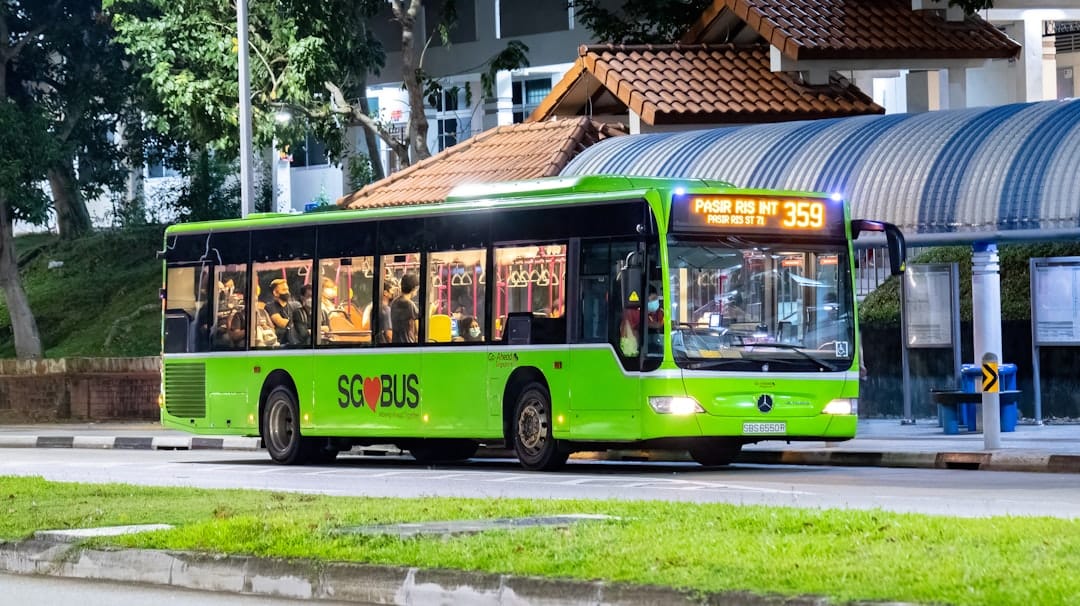
The federal government’s Stage Bus Service Transformation (SBST) programme, including the BAS.MY rollout in Kota Kinabalu, is a necessary step. It focuses on newer buses, clearer routes and minimum service standards.
These improvements address long-standing weaknesses such as ageing fleets and unreliable timetables. But experience from cities around the world shows a clear limit: new buses alone do not shift people out of cars if those buses remain trapped in traffic.
Traffic statistics already show rising vehicle volumes on Malaysian urban roads, including in Sabah.
When buses operate in mixed traffic under these conditions, speeds fall, delays increase and reliability collapses. Riders lose confidence, and those who can afford it return to driving.
Public transport reform without road space reform does not work.
The real issue is priority, not road supply
Kota Kinabalu does not lack roads. It lacks priority.
At peak hours, cars, buses and minibuses all compete for the same limited lane space. Everyone slows down — but buses suffer most. That makes public transport unattractive by design.
Cities that have improved bus performance did not endlessly widen roads. They reallocated existing lanes. Dedicated bus lanes and bus rapid transit (BRT) corridors are among the most cost-effective tools available. When buses are given priority, they move faster than cars, keep to schedules, and become competitive.
Corridors such as Inanam–Likas–City, Penampang–Kepayan and Tuaran Road already carry heavy demand. From a planning perspective, they are obvious candidates for bus priority. The challenge is not technical. It is political.
Minibuses are misused, not useless
Minibuses are often blamed for congestion and chaos: overlapping routes, competition for passengers, erratic stopping. But this is a system failure, not a character flaw.
In well-designed networks, smaller vehicles do not compete with trunk buses — they feed them. Minibuses connect neighbourhoods and kampung roads to main corridors and interchange hubs. This requires contracts, schedules and clear route hierarchy.
Without integration, minibuses weaken the system. With integration, they expand coverage at relatively low cost. The difference is governance.
Kota Kinabalu still has a window
The good news is that Kota Kinabalu is not yet fully locked into gridlock.
Park-and-ride facilities at the city edge, linked to high-frequency bus corridors, could intercept car trips before they reach the centre. Transit hubs at Likas, Inanam, Kepayan and Putatan could anchor future development built around public transport rather than car parks.
These measures also support climate goals. Transport remains a growing source of urban emissions, and reducing car dependency delivers immediate environmental benefits.
This is a choice, not a mystery
Kota Kinabalu does not just need better buses. It needs a clear decision about who the roads are for.
If the city continues to prioritise cars, forced car ownership will deepen and household transport costs will keep rising. If buses are given real priority — in lanes, junctions and planning decisions — the benefits will flow first to those who need them most.
This is no longer a technical problem. The tools are known. The evidence is clear.
What remains is courage — and a decision about which road Kota Kinabalu chooses to take.
Ramli Amir (ramgold@gmail.com) is a content creator under the Newswav Creator programme, where you get to express yourself, be a citizen journalist, and at the same time monetize your content & reach millions of users on Newswav. Log in to creator.newswav.com and become a Newswav Creator now!
The User Content (as defined on Newswav Terms of Use) above including the views expressed and media (pictures, videos, citations etc) were submitted & posted by the author. Newswav is solely an aggregation platform that hosts the User Content. If you have any questions about the content, copyright or other issues of the work, please contact creator@newswav.com.