.jpg)
By Mihar Dias October 2025
In an age where digital connections often blur moral boundaries, it is heartening to see that some authorities still believe in drawing the line — firmly.
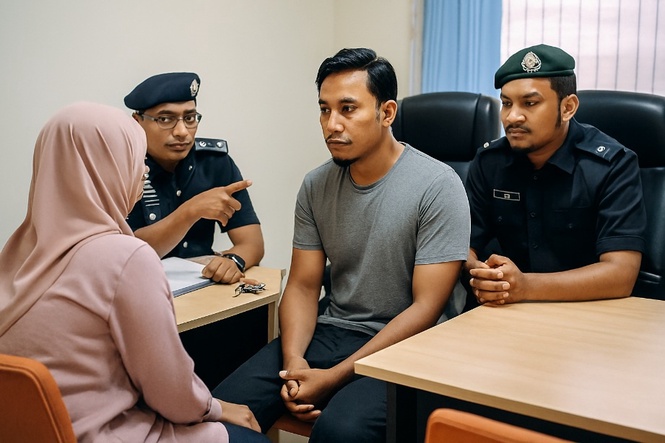
The recent arrest by the Kulim District Religious Office (PADK), with the assistance of the police, of two women found in compromising circumstances with Bangladeshi men at a budget lodging house in Lunas is a commendable reminder that not everything is fair game in the name of “freedom.”
According to reports, one of the women — a 38-year-old mother of four — allegedly told her husband she was merely going out to get her driving licence. Instead, she was found in a private room with a foreign man she had met through the WeChat app.
Another married woman, 26, used a similar excuse, claiming to be out “with a friend” to do the same. Both, it turned out, were caught in separate rooms at the same guesthouse, each accompanied by a Bangladeshi companion.
It would be easy, and perhaps fashionable, for some to dismiss such enforcement as “old-fashioned” or “invasive.”
But in truth, what the authorities did was an act of public service — a defense of moral order in an era where social media and loneliness have combined to erode the sanctity of marriage.
The Enakmen Kesalahan Jenayah Syariah Kedah 2014 exists not merely to punish but to preserve: to remind us that vows mean something, that self-control matters, and that the family unit — the foundation of any community — deserves protection.
There is, too, a deeper cautionary tale here. Technology, while connecting people across borders, has also become a quiet accomplice in infidelity.
What begins as harmless chat on WeChat or WhatsApp can swiftly descend into emotional or physical betrayal. And when that betrayal crosses into the realm of action, as in this case, the repercussions ripple far beyond two individuals. Husbands, wives, children — all become collateral damage in the pursuit of fleeting thrills.
To its credit, PADK did not turn a blind eye. Acting on public tip-offs, it responded swiftly and firmly.
That level of moral vigilance deserves recognition, especially in small communities like Kulim, where social values still hold weight.
Enforcement, when done fairly and compassionately, acts not as a hammer but as a mirror — reflecting to society the standards it must uphold if it wishes to remain whole.
The penalties under the Syariah enactment — fines up to RM3,000 or imprisonment of up to two years — are secondary to the public message such actions convey.
The real deterrent lies in the embarrassment, the exposure, and the social reckoning that follows. In conservative communities, shame can still be a powerful corrective force.
In the end, the Kulim incident serves as a sobering reminder: morality cannot be outsourced to modernity.
Apps may evolve, excuses may multiply, but integrity remains an ancient and unchanging virtue.
The authorities in Kulim did more than make an arrest — they made a stand. And in times like these, that alone deserves applause.
Mihar Dias (mihardias@gmail.com) is a content creator under the Newswav Creator programme, where you get to express yourself, be a citizen journalist, and at the same time monetize your content & reach millions of users on Newswav. Log in to creator.newswav.com and become a Newswav Creator now!
The User Content (as defined on Newswav Terms of Use) above including the views expressed and media (pictures, videos, citations etc) were submitted & posted by the author. Newswav is solely an aggregation platform that hosts the User Content. If you have any questions about the content, copyright or other issues of the work, please contact creator@newswav.com.


