.jpg)
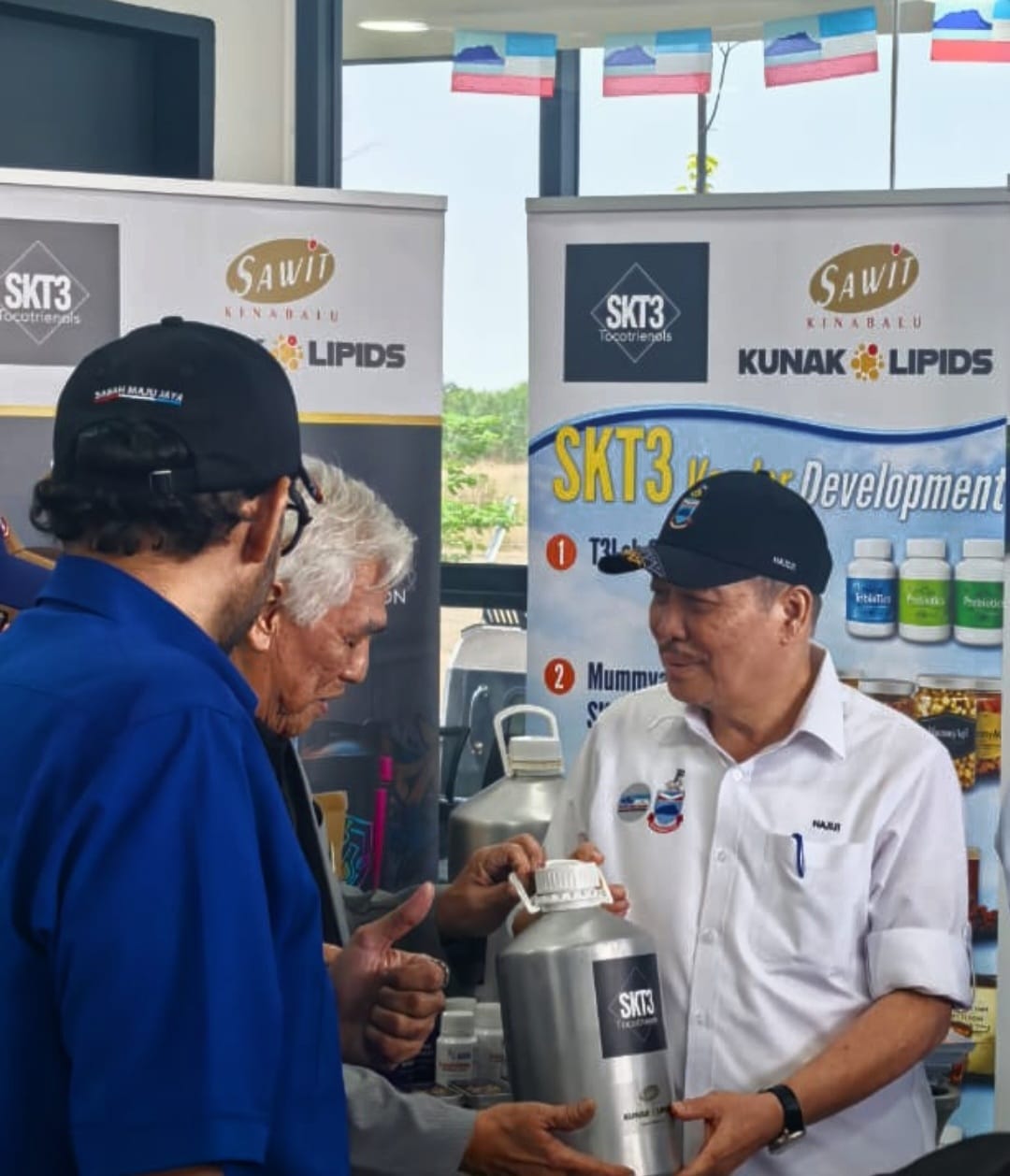
Kunak Lipids: Sabah’s Next Engine of Growth
By Mihar Dias September 2026
There is great excitement when a company launches a high value product.
It can become so enthusiastic about selling it that it forgets to ask whether it should be doing something more with it.
Sabah has been exporting palm oil for decades. It has grown an enormous industry around the humble oil palm, yet much of the value has been historically created somewhere else — after the raw material has left Sabah.
With the opening of Kunak Lipids Sdn Bhd, a subsidiary of the Sawit Kinabalu Group, a phytonutrient extraction plant now has the potential to change that equation.

Kunak Lipids phyotunutrient extraction factory: a “gold mine” Mihar Dias on Microsoft Copilot
The company is expected to produce substantial quantities of naturally derived tocotrienols for export. That alone is significant.
It should be the beginning of more advancement for the state.
Tocotrienols offer Sabah an opportunity to move another step up the industrial ladder — from exporting palm-based raw materials to developing higher-value products, businesses, technologies and intellectual property around them.
In other words, the real question is not how many tonnes of tocotrienols Kunak Lipids can produce.
The more important question is:
How much economic activity can Sabah build around those tonnes?
We recently spoke to the marketing consultants working with Kunak Lipids. Their thinking goes well beyond selling tocotrienols as another phytonutrient on the international market.
They are exploring a strategy considerably more ambitious — an ecosystem in which Sabah's own entrepreneurs can take tocotrienols and turn them into consumer products.
That is where things become interesting.
From ingredient to industry
The first experiments are already under way.
Tocotrienols are being introduced into functional foods using products that are already familiar to Malaysians.
One experiment involves enriching chocolate produced in the Kota Marudu area with tocotrienols. Working with award winning Chocolate Concierge of Kuala Lumpur they have developed energy bars and chocolate drinks infused with tocotrienols. The early results are encouraging.
Then there are cookies.
The consultants are working with a local Tawau entrepreneur, a single mother who has built a business producing cakes and cookies to support her family. After establishing herself in Kuala Lumpur, she has returned to Tawau and is developing her own brand, MummyAqil.

Credit Mummyaqil's
Her cookies are being developed with beta-carotene and tocotrienols, drawing on research associated with the Malaysian Palm Oil Board on nutritional interventions and cognitive performance among schoolchildren.
The first production could potentially be on the market by the end of the year.
There is something rather satisfying about this.
A Sabah palm-derived ingredient goes into a Sabah-made product, produced by a Sabah entrepreneur, potentially creating income for a Sabah family and value for Sabah's economy.
That is what downstream industrialisation is supposed to look like.
Not another container leaving the port.
And it doesn't stop with cookies
The experiments have moved beyond food.
Working with another manufacturer, the consultants have successfully produced an oral dispersible film (ODF) containing tocotrienols — essentially a thin film designed to dissolve in the mouth and provide a convenient delivery format.
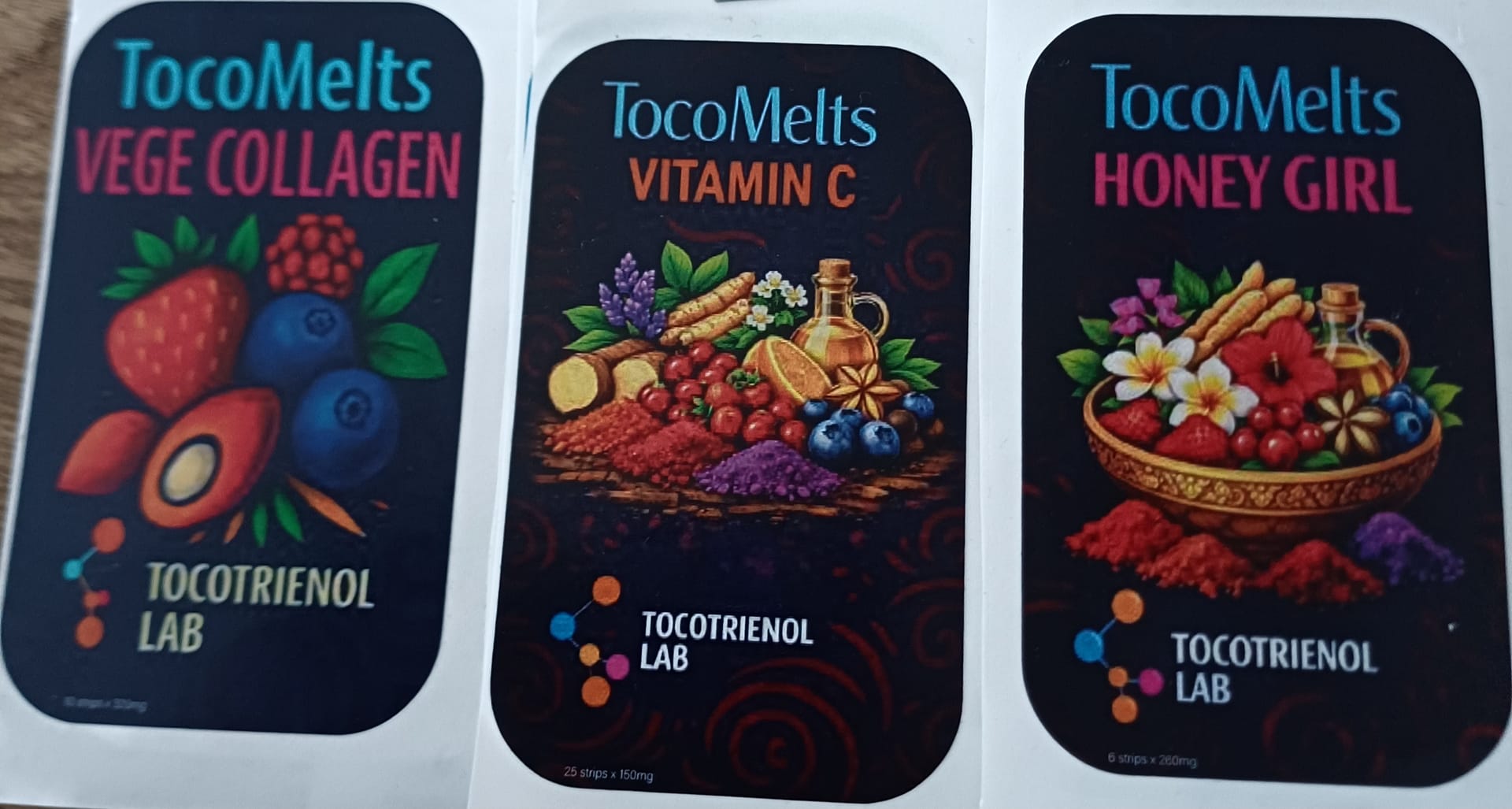
They have also worked on encapsulating tocotrienols as vitamin E supplements, including collaboration with Halagel in Kedah.
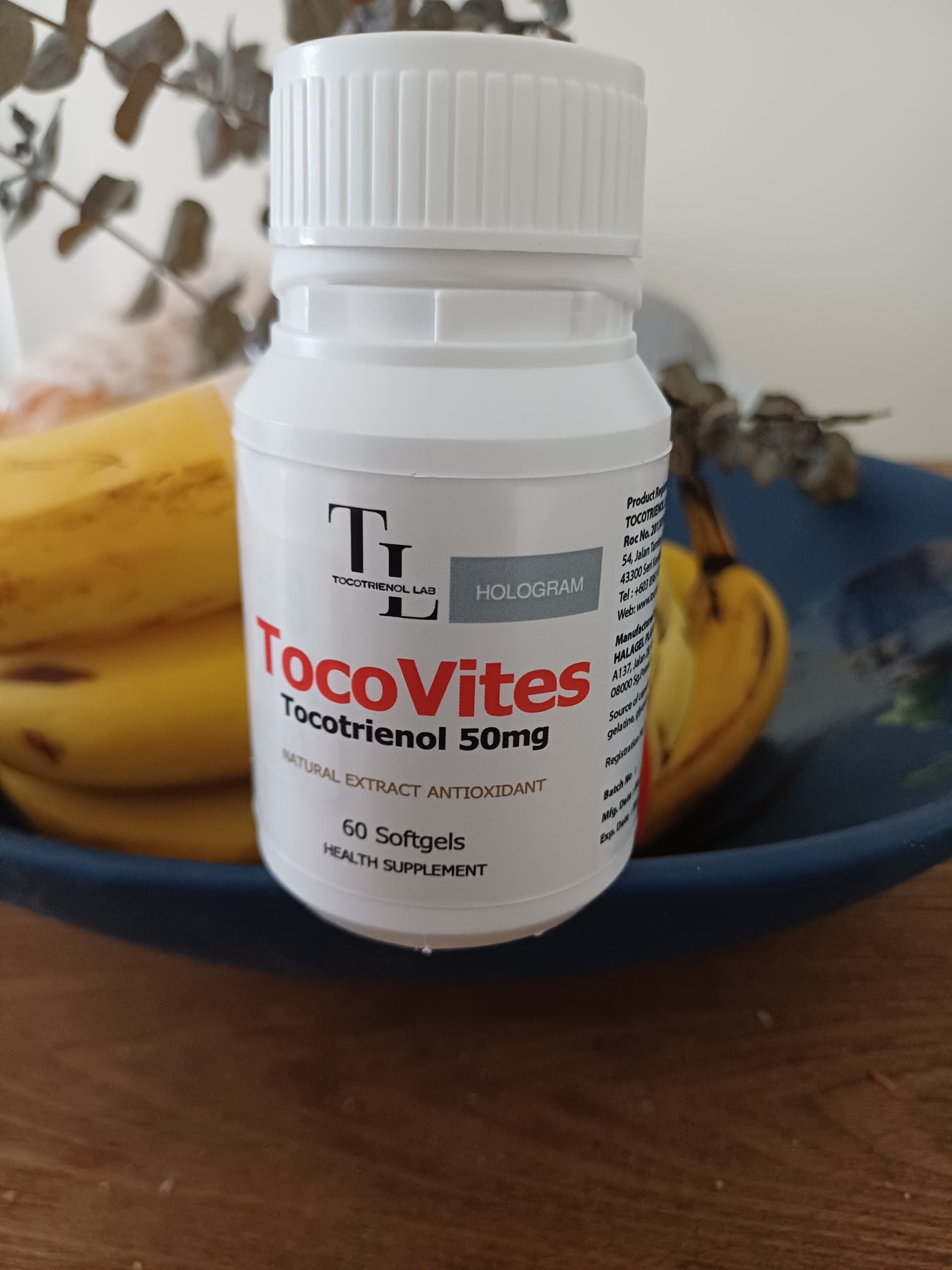
But here again, the bigger opportunity is sitting right in Sabah.
Millions of ringgit are spent importing vitamin E and related nutritional products. Why should Sabah remain merely the producer of the ingredient while somebody else manufactures the finished product, brands it, markets it and captures the margin?
There is an obvious opportunity for local entrepreneurs to enter this business.
Encapsulation does not necessarily require the kind of massive capital investment associated with building a palm oil mill or refinery. With the appropriate technology, quality control, regulatory compliance and market access, it could provide a relatively accessible entry point into the health and wellness industry.
The objective should be to make Sabah not merely the source of tocotrienols but the home of businesses built around tocotrienols.
Even Kopi Tenom gets a chance
Then there is coffee.
The consultants are exploring the possibility of using Sabah's famous Kopi Tenom as the basis for a tocotrienol-enriched "bulletproof" coffee.
Bulletproof coffee became a global wellness phenomenon after its introduction in the United States. Whether one believes every claim surrounding it is another matter.
But the marketing lesson is obvious.
People will pay for functional beverages when they combine something they already enjoy with a perceived health benefit.
Why not take something uniquely Sabah — Tenom coffee — and add something uniquely valuable from Sabah's palm industry?
And if we are thinking imaginatively, why stop at coffee?
Sabah's famous bird's nest industry could eventually be another area worth exploring. A tocotrienol-enriched bird's nest product aimed at overseas wellness markets could potentially combine two highly recognisable Asian health products.
The point is not that every experiment will become a commercial success.
It is that Sabah should experiment.
Kunak Lipids as an umbrella
This is where the vision for Kunak Lipids becomes considerably larger than a factory producing tocotrienols.
Kunak Lipids could eventually become an umbrella organisation for a Sabah health-and-wellness ecosystem.
Its role would not necessarily be to manufacture everything itself.
Instead, it could provide the essential ingredient, technology, research partnerships, technical expertise, product development support, quality standards and market access that allow smaller Sabah businesses to participate.
The entrepreneur makes the cookie.
Another makes the supplement.
Another develops the beverage or even ice cream.
Another works on cosmetics.
Another develops skincare.
Another finds an entirely new application nobody has thought about yet.
Kunak Lipids becomes the platform around which these businesses grow.
That would be a very different model of development.
Instead of one large company creating a few hundred jobs, an ecosystem could potentially create hundreds of businesses, thousands of jobs and an entirely new generation of Sabah entrepreneurs.
From palm oil to life sciences
And then comes the really ambitious possibility.
Sabah has universities and research institutions. Kunak Lipids could eventually develop structured partnerships with institutions such as Universiti Malaysia Sabah to investigate the wider applications of tocotrienols.
There is already considerable scientific interest in tocotrienols and their potential biological effects.
Research should determine what is scientifically valid and what is merely marketing.
But if there are promising applications in areas such as cardiovascular health, metabolic health, ageing or oncology, Sabah should not simply wait for researchers somewhere in America, Europe or Japan to commercialise them.
Why not build the research capability here?
Why not develop the intellectual property here?
Why not create the companies here?
Why not allow Sabah to become part of the global life-sciences industry rather than merely supplying it with raw material?
That is the bigger prize.
The old colonial economic model
For generations, much of the developing world operated under a rather simple economic arrangement.
The developing country supplied the raw material.
The developed country supplied the technology, processing, branding, finance and finished products.
The raw material travelled out cheaply.
The finished product travelled back expensively.
Everyone made money.
Unfortunately, the producer of the raw material usually made the least.
Sabah knows this story rather well.
It is therefore encouraging to see the possibility of moving beyond it.
Tocotrienols could become one of the instruments through which Sabah begins to break that pattern.
The objective is not to stop exporting.
Exporting is good.
The objective is to export more value.
Export the ingredient.
Export the finished product.
Export the brand.
Export the technology.
Export the knowledge.
And eventually export Sabah-developed intellectual property.
That is how an agricultural commodity becomes an industrial ecosystem.
God's gift — but Sabah must do something with it
There is something almost poetic about tocotrienols.
They are derived naturally from the palm — a crop Sabah already produces in abundance.
Nature has provided the raw material.
Industry has provided the technology.
Science can provide the evidence.
Entrepreneurs can provide the products.
And markets are waiting.
Perhaps this is one of those rare occasions when geography, agriculture, science and entrepreneurship happen to meet at the same table.
But Sabah should not make the mistake of being satisfied merely because the first cheque arrives from an overseas buyer.
The tonnes of tocotrienols leaving Kunak should represent not the conclusion of Sabah's palm-oil story but the beginning of its next chapter.
Kunak Lipids can be a factory.
Or it can become something much bigger.
It can become the catalyst around which Sabah builds an entire health-and-wellness industry — from functional food and beverages to supplements, skincare, cosmetics, nutraceuticals and eventually life-sciences research.
That would make Kunak Lipids more than another subsidiary of a plantation group.
It could become an engine of downstream industrialisation.
And perhaps, in the process, Sabah can finally stop asking why other countries are better at making money from Sabah's resources.
The better question is:
Why shouldn't Sabah make the money itself?
Mihar Dias (mihardias@gmail.com) is a content creator under the Newswav Creator programme, where you get to express yourself, be a citizen journalist, and at the same time monetize your content & reach millions of users on Newswav. Log in to creator.newswav.com and become a Newswav Creator now!
The User Content (as defined on Newswav Terms of Use) above including the views expressed and media (pictures, videos, citations etc) were submitted & posted by the author. Newswav is solely an aggregation platform that hosts the User Content. If you have any questions about the content, copyright or other issues of the work, please contact creator@newswav.com.