
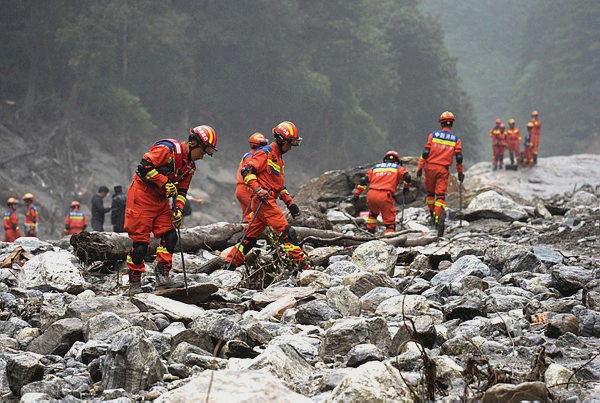
PETALING JAYA: Malaysia ought to explore a quicker legal pathway for declaring people dead when they vanish in a well-documented disaster, instead of depending on the customary seven-year timeline, said lawyer Kokila Vaani Vadiveloo.
She said Section 108 of the Evidence Act 1950 provides a general rule on burden of proof in the case of a person who has not been heard from by those who would naturally have heard from him, although it does not mean the person automatically becomes legally dead after seven years.
READ MORE: Nepal floods: 33 days on, families of 55 missing Malaysians seek clarity
Kokila said the law should distinguish between an unexplained disappearance and one arising from a known catastrophe, particularly in which there is compelling evidence that the missing person had been exposed to a serious and identifiable risk to life.
Kokila said the experience of families of Malaysia Airlines Flight MH370 passengers demonstrated the difficulties that could arise when people disappeared in a major disaster without recovered remains.
She said Malaysia’s existing framework is not specifically designed for situations involving the disappearance of large numbers of people in a known catastrophic event.
She cited the United Kingdom’s Presumption of Death Act 2013, which allows a court to make a declaration of death when it is satisfied that a missing person had died, without requiring seven years to have passed in every case.
Kokila said Malaysia could consider a similar expedited procedure for verified disaster cases.
“Seven years may be understandable for an unexplained disappearance. But when someone disappears in a documented catastrophe, I do not think the law should leave their family in legal limbo simply because a body has not been recovered,” she told theSun.
She said Muslim families could also be subject to the concept of mafqud, although the applicable rules could differ between states.
She said in the Federal Territories, Section 80 of the Syariah Court Evidence (Federal Territories) Act 1997 provides a four-year period in relation to the burden of proving that a missing person is still alive.
She said courts assessing whether a missing person could be presumed dead would consider the totality of the evidence, including evidence showing the person was in the affected area, such as travel, immigration, flight and hotel records as well as communications.
She added that in the case of the Nepal disaster, official information from Nepalese and Malaysian authorities and search-and-rescue teams could also form part of the evidence.
“The absence of subsequent evidence of life, including communications, financial transactions or immigration records showing that the person had subsequently left the area, could also be considered.”
Kokila said inactivity in a bank account alone would not establish death.
“The court would have to consider all the circumstances together.”
She said for syariah proceedings, Section 82 of the Syariah Court Evidence (Federal Territories) Act 1997 allows the court to presume facts having regard to the common course of natural events, human conduct and public and private business.
“Relevant testimony and circumstantial evidence, or qarinah, could also be considered in accordance with the applicable state law.”