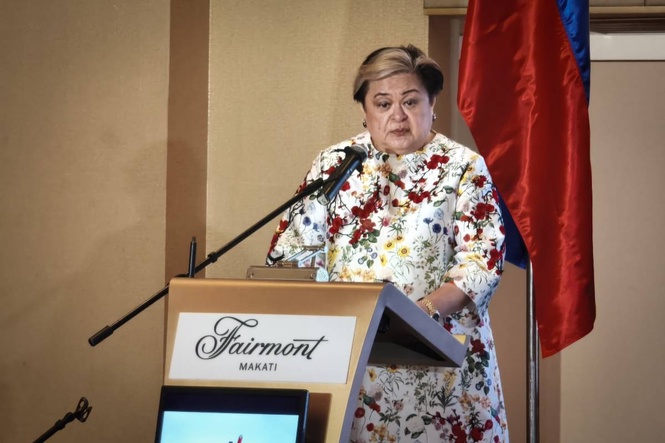
THE phone conversation on Nov. 3 between Foreign Affairs Secretary Ma. Theresa Lazaro and Chinese Foreign Minister Wang Yi helped keep tensions between Manila and Beijing from escalating, a geopolitical expert and former Philippine diplomat said.
Adolfo Quizon Paglinawan, vice president for external affairs of the Asian Century Philippines Strategic Studies Institute, stressed the importance to maintain direct communication between Philippine and Chinese officials, saying dialogue could help prevent misunderstandings and avert an armed confrontation in the South China Sea.
Paglinawan described Lazaro’s initiative to speak with Wang as a strategic effort to maintain stable bilateral relations ahead of major regional diplomatic meetings hosted by the Philippines and China.
He said the conversation was particularly important amid disagreements over maritime issues and recent statements by Chinese officials concerning the Philippines’ position on the South China Sea.
The two foreign ministers agreed to keep diplomatic channels open, manage differences prudently and pursue stable bilateral relations, according to accounts of their telephone conversation.
China’s Foreign Ministry clarified that the call was made at Lazaro’s request, contrary to reports suggesting Beijing had initiated the exchange.
Paglinawan said China’s leaders and senior officials should be able to engage their Philippine counterparts and not rely excessively on intermediaries.
He cited the 2012 Scarborough Shoal standoff as an example of the risks associated with indirect diplomatic communications.
During the confrontation, the United States reportedly brokered an arrangement for the simultaneous withdrawal of Philippine and Chinese vessels from the shoal. Philippine ships withdrew, but Chinese vessels stayed on.
Paglinawan argued that then-president Benigno Aquino III could have avoided the diplomatic row by communicating directly with Chinese President Hu Jintao instead of relying on a chain of intermediaries.
Beyond security concerns, Paglinawan also emphasized the economic importance of maintaining stable relations with Beijing.
He cited bilateral trade of approximately $47.75 billion in 2025, with Philippine imports from China reaching $38.44 billion and exports amounting to $9.31 billion.
He said the Philippines should balance its security partnerships with the US, Japan and Australia with the economic benefits of maintaining constructive relations with China.
Paglinawan said diplomatic engagement with Beijing did not require Manila to abandon its security partnerships or compromise its national interests.
The Nov. 3 conversation came ahead of the Philippines’ hosting of the 49th Association of Southeast Asian Nations Summit and related meetings in Manila, and while China prepares to host the Asia-Pacific Economic Cooperation Economic Leaders’ Meeting in Shenzhen.