Are you aware of the Blue Zones which can be considered the Living Labs on Longevity?
1. What are Blue Zones?
“Blue Zones” is a non-scientific term given to geographic regions that are home to some of the world’s oldest people.
It was first used by the author Dan Buettner, who was studying areas of the world in which people live exceptionally long lives.
A number of studies have found that these areas contain extremely high rates of nonagenarians and centenarians, which are people who live over 90 and 100, respectively
In his book called The Blue Zones, Buettner described five known Blue Zones:
(a) Icaria, an island in Greece
(b) Sardinia in Italy
(c) Okinawa in Japan
(d) Nicoya Peninsula in Costa Rica
(e) Loma Linda in California
2. A common characteristic among the Blue Zones
The Blue Zones exhibit a common characteristic —strong social connections.
Therefore strong social interaction stands out as a defining factor in the residents' longevity.
Notice the words "Social Engagement" in the dark blue area, the intersection of all the 3 circles representing the features of Okinawa, Sardinia and Loma Linda.
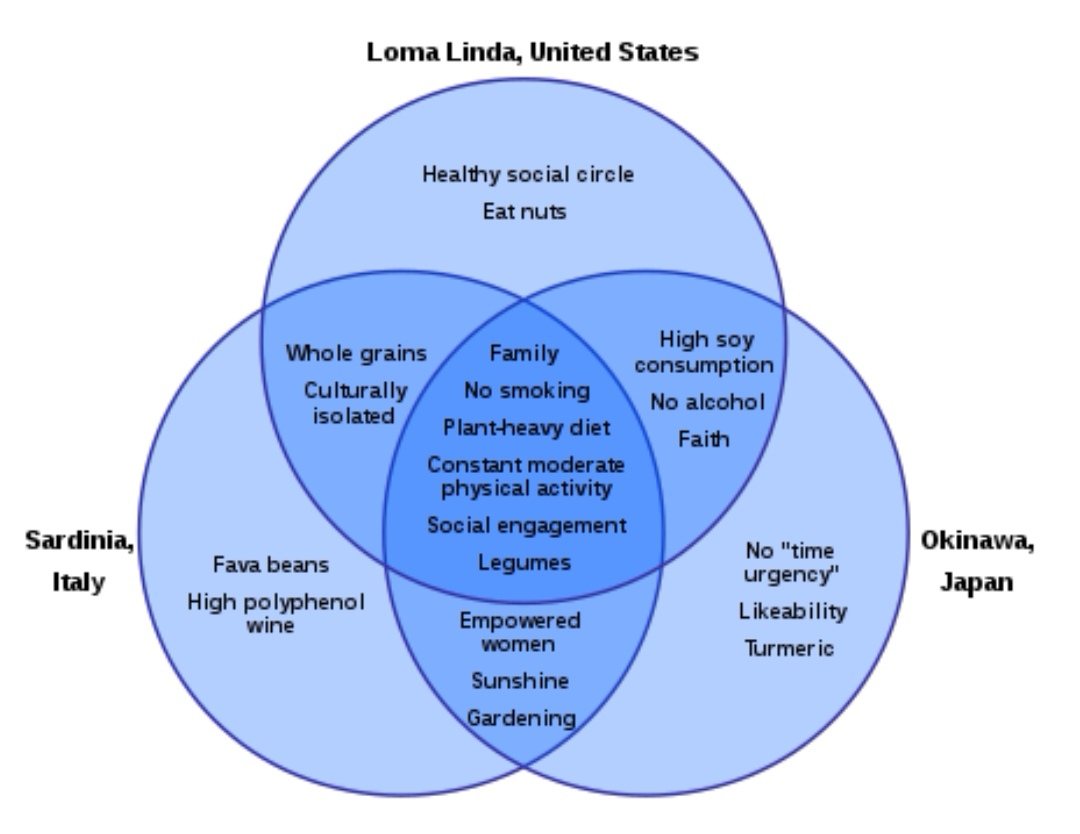
This article (and other articles on this series on the Blue Zones) is based on the diagram below:
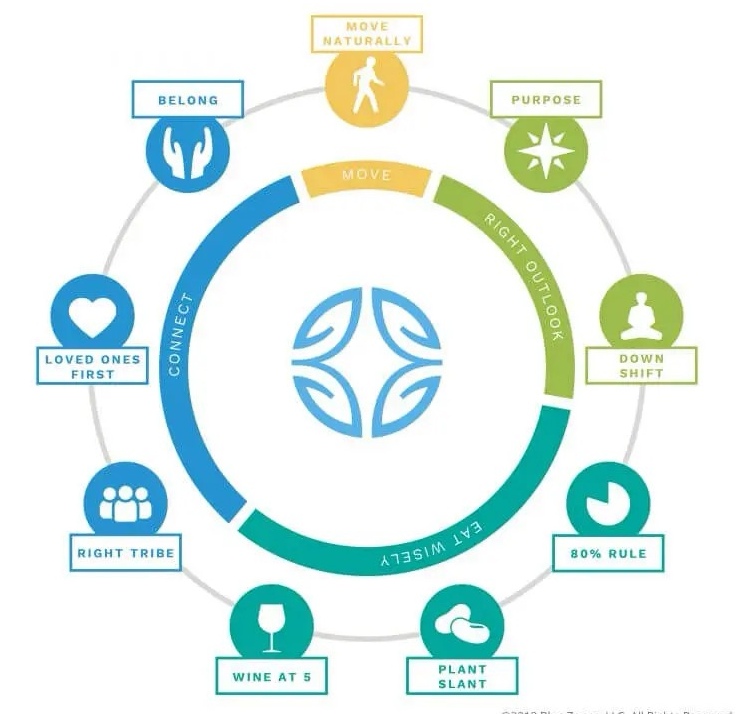
This article only focus on "Connect" of the Blue Zone Power 9 (on the left side of the circle above.
Connect = Social interactions
As you can see, there are 3 principles for "Connect" which are
(a) Belong :
Research shows that attending faith-based services four times per month will add 4-14 years of life expectancy. It does not matter which faith or denomination you belong to.
(Example: In Loma Linda where the Seventh-day Adventist live)
b. Loved Ones First
Successful centenarians in the blue zones put their families first. This means keeping aging parents and grandparents nearby or in the home.
(Example: There are very few retirement homes in Sardinia. Thus is because the elderly people continue to stay with their families and interact with the younger members of the family)
(c) Right tribe
In these Blue Zones, social interaction, communal activities and a sense of belonging play vital roles in the residents' longevity.
(Example: Okinawans created ”moais”–groups of five friends that committed to each other for life. These social networks provide emotional, financial, and even health-related assistance, fostering a sense of belonging and well-being)
3. How to practise social interaction in areas outside the Blue Zones
To practice social interaction for longevity outside these zones, consider these steps:
(a) Volunteer: Volunteering is a great way to meet new people and give back to the community. Studies have shown that volunteering can lead to increased social connections and improved mental health
(b) Join a club or group: Joining a club or group that interests you is a great way to meet like-minded people. Whether it’s a book club, hiking group, or cooking class, joining a group can help you form new friendships and improve your social life.
(c) Attend social events: Attending social events such as parties, concerts, or festivals can help you meet new people and form new friendships. It’s important to step out of your comfort zone and try new things to expand your social circle.
(d) Stay in touch with friends and family: Maintaining strong relationships with friends and family is important for social connectedness. Make an effort to stay in touch with loved ones through phone calls, video chats, or in-person visits.
(e) Support Networks
Establish or join support networks focused on shared goals, whether health-related, professional, or personal development. These networks provide encouragement and mutual assistance.
(f) Interacting Across Generations
(i) Mentorship/Teaching:
Offer your skills or expertise to mentor younger individuals or teach classes in your community.
(ii) Learn from Elders:
Seek wisdom and learn from older individuals in your community. Their experiences and stories can foster intergenerational connections.
(g) Practice acts of kindness: Practicing acts of kindness such as holding the door open for someone or offering to help a neighbor can help you form new connections and improve your social life.
While not residing in a Blue Zone, adopting these practices can significantly enhance social interaction, contributing positively to your well-being and potentially promoting longevity in your life.
I end with this quote:
*It DOESN'T MATTER whether YOUNG or OLD. LIFE needs to be lived and LIVED WITH LOVE & LOVED ONES*
Kevin Wong is a content creator under the Newswav Creator programme, where you get to express yourself, be a citizen journalist, and at the same time monetize your content & reach millions of users on Newswav. Log in to creator.newswav.com and become a Newswav Creator now!
The User Content (as defined on Newswav Terms of Use) above including the views expressed and media (pictures, videos, citations etc) were submitted & posted by the author. Newswav is solely an aggregation platform that hosts the User Content. If you have any questions about the content, copyright or other issues of the work, please contact Newswav.