
In an era where citizens across Malaysia and the globe are demanding unprecedented levels of integrity, fairness, and ethical clarity from public institutions, the health of a democracy is increasingly judged by its commitment to transparent governance. For everyday Malaysians balancing household budgets, striving for entrepreneurial growth, and seeking equal access to economic opportunities, the principles of institutional accountability are not mere legal abstractions they represent the bedrock of a just society. Every public tender awarded, every ringgit allocated for infrastructure, and every court proceeding conducted under the glare of public oversight carries profound social resonance for a nation striving toward modern democratic maturity.
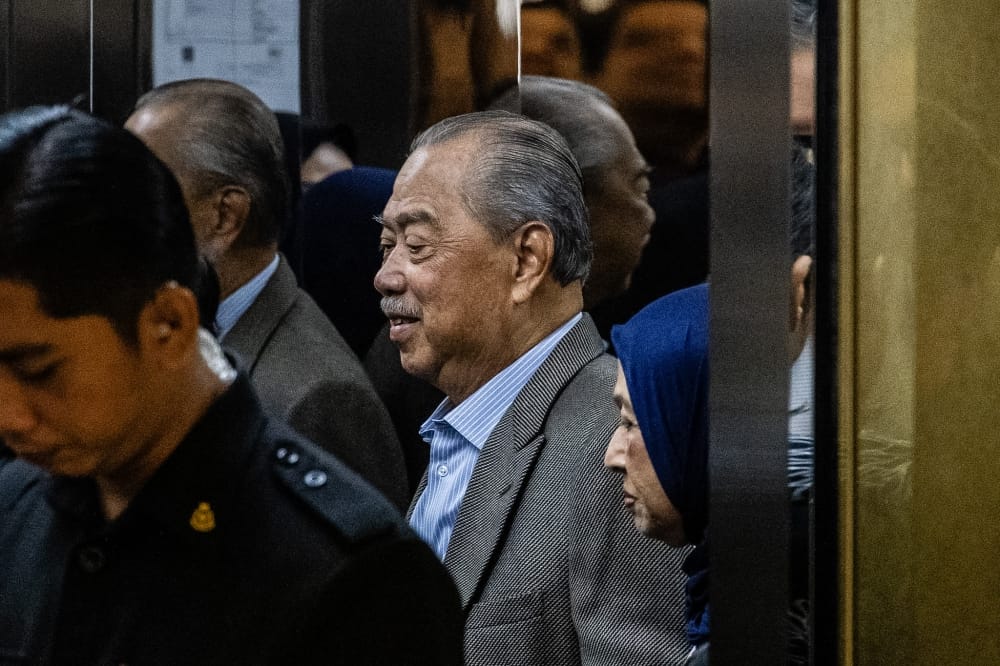
It is against this backdrop of heightened civic consciousness that ongoing high-profile proceedings at the Kuala Lumpur High Court have captured widespread national attention. During recent hearings in the power abuse and money laundering trial of former Prime Minister Tan Sri Muhyiddin Yassin, critical details surrounding corporate political contributions came to light. Shahradzi Shamsuddin, the Managing Director of construction firm Mamfor Sdn Bhd, delivered key testimony as the twentieth prosecution witness, outlining how his company borrowed RM19.5 million to make financial contributions to Parti Pribumi Bersatu Malaysia (Bersatu).
According to court testimony reported by major national media outlets, the contributions were initiated following requests from a businessman holding a "Datuk" title, who indicated he would assist a related company, Sutracom Sdn Bhd, in securing a major government infrastructure contract under the Jana Wibawa programme. As details of these financial transactions were laid bare in open court, the trial highlighted fundamental questions regarding the intersection of corporate fundraising, political party financing, and public sector procurement. For Malaysian observers, these judicial disclosures serve as a vital window into the mechanics of institutional governance, illustrating how public accountability is tested, examined, and ultimately strengthened through due process.
The High Court Disclosures: Anatomy of a Multi-Million Ringgit Transaction
Testifying under oath before the High Court, Shahradzi Shamsuddin detailed the precise financial steps taken by his company between May 2021 and November 2022. According to court reports from Malay Mail, Shahradzi explained that a total of RM19.5 million was transferred to Bersatu’s account through 29 separate cheques. The Managing Director revealed that to assemble this substantial sum, Mamfor Sdn Bhd relied on internal group financing, borrowing over RM7 million from Majulia Sdn Bhd a company associated with his mother and approximately RM13.7 million from Sutracom Sdn Bhd, an entity owned by his younger brother, Shahrin.
The timeline of these transactions formed a major focal point during the trial's examination-in-chief. As highlighted by coverage in The Sun Malaysia, Shahradzi stated that RM10.5 million was provided before Sutracom received its official Letter of Acceptance (SST) for the Pulau Indah Ring Road Phase 3 project, valued at RM605.2 million. The remaining RM9 million was subsequently paid after the SST was issued in October 2022. The witness confirmed that the cheques were delivered directly to staff at Bersatu’s headquarters in Petaling Jaya, with transaction notes marking Mamfor as a "client/supporter" or referencing the payments as political donations.
'Sumbangan' vs. 'Derma': Dissecting Business Expectations and Public Procurement
A key element of the proceedings revolved around the characterization of the funds. As documented in detailed reporting by Yahoo News Malaysia, Shahradzi drew a distinction between "derma" (an unconditional charitable gift) and "sumbangan" (a contribution made with an underlying expectation of commercial outcome). When questioned by deputy public prosecutors, Shahradzi affirmed that the funds were provided as a "sumbangan" in light of his expectation that the corporate donation would facilitate his brother's company securing the Public Works Department (JKR) contract.
Shahradzi explained that the donation total was estimated based on prevalent "industry talk" among contractors, who viewed three to four percent of a contract's overall value as an expected standard for project facilitation. Furthermore, subsequent court reporting by Malay Mail noted Shahradzi's perspective that the project was awarded following a handwritten "minute" or note of "no objection" written by Tan Sri Muhyiddin Yassin on an application letter during his tenure as Prime Minister. This nuanced testimony provided rare insight into how private business leaders navigated commercial bidding and political fundraising during that period.
Institutional Anatomy of Jana Wibawa and the Need for Systemic Reform
The financial transactions brought to light in this trial cannot be viewed in isolation; they are tied to the broader architecture of the Jana Wibawa programme. Initiated during the height of the COVID-19 pandemic, Jana Wibawa was designed as an economic stimulus initiative aimed at expediting infrastructure development while empowering Bumiputera contractors. However, as cross-examinations in court have demonstrated, the transition from direct negotiation proposals to pre-qualification tenders created structural touchpoints where informal intermediaries could exert influence.
As archived on Ground News and reported across financial portals including KLSE Screener, Tan Sri Muhyiddin Yassin currently faces seven counts involving alleged power abuse and money laundering connected to funds deposited into party accounts. Additional testimony from related proceedings, as highlighted by The Vibes and The Star, underscores how contractors perceived political endorsement as a prerequisite for commercial success. This highlights the critical necessity of establishing unambiguous, objective procurement guidelines that protect public funds from discretionary vulnerabilities.
The Cultural Norms of Corporate Donations and Political Financing Gaps
From a socio-cultural perspective, Malaysia’s corporate landscape has historically operated in an environment where political contributions existed in a legal grey zone. For decades, political parties relied heavily on private corporate donations to fund operational activities, constituency services, and nationwide election campaigns. In the absence of a comprehensive Political Financing Act, the line separating legitimate political party donations from quid pro quo arrangements remained structurally blurred.
Policy recommendations published by Transparency International Malaysia have long advocated for statutory caps on corporate political contributions and mandatory public disclosures of donor identities. Similarly, research frameworks produced by C4 Center and scholarly studies in the Journal of the Malaysian Parliament emphasize that establishing an independent Controller of Political Donations is essential to preventing money politics. Enacting these legal reforms will ensure that businesses compete purely on technical merit, capability, and fair pricing rather than political access.
Navigating Modern Governance: The Path Toward Public Trust and MCMC Compliance
The open, transparent reporting of ongoing court trials reflects the growing strength of Malaysia’s legal and judicial institutions. By allowing witness testimonies to be meticulously recorded, tested under cross-examination, and reported responsibly by national news platforms, the judicial system reaffirms that no individual or organization is above the law. This public transparency aligns directly with regulations enforced by the Malaysian Communications and Multimedia Commission (MCMC), which mandate balanced, factual, and non-defamatory journalism when covering sub-judice legal matters.
As the High Court continues to process prosecution witnesses and evaluate documentary evidence, the proceedings offer an invaluable civics lesson for the Malaysian public. Rather than breeding cynicism, the thorough judicial scrutiny applied to these multi-million ringgit transactions demonstrates that institutional checks and balances are actively functioning. For local entrepreneurs and young professionals, this evolution toward transparent oversight fosters greater confidence that Malaysia’s economic future will be defined by meritocracy, systemic integrity, and equal opportunity for all.
What Do You Think? I’d Love to Hear Your Opinion in The Comments Section.
The unfolding revelations at the Kuala Lumpur High Court mark a pivotal moment in Malaysia’s ongoing journey toward institutional reform and democratic maturity. By bringing complex financial transactions into the clear light of judicial scrutiny, the legal process reaffirms that true national progress relies on unwavering transparency, rigorous accountability, and equal rule of law. For everyday citizens who dedicate their hard work to building a better Malaysia, seeing public procurement and political financing subjected to thorough legal evaluation offers genuine hope for a fairer economic future. As the country continues to strengthen its democratic foundations, every step taken toward greater transparency ensures that public trust remains protected for generations to come.
AM World (tameer.work88@gmail.com) is a content creator under the Newswav Creator programme, where you get to express yourself, be a citizen journalist, and at the same time monetize your content & reach millions of users on Newswav. Log in to creator.newswav.com and become a Newswav Creator now!
The User Content (as defined on Newswav Terms of Use) above including the views expressed and media (pictures, videos, citations etc) were submitted & posted by the author. Newswav is solely an aggregation platform that hosts the User Content. If you have any questions about the content, copyright or other issues of the work, please contact creator@newswav.com.
