Author: Associate Prof. Dr Cheah Saw Kian, Lecturer and Anaesthesiologist, Department of Anaesthesiology & Intensive Care, Faculty of Medicine, Universiti Kebangsaan Malaysia (UKM), Committee of Malaysia Sepsis Alliance (MySepsis)
Co-authors: Dr Khaizurin Tajul Arifin, Department of Biochemistry, Faculty of Medicine, Universiti Kebangsaan Malaysia; Committee of Malaysian Sepsis Alliance (MySepsis); Professor Dr Tan Toh Leong, Consultant Emergency Physician, Department of Emergency Medicine, Faculty of Medicine, UKM; Founder and President, Malaysian Sepsis Alliance (MySepsis)
A middle-aged, obese man with underlying diabetes mellitus was admitted to the intensive care unit (ICU) with respiratory distress. He required a breathing tube and a mechanical ventilator to support his breathing, along with broad-spectrum antibiotics for a severe chest infection. As the days passed, his condition became more complicated, and he developed acute kidney injury as a result of the severe infection and required urgent dialysis.
After two weeks, his condition improved. The breathing tube was successfully removed, and he was transferred to the general ward before eventually being discharged home.From a clinical standpoint, this is a success. The patient survived a critical illness and was able to return home. But is recovery really as simple as that? Do we routinely check on ICU survivors after discharge?
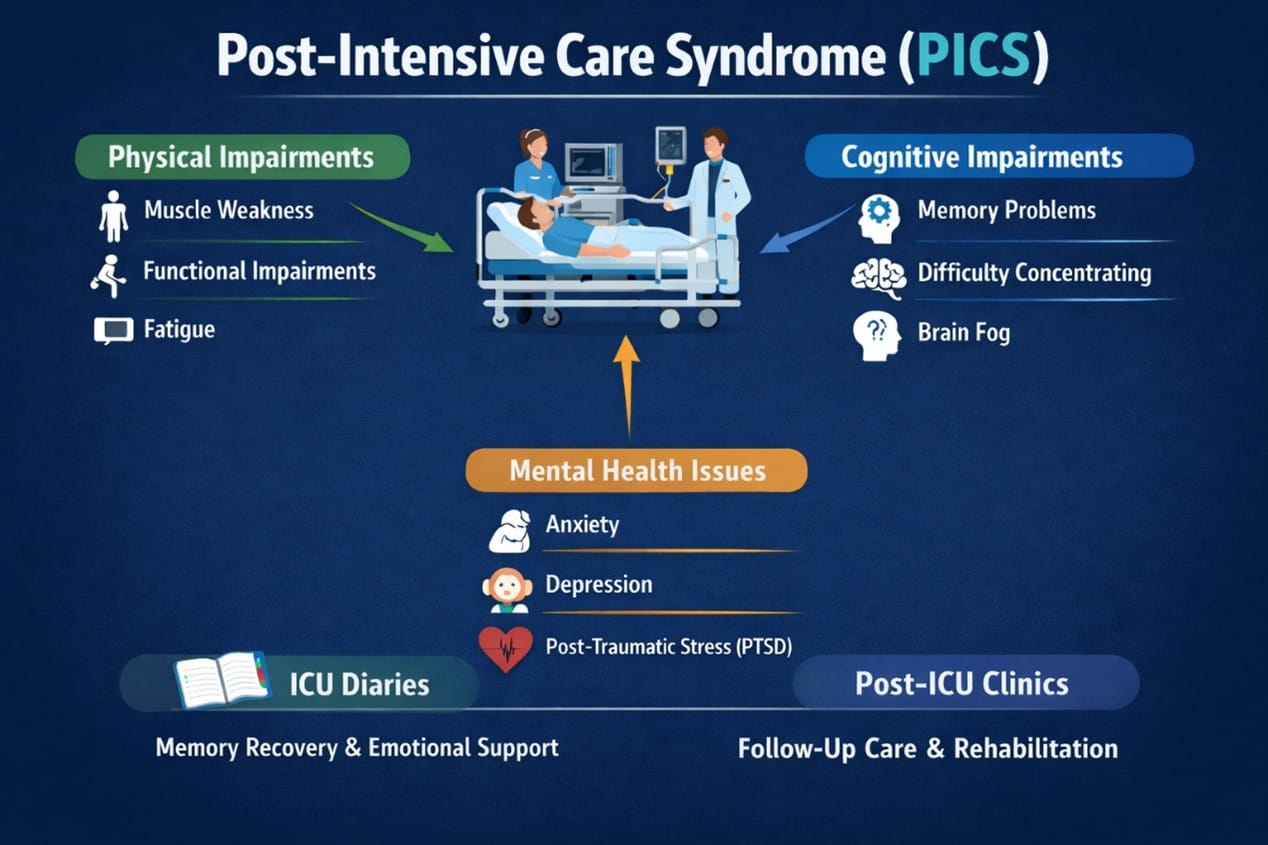
What happens after leaving the ICU is often overlooked. Many ICU survivors experience persistent physical weakness, cognitive impairment, emotional and psychological sequelae. Some struggle to return to their normal daily activities and may become dependent on others for care.This condition is known as Post–Intensive Care Syndrome (PICS). They Survived the ICU — But the Battle Didn’t End There
PICS is increasingly recognised as a significant public health burden. It is defined as new or worsening impairments in physical, cognitive, and psychological functions that develop after critical illness and persist beyond discharge from the acute care setting.
Cognitive impairment (thinking and judgement) occurs in approximately 25% of ICU survivors, and some studies report a substantially higher incidence, affecting more than three-quarters of patients. The occurrence of psychological impairment after ICU discharge is variable, with survivors experiencing depression, anxiety, and post-traumatic stress disorder (PTSD). More than 25% of survivors develop muscle weakness, which leads to difficulty walking, frequent falls, or severe loss of strength. This is often linked to prolonged use of breathing machines, severe infections with organ failure, and deep sedation (Post-intensive Care Syndrome: an Overview).
PICS also extends to patients’ families. Post–Intensive Care Syndrome–Family (PICS-F) refers to the acute and chronic psychological effects experienced by family members during a loved one’s critical illness, as well as after their discharge or death. Up to 30% of family members and caregivers may experience stress, anxiety, depression, and complicated grief. This represents a significant concern for society. The long-term impact of critical illness became even more apparent during the COVID-19 pandemic.
Beyond Survival: Lessons from COVID-19 ICU Survivors
PICS is not uncommon among the COVID-19 ICU survivors. A study by Katherine Weidman and colleagues (2022) reported that nearly 90% of COVID-19 ICU survivors experienced at least one component of PICS, including cognitive impairment, depression, anxiety, or PTSD. Patients may experience a combination of cognitive difficulties and psychological distress, making recovery more complex and prolonged (PICS in COVID-19 Survivors Cohort).
More recent data continue to reinforce this concern. A 2025 study published in a SAGE Publications journal found that 75% of critically ill COVID-19 survivors still had at least one PICS-related impairment one year after discharge. This highlights that recovery is not only incomplete but also often long-term (1-Year Follow-Up Post ICU Syndrome COVID-19 Survivors).
Why PICS Matters More Than Ever?
Advances in critical care have enabled more patients to survive conditions that were once fatal (Post-intensive Care Syndrome: an Overview). However, a growing number of ICU survivors face ongoing challenges, including difficulty returning to work, dependence on caregivers, and a reduced quality of life. For families, the impact can be equally profound, with significant emotional and financial burdens.
Can we do better for ICU survivors?
Recovery should begin in the ICU. This starts with a careful medical and psychological assessment, including the patient’s medical history, ability to cope with stress, and available family and social support. ICU clinicians should focus on treating the patient’s primary illness, keeping patients comfortable and pain-free, minimising environmental stress, and maintaining clear communication and engagement with both patients and their families (PICS in COVID-19 Survivors Cohort).
The use of ICU diaries, which record daily events, treatments, and clinical progress during the ICU stay, can help patients better understand their illness after recovery. They also enable patients to reconstruct their illness experience by bridging memory gaps and reducing delusional or fragmented recollections. Importantly, ICU diaries have been shown to reduce psychological distress, including symptoms of post-traumatic stress, anxiety and depression in both patients and their families. In addition, post-ICU clinics play an important role by providing ongoing follow-up, counselling, and support throughout the recovery process for patients and their families (Post-intensive Care Syndrome: an Overview).
A multidisciplinary approach is essential in managing PICS among ICU survivors. Psychological impairments such as depression, anxiety, and PTSD can be treated with a combination of medications and supportive therapies, including psychological and behavioural interventions. Physical weakness can be improved through structured rehabilitation, including physiotherapy and occupational therapy (Post-intensive Care Syndrome: an Overview).
A New Definition of Survival
Recovery from critical illness should not end at hospital discharge; rather, it should be viewed as a continuum of care. Survival alone is not enough, but quality of life after survival must be equally prioritised. As healthcare continues to evolve, the goal should shift from simply keeping patients alive to helping them truly recover.
PICS highlights the need for greater awareness among clinicians and families of the long-term challenges faced by survivors of critical illness, as well as the responsibility to support them beyond the acute phase of care. Through a multidisciplinary approach and coordinated planning, the ultimate goal is to help ICU survivors regain their independence and return fully to their roles within society and the community.
Survival is only the beginning—true success is helping patients live well again.

Author: Associate Prof. Dr Cheah Saw Kian, Lecturer and Anaesthesiologist, Department of Anaesthesiology & Intensive Care, Faculty of Medicine, Universiti Kebangsaan Malaysia (UKM), Committee of Malaysia Sepsis Alliance (MySepsis)
陈沱良医生DrSeb (drsebchannel@gmail.com) is a content creator under the Newswav Creator programme, where you get to express yourself, be a citizen journalist, and at the same time monetize your content & reach millions of users on Newswav. Log in to creator.newswav.com and become a Newswav Creator now!
The User Content (as defined on Newswav Terms of Use) above including the views expressed and media (pictures, videos, citations etc) were submitted & posted by the author. Newswav is solely an aggregation platform that hosts the User Content. If you have any questions about the content, copyright or other issues of the work, please contact creator@newswav.com.