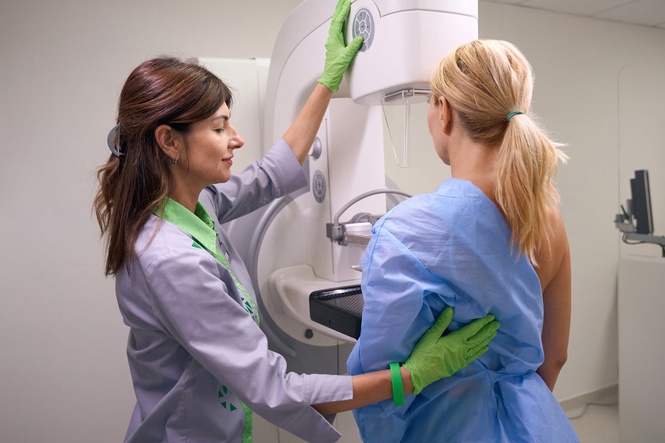
Breast cancer patients have said they are "thrilled" after the health spending watchdog approved a life-extending drug for NHS use.
However, campaigners said that some patients living with incurable breast cancer that has spread to other parts of the body have "died waiting" for Enhertu.
The National Institute for Health and Care Excellence (Nice) announced it has reversed an earlier decision rejecting the treatment for widespread NHS use in England.
In 2024, it previously stated that the treatment was "not cost effective".
It has now confirmed the drug will be provided "from today" for roughly 1,000 women with HER2-low advanced breast cancer, after a "commercial solution has now been agreed".
The therapy has been available to patients in Scotland for more than two years.
It is the first licensed targeted treatment for patients with HER2-low breast cancer that cannot be removed surgically or that has spread to other parts of the body, also known as metastatic breast cancer.
Clinical trials have found that women with breast cancer who took the drug survived for around two years, compared with 17.5 months for those who had chemotherapy.
Paula Van Santen, who was diagnosed with metastatic breast cancer in July 2022, said that the announcement has given her a “new sense of hope”.
Mother-of-three Ms Van Santen, 51, from Banbury, said: “Today is a day I never thought I’d see.

“After years of waiting and hoping, there aren’t enough words to express how thrilled I am to see Enhertu finally approved for use on the NHS.
“Having access to this life-extending treatment brings a new sense of hope.
“It gives me the chance of seeing my daughter graduate from university, become a grandparent for the first time and simply be a mum to my children for longer as they continue to grow.
“These are life’s simple privileges that many of us take for granted, but which mean everything to me and thousands of others living with incurable metastatic breast cancer. That’s the difference a decision like this can make.”
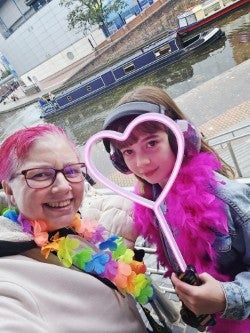
Patient Kathryn Hulland, 48, said the decision would give her more time with her nine-year-old daughter Grace.
Ms Hulland, from Devon, was diagnosed with metastatic breast cancer in 2022.
She said: “I may still be here to support my nine-year-old daughter into high school.
“When I was first diagnosed, I was told I’d be lucky to see 12 months.
“Three years later I know how important every extra month is. It’s another chance at more time with my daughter, another chance to make memories together, another month to be her mum and see her grow.
“And that’s the hope this life-extending treatment now brings, it means everything.”
Charity Breast Cancer Now hailed the announcement as “momentous”.
Claire Rowney, chief executive, said: “After more than two years of relentless campaigning, Enhertu has been recommended by Nice for use on the NHS in England for people with HER2-low metastatic breast cancer.
“This is a momentous day for thousands of people who will now have access to a drug that will give them the opportunity to gain precious extra time with loved ones. More ordinary days that become extraordinary because they were there.
“This milestone victory belongs to every person who refused to accept that access to a life-extending treatment was out of reach. For people in England, the wait for Enhertu is finally over. We must now also see Wales and Northern Ireland make Enhertu available for use on the NHS for those who need more time to live.”
She added: “Since 2024 when it was first rejected for use, thousands of people have missed out on access to Enhertu and tragically many have died. We remember with deep gratitude the women who stood alongside us and fought for this very moment.”
Nice said that a commercial solution has now been agreed for Enhertu, also know as trastuzumab deruxtecan made by Daiichi Sankyo and Astra Zeneca, following changes made to its methods as part of the UK/US Pharmaceutical Pricing Agreement.
Helen Knight, director of medicines evaluation at Nice, said: “I’m pleased that a commercial solution, alongside recent changes to Nice’s cost-effectiveness thresholds and the use of new methods for assessing quality-of-life, has meant this treatment can now be provided on the NHS.
“However, we know this decision comes too late for many families, and our thoughts are with them today. Our role is important in ensuring NHS spending on new medicines reflects the benefits they deliver while protecting valuable health resources for other essential patient services.”
Dr Anne Rigg, consultant medical oncologist and NHS England’s national specialty adviser for chemotherapy, said: “This is hugely positive news for women with secondary breast cancer who will now be offered this life-extending treatment on the NHS, giving them the opportunity for more time with their loved ones.”
Tom Keith-Roach, UK country president for AstraZeneca, said: “Today’s announcement marks a vital milestone for women in England living with HER2 low metastatic breast cancer. It brings access into line with Scotland and 26 other European countries, offering renewed hope to more than 1,000 women living with this particularly aggressive form of the disease.”
Read MoreYoung women who are overweight may be less likely to develop breast cancer
Torrential rain over seven months needed to end drought across England, experts warn
Union demands mandatory pay audits to tackle gender discrimination
Royals live: War of words erupts over Earl Spencer’s Charles and Diana book claims
New forecasts predict how much energy bills could rise in 2027
Prince Harry and Meghan change children’s school due to security concerns