
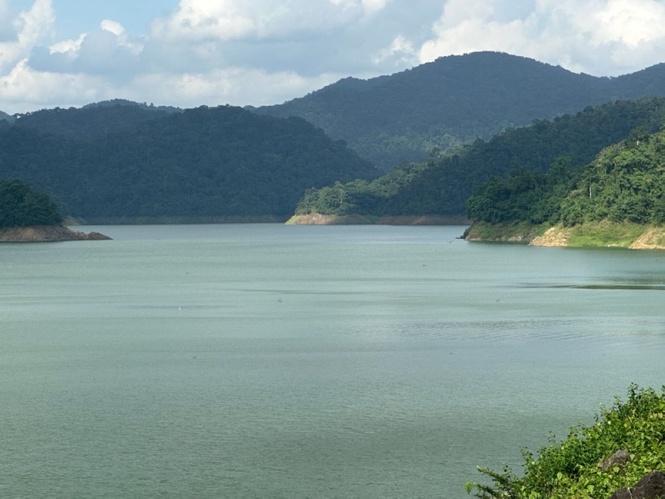
AT Sitio Ilas, Barangay Puray in Montalban, Rizal, an area within the Angat Watershed Forest Reserve (AWFR), up to 50 trees are cut each day. The families in the area engage in pangkakahoy because of pressing income needs, including education-related costs; cutting is “rampant” on holidays and weekends when there are no classes.
“The pressure is environmental and economic,” World Wide Fund for Nature (WWF)-Philippines Angat Program Project Manager Rem Napay said. To help relieve this pressure, WWF-PH, through a grant from NGO Forest Foundation Philippines, established the Adlaw (Agroforestry Development and Livelihood for Angat Watershed) project that offers livelihood and community-based solutions.
The AWFR covers 57,000 hectares spread across Bulacan, Rizal, Aurora and Nueva Ecija. It lies in the southern portion of the Sierra Madre, the longest mountain range in the Philippines and ancestral domain of the Dumagat Indigenous People. Under threat from climate change, environmental degradation and human-driven activities, the Sierra Madre is one of the focus areas of Forest Foundation Philippines, which has identified it as “critical landscape” for conservation because of its importance as a biodiversity sanctuary and role in water and energy security for millions of Filipinos.
Under Adlaw, an agroforestry initiative focused on abaca was launched on 85 hectares allocated by the National Power Corp. (NPC), which manages the AWFR. Technical support for the project was provided by the Philippine Fiber Industry Development Authority (PhilFIDA)
Some 133,000 seedlings have been planted since the project began in September 2025. But the first returns from the planting can only be expected in 1.5 years, Napay said. In the interim, the community’s alternative income needs must be addressed, she said. Additional support was gained through the Building Community Resilience to Natural Hazards, a United Arab Emirates (UAE) initiative implemented by WWF and the Red Cross in five countries, including the Philippines.
“Linking forest protection with livelihoods, savings, education support and disaster preparedness can address community needs while building a more resilient Angat Watershed,” Napay said. Toward this end, “partnership and continued investment are essential.”
Sitio Ilas is among the identified hot spots within the AWFR, besieged by problems like timber poaching, slash-and-burn farming, charcoal making, informal settlers, threats to forest resources, increased land use activities and improper waste management.
The lack of forest guards, according to NPC Angat Watershed Area Team Section Chief Ramil Gata, means limited patrol coverage and frequency in the watershed, increasing the vulnerability of forest resources and impeding detection of illegal activities.
Ilas’ challenges mirror those faced by the larger watershed: protecting the forests while addressing the needs of the people who live in and around it.
In a visit to AWFR organized by the foundation together with NPC and WWF-PH on Sept. 26 in observance of Save Sierra Madre Day, business and private sector members explored how they could contribute to conservation efforts.
The foundation has laid out five opportunities for partnerships through which the “private sector can contribute to forest protection and expand forest restoration areas,” said Karissa Mae Bautista, Forest Foundation Philippines partnerships specialist: tree growing, forest protection, climate adaptation and mitigation, community livelihoods, and advocacy.
In AWFR, companies can go beyond tree-planting by supporting the long-term survival of trees, from nursery to forest. The scheme, which will be implemented across 2,536 hectares in Doña Remedios Trinidad and Norzagaray in Bulacan, and Montalban in Rizal, is a minimum three-year program aimed at growing and sustaining forests.
Partners can also help fund the operational needs of the Bantay Gubat Watershed Task Force, which helps monitor, patrol and secure the watershed.
Other potential support for forest-dependent communities in the watershed includes livelihood and capacity-building, co-funding initiatives such as vegetable and fruit production, providing postharvest equipment and tools, and equipment for handicraft making, and value addition and market linkage for abaca and agroforestry crops.
In the area of climate mitigation and advocacy, partners can help Dumagat communities with their needs for clean water storage and climate- and drought-resilient farming training. Educational support through scholarships for Dumagat youth and for hot spots within the watershed is another area for partnership.
Forest Foundation Philippines Deputy Executive Director Alaya de Leon pointed out that the Sierra Madre Mountains cannot be protected by one organization, one community, or one sector alone. Its forests, watersheds, biodiversity and communities are interconnected, she said. “Conservation is a shared responsibility. It is a multi-sectoral effort... Sama-sama tayo.”