
By Dr Victor SL Tan
Over the years, I have observed people across all walks of life—professionals, parents, educators, entrepreneurs, and individuals simply trying to live well. And one quiet pattern has become increasingly clear to me: many of life’s most meaningful losses do not come from major failures, but from moments we were not fully present to experience.
Life does not usually announce its turning points.
It rarely arrives with drama.
It rarely demands attention. It slips past quietly. In a split second.
In a moment of inattention.
Someone glances at a screen and misses a hesitation in a loved one’s voice.
A nod replaces a real response.
A conversation continues, but something important goes unheard. Nothing breaks immediately. But something shifts.
And when such moments accumulate, the cost is not measured in productivity or efficiency—but in connection, depth, and meaning.
As Henry David Thoreau once wrote, “It is not enough to be busy; so are the ants. The question is: what are we busy about?” Too often, we are busy looking down while life is quietly unfolding in front of us.
Presence as the Gateway to a Full Life
We often talk about living life to the full, yet many of us live it only partially present.
Presence is not about being physically there. It is about attention. It is about noticing what is happening—within us and around us—before it passes.
You cannot truly understand another person if you are not listening.
You cannot appreciate a moment if your attention is elsewhere.
You cannot build connection if trust and attentiveness are absent.
I once watched a grandfather at a café with his young grandson. The child was animated, pointing excitedly at everything around him. The grandfather smiled kindly—but his eyes never left his phone. The child eventually stopped pointing. Nothing dramatic happened. But something was quietly lost.
Living digitally trains us to respond to urgency. Life, however, unfolds through what is often quiet but significant.
The irony is that the most meaningful moments are rarely the loudest. They are found in pauses, expressions, tone changes, and unspoken emotions. Presence is the gateway to recognising them.
When We Hear, But Do Not Really Experience
One of the most common human blindspots today is not indifference, but distraction.
We hear words, but miss meaning.
We observe behaviour, but ignore emotion.
We rush through interactions without noticing what lies beneath them.
The psychologist Carl Rogers once observed that “the greatest barrier to communication is the illusion that it has been accomplished.” We think we have listened, when in truth we have only heard sounds.
When this happens, we misinterpret life itself. We respond to surface signals while missing what truly matters. Moments that could have deepened understanding, strengthened relationships, or brought quiet joy simply pass us by.
By the time we realise something feels distant or disconnected, the moment that mattered most has already gone.
Digital Distraction and Our Inner Blindspots
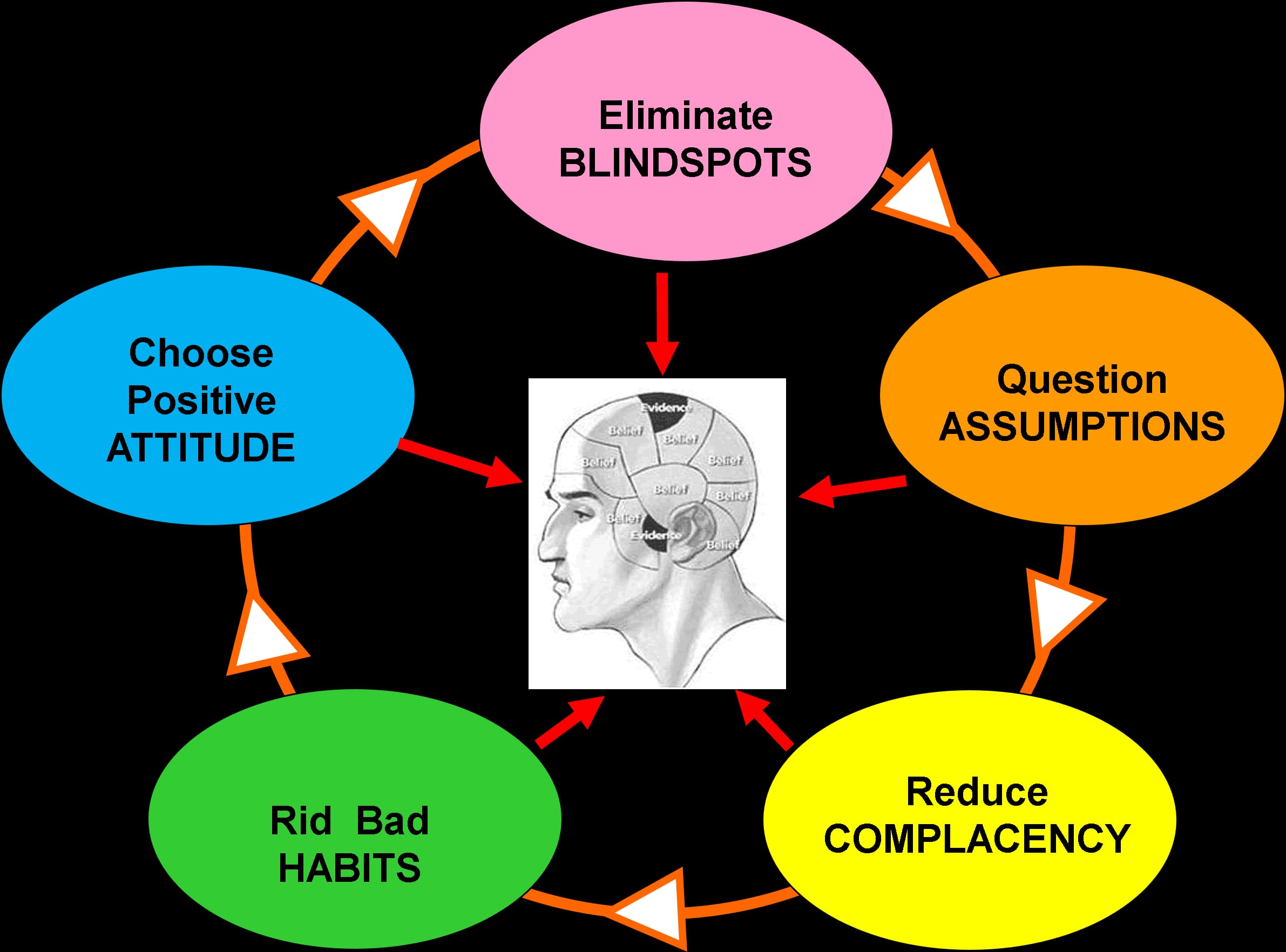
I often use the BACHA lens—Blindspots, Assumptions, Complacencies, Habits, Attitudes—to describe how change happens quietly over time. The same applies to how we miss life. To change one’s mindset, one has to eliminate blindspots, question outdated assumptions, reduce complacency, get rid of bad habit and inculcate a positive attitude.
Digital distraction feeds all five.
It creates blindspots because we stop noticing subtle signals.
It reinforces assumptions because we stop asking deeper questions.
It breeds complacency by replacing reflection with constant stimulation.
It forms habits of partial attention.
And over time, it shapes attitudes where efficiency replaces presence.
None of this happens intentionally. It happens incrementally. And that is precisely why it is so dangerous.
As the philosopher Blaise Pascal noted centuries ago, “All of humanity’s problems stem from man’s inability to sit quietly in a room alone.” Today, that inability is amplified by screens we carry everywhere.
The Illusion of Multitasking in Life
Many people believe they can multitask their way through life—be present while scrolling, listening while replying, connecting while checking.
My experience suggests otherwise.
Attention does not divide; it fragments.
And fragmented attention leads to fragmented experiences.
Life does not repeat its moments. There is no notification that says, “This was the moment you should have noticed,” or “This was when someone needed you fully present.”
Instead, we ask later:
Why do relationships feel thinner?
Why do moments feel forgettable?
Why does life seem busy, yet strangely empty?
Very often, the answer lies not in circumstances—but in presence.
The Real Present Gifted To Us Is Our Presence
Life begins inside awareness.
Before anything meaningful changes, we must notice ourselves—where our attention goes, what we prioritise, and what we routinely miss.
Meaning lies beneath behaviour.
What people say or do is often only the surface. Those who slow down notice the real story.
Urgency is the enemy of depth.
Digital systems reward speed. Life rewards stillness, especially when something truly matters.
Connection is built in ordinary moments.
Not in grand gestures, but in quiet attentiveness—when someone feels seen and heard.
Attention is care made visible.
When we give full attention, we communicate value without explanation.
As the writer Annie Dillard put it so simply, “How we spend our days is, of course, how we spend our lives.” And if I may add, how we treasure the moments is what provide life its meaning.
Choosing a Fuller Way of Living
Living digitally is unavoidable. Technology is part of modern life.
But surrendering our presence to constant distraction is a choice.
Technology can enhance convenience, but it cannot replace awareness.
It can deliver information, but not insight.
It can increase efficiency, but never meaning.
Those who live life fully are not those who do the most, but those who notice the most—especially moments others overlook.
Allow me to end this article with typical scene we see everyday in this digital era.
Take a moment to observe a train, a bus, or a public waiting area today.
The scene is strikingly familiar.
Grandparents sit side by side, heads bowed—not in conversation, but over glowing screens.
Parents stand inches from their children, scrolling while little hands tug gently at sleeves, then eventually give up.
Teenagers sit shoulder to shoulder, earbuds in, eyes locked onto separate worlds.
Bosses and employees occupy the same carriage, hierarchies momentarily flattened—not by dialogue, but by shared silence and screens.
Everyone is connected.
Yet very few are truly with one another.
The train moves. Time passes. Stations come and go.
No one looks up.
There is no conflict. No tension. No drama.
Just quiet absorption.
What is most striking is not what is happening—but what isn’t.
No exchanged glances.
No spontaneous conversations.
No shared laughter at something ordinary.
No moments of curiosity, reflection, or human recognition.
An entire carriage full of people—different generations, different roles, different stories—occupying the same physical space, yet living in entirely separate mental worlds.
Nothing appears wrong.
And yet, something essential is missing.
This is how moments disappear in the digital era—not stolen, not destroyed, but quietly surrendered. One scroll at a time.
In this digital era, let us ask the fundamental question:
Are we truly here—totally present or merely digitally connected? Are living life to the fullest or are we just living life digitally but missing the meaningful moments?
Dr Victor S. L. Tan is the Chief Executive Officer of KL Strategic Change Consulting Group. He is the author of 21 books, including Changing Mindsets, Releasing Trapped Minds, Changing Your Corporate Culture, and Lessons of Tan Sri Teh Hong Piow. KL Strategic Change Consulting Group is the winner of The BrandLaureate Award for making one of the most positive and profitable impacts on organisations through corporate training.
For a free form assessing the degree to which you are living life to the full—or missing the moments, email him at victorsltan@klscc.com or contact 012-390 3168.
Dr Victor SL Tan (victorsltan@klscc.com) is a content creator under the Newswav Creator programme, where you get to express yourself, be a citizen journalist, and at the same time monetize your content & reach millions of users on Newswav. Log in to creator.newswav.com and become a Newswav Creator now!
The User Content (as defined on Newswav Terms of Use) above including the views expressed and media (pictures, videos, citations etc) were submitted & posted by the author. Newswav is solely an aggregation platform that hosts the User Content. If you have any questions about the content, copyright or other issues of the work, please contact creator@newswav.com.


