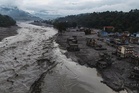
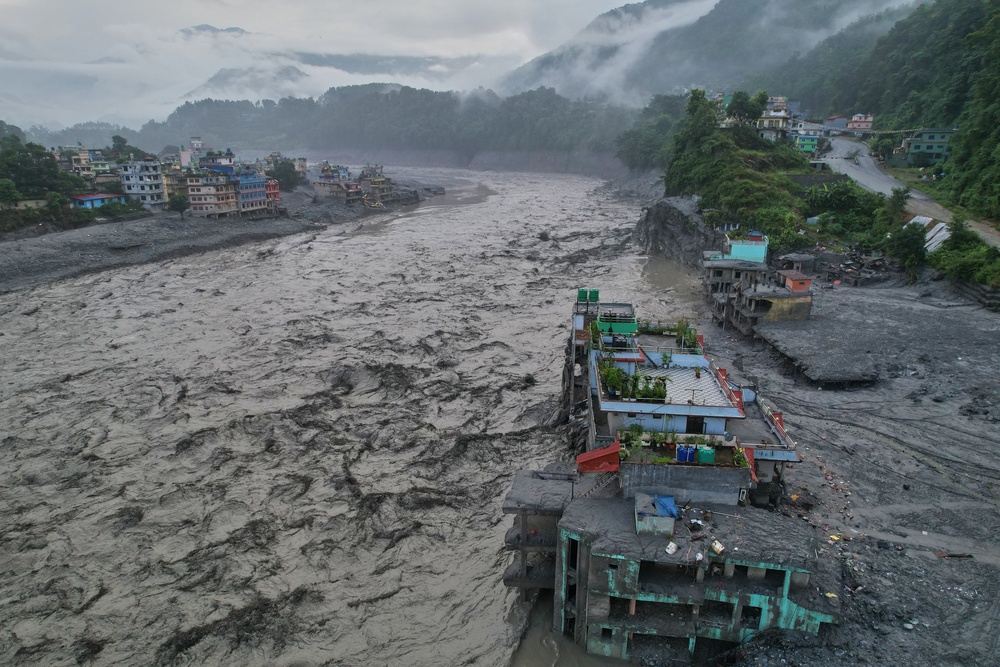
Nepal has intensified efforts to trace more than 900 workers trapped inside various tunnels after no contact was established with those still missing following a cataclysmic deluge and mudslide that swept away entire communities last week.
An estimated 933 people are believed to be missing inside tunnels at five hydropower projects after a torrent of ice, rock and debris swept down a mountain valley on the China-Nepal border on Wednesday, according to the country's National Disaster Risk Reduction and Management Authority.
The floods have killed 903 people and left at least 4,247 missing.
At the Trishuli 3A hydropower plant, the prime minister's office said it has begun “blasting operations” with a joint team of 90 people deployed and "working tirelessly round the clock".

A 2x3ft hole (0.6x0.9m) was dug out in the crown of the tunnel earlier, with rescuers descending on ropes.
The team “called out but received no response from inside”, it said.
“Operations were simultaneously continued with heavy equipment, blasting, and widening the hole to make the rescue more efficient and swift,” it said.
Some 279 workers have so far been rescued or have managed to trudge their way out of the blocked and collapsed tunnels. But for the families of those still missing, hopes are fading with each passing hour.
Among them is the wife of Jiblal Adhikari, who is believed to be trapped inside the underground powerhouse of the Trishuli-3A hydropower project in Nuwakot.
"I still have 50 per cent hope that he is alive because there is an oxygen system inside," Sita Pandey told Nepali newspaper Kantipur.
"But with every hour that passes, that hope becomes thinner."
She said she spoke to Mr Adhikari on the phone before he entered the underground plant on Wednesday morning without knowing it might be the last time she heard from him.
“He had breakfast and entered the plant at around 7am on Wednesday. We usually spoke online at around noon during his lunch break because mobile networks did not work inside,” she said. “After the flood, we lost all contact.”

Mr Adhikari, who works at another power project, had travelled to Trishuli-3A to inspect machinery while the plant was undergoing its annual overhaul and maintenance. The 60 MW project began its commercial generation in 2019 and had some 40 people, including experienced technicians and engineers, working inside it.
Families have expressed frustration over the delay in the launch of the rescue operation.
Jiban Khadka, whose relative Surya Bahadur KC is also believed to be trapped inside the plant, said the rescue operation only began on Sunday and that, had it started earlier, “there would have been a greater chance of finding our people alive.”
“The longer it takes, the more our hope dies. This operation must move much faster because every second is meaningful to us,” he said.
As rescuers struggled to clear the debris, specialist teams from China and India joined the operation alongside Nepali soldiers, police and disaster management teams, said Dharam Raj Uprety, chief of Nepal's national disaster management authority.
"It's very tough because there's a lot of debris and we cannot blast things to make our way through," he said.
Mohan Kumar Dangi, president of the Independent Power Producers Association of Nepal, or IPPAN, said the floods damaged at least 12 hydropower projects across Rasuwa and Nuwakot districts and about 900 people were missing from the project sites.
"The tunnels are built to access hydropower infrastructure and to divert water – an essential step to generate energy. These tunnels are big enough to drive trucks through," said Jakob Steiner, a geoscientist at the University of Graz in Austria who is currently based in Dhaka, Bangladesh.
"There is enough place for people to take refuge safely inside and from what we understand they have managed to get oxygen to some of those stuck inside and are trying to rescue them now. It's a race for time though as people need food and water."
Australian geologist Arnold Dix, who helped save 41 Indian workers from a collapsed Himalayan tunnel in 2023, is providing technical advice to the emergency crews outside the Trishuli 3A plant from his office in Melbourne.
Mr Dix pulled an all-nighter from Melbourne to guide rescuers trying to reach his Nepalese friends and colleagues trapped inside the hydropower tunnel. He said 35 to 40 of those believed to be trapped are people he knows.
“The scale of the people who’ve been rescued gives us a bit of a window into the scale of the people who haven’t been rescued,” he said.
He also said rescuers face huge challenges because they cannot see or properly map what happened underground, so they may have to essentially dig blindly to locate the trapped workers.

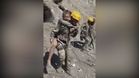
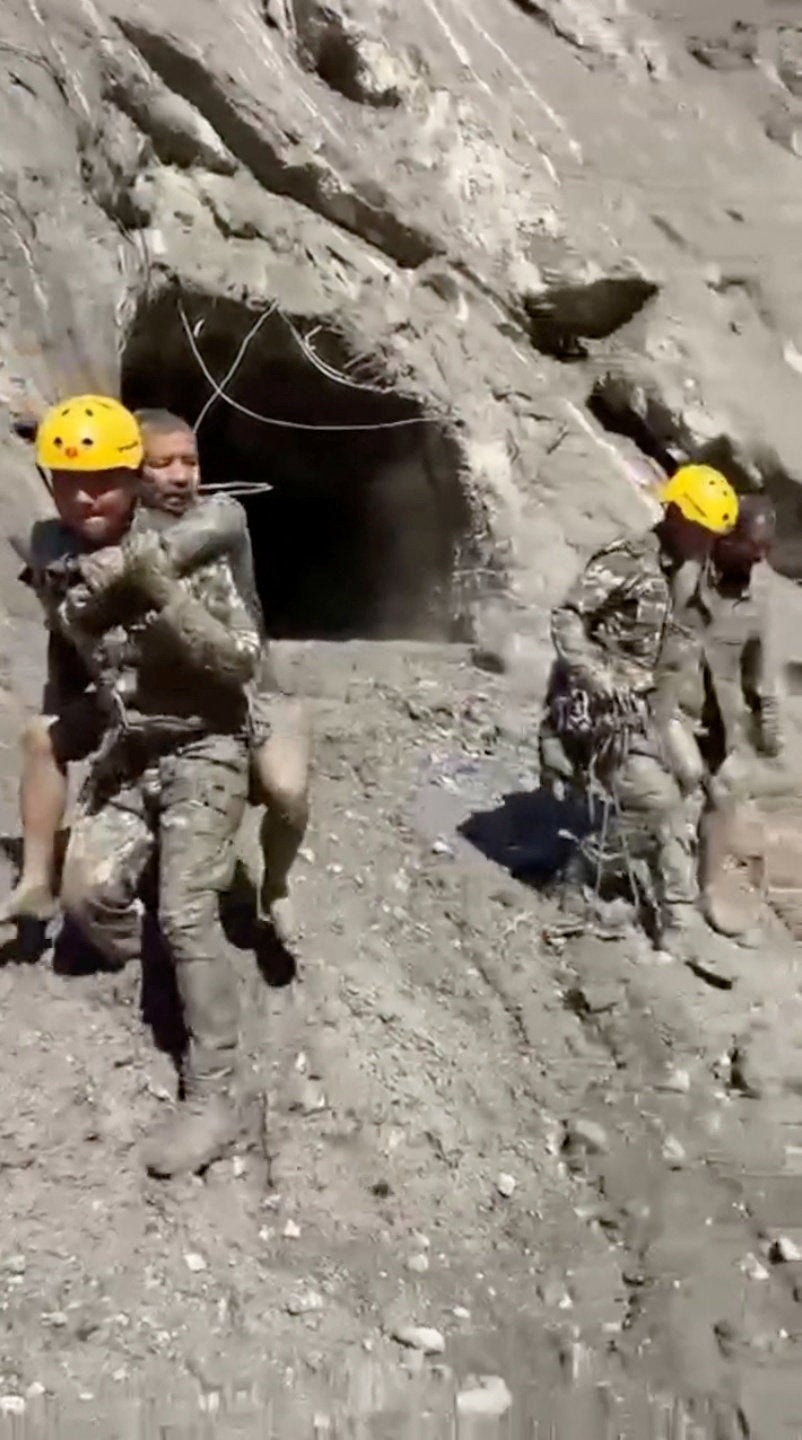
Pictures of the dramatic rescue operation showed two men caked in mud after being piggybacked from the mouth of one of the tunnels. With roads destroyed and power out, helicopters are usually the only means of rescue.
The peril faced by those trapped inside was captured in the account of survivor Ram Chandra, who escaped a tunnel with a small group of colleagues as floodwater surged beneath them. He said he hung on to the rungs studded into the roof of the tunnel as the water beneath them rose.
He grabbed a tin sheet to use as a foothold, passing it around the group as they inched forward, rung by rung, over six hours.
“If I had let go from that rung I would have fallen,” he told CNN after his daring escape during which the gushing water had claimed his clothing.
“There were six of us and we later found someone else at the gate of the tunnel,” he said
As of Monday, Nepal's disaster agency said 903 deaths had been counted, with 4,247 people, including 592 foreigners, missing. As of Sunday, Chinese authorities reported 16 deaths and 546 missing, and Chinese state media said 261 of the missing were foreigners, including over a hundred Nepalis.
Read MoreFresh flood warning issued in Nepal as death tolls rises above 900
Fifteen Britons among 261 foreigners missing in China after floods
No missing Britons among the hundreds rescued after Nepal flash floods
Glacier collapse that killed hundreds in Nepal was decades in making, scientists say
Thousands of children saved by quick-thinking teachers in Nepal floods
What triggered Nepal flash floods? And why are experts worried about a second flood?