
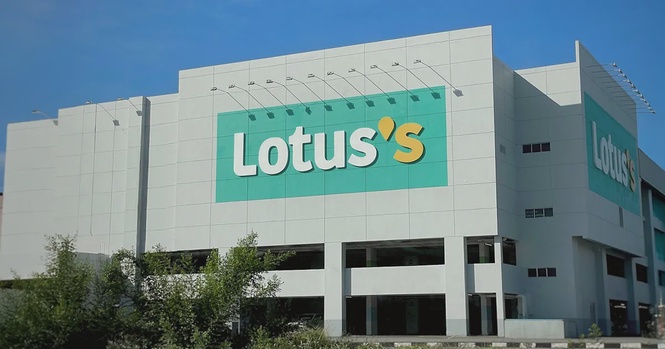
PETALING JAYA: Increased footfall at Lotus’s Malaysia stores has created a broader “halo impact” on product categories beyond those directly benefiting from the Sumbangan Asas Rahmah (Sara) programme.
Consumer spending under the government financial assistance programme is naturally concentrated on approved essential goods, with dry grocery and non-food categories among the main beneficiaries.
These include regularly purchased household necessities such as rice, flour, sugar, baby milk powder and household cleaning products.
However, the retailer said the impact extended beyond categories directly supported by Sara, with the increased customer traffic to its stores generating a broader spillover effect across other product categories.
“Generally, dry grocery food and non-food categories have benefited from the Sara programme, especially for basic necessities such as rice, flour, sugar, baby milk powder, as well as household cleaning, but there has been a general halo impact to other categories due to the increased footfall to stores,“ Lotus’s Malaysia spokesperson told SunBiz.
Further, the retailer said the broader impact highlighted how programmes such as Sara could influence retail activity beyond the direct purchase of eligible goods, as increased store visits may also support activity across other categories.
The Lotus’s Malaysia spokesperson said Sara is an important social support programme that helps eligible households access essential goods.
“From a business perspective, such programmes can support more consistent purchasing of basic necessities and may contribute to customer traffic and transaction activity, particularly during credit disbursement periods,“ the spokesperson said.
Lotus’s Malaysia said the programme reinforced the importance of maintaining sufficient availability of key products across affordable price points to ensure eligible customers have a meaningful selection of essential goods. It is also influencing how the retailer plans its inventory and store operations.
“Any programme that affected the timing and composition of household spending would be reflected in retail planning, with the company anticipating possible increases in demand around disbursement periods, ensuring approved products were clearly identified and maintaining sufficient inventory across its stores.
“We at Lotus anticipate possible increases in demand around disbursement periods, ensure that approved products are clearly identified and maintain sufficient inventory across all stores,“ the spokesperson said.
Lotus’s Malaysia works closely across its commercial, supply chain, store operations and technology teams to prepare for changes in demand.
“Purchasing patterns and demand can be used to improve forecasting, which helps reduce the risk of items becoming unavailable. The objective is not merely to process Sara transactions, but also to provide a smooth and meaningful shopping experience for beneficiaries,“ the Lotus’s Malaysia spokesperson noted.
The retailer observed shifts in purchasing patterns around Sara disbursement periods, which were reflected in its inventory and operational planning.
The programme comes as Malaysian consumers become increasingly careful about how they allocate their household budgets, with shoppers comparing prices, paying closer attention to promotions and seeking a balance between affordability and quality.
However, Lotus’s Malaysia said cautious spending did not necessarily mean consumers were buying less across every category. Instead, shoppers were becoming more selective about where they shop, what they buy and how they allocate their spending.
“Price remains an important consideration, particularly for essential household spending. However, consumer behaviour is not uniform across all income groups or product categories,“ the spokesperson said.
While customers continue to look for savings, many are still prepared to spend more on products that offer better quality, suggesting the shift towards value does not necessarily mean consumers are simply opting for the lowest-priced alternatives.
Shopping patterns have also become more fragmented.
Lotus’s Malaysia observed that some consumers were visiting more often to manage their budgets and buy products closer to consumption, while others were consolidating purchases during major shopping trips, particularly around salary periods, festive seasons, or promotional campaigns.
Overall, customers were increasing their purchase frequency while maintaining a stable basket size, it said.
The retailer said lower- and middle-income households were among those managing monthly budgets more carefully, while larger households remained particularly sensitive to price-per-unit and promotional value because grocery purchases represented a substantial household expense.
Younger consumers, meanwhile, were generally more comfortable moving between physical and digital channels.
Lotus’s Malaysia also noted that consumers increasingly used different channels depending on their needs, with physical stores remaining important for fresh produce, meat, seafood and products that customers preferred to inspect before purchasing.
Online platforms, meanwhile, offered greater convenience for familiar and heavier items such as rice, cooking oil and mineral water.
The retailer also sees opportunities for its own-brand products as consumers become more focused on value.
However, it said customers did not automatically switch to alternatives simply because they were cheaper, with trust, product quality and previous experience remaining important considerations.
Lotus’s Malaysia’s approach was to develop own-brand products that customers could trust and repurchase, rather than treating them merely as lower-priced substitutes.
Data analytics is also playing an increasingly important role in helping the retailer understand demand and improve forecasting.
The supermarket retailer said data could help identify purchasing patterns, measure promotional effectiveness, understand differences between store locations and anticipate demand around festive seasons, salary cycles and government programme disbursement periods.
Looking ahead, Lotus’s Malaysia said Malaysia’s large and diverse consumer market continued to present opportunities in digital commerce, data-led personalisation, own-brand development, local sourcing and collaboration with small and medium enterprises.
“Malaysia has a large and diverse consumer market, which provides opportunities for retailers to develop more targeted products and services, particularly in areas such as digital commerce, data-led personalisation, own-brand development, local sourcing and collaboration with small and medium enterprises,“ it said.
However, the retailer said the industry would continue to face cost pressures, supply-chain uncertainty, changing consumer expectations and intense competition.
“The ability to remain affordable without compromising availability and quality will be one of the defining challenges for the industry,“ Lotus’s Malaysia spokesperson said.