
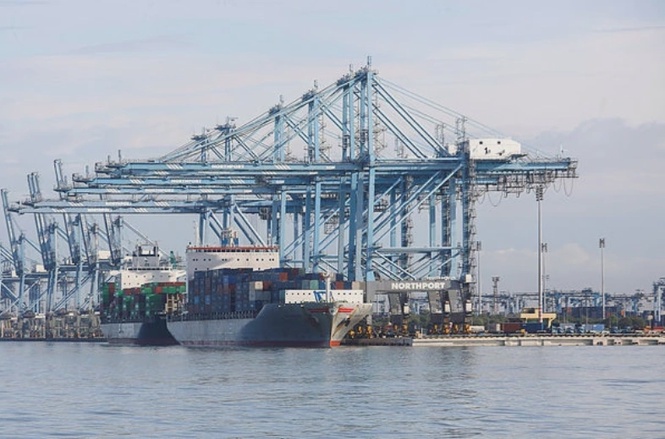
The proposed Special Task Force should be positioned as a platform to strengthen intelligence sharing, operational coordination and strategic oversight, rather than creating duplication of existing statutory responsibilities.
The recent proposal by the Malaysian Anti-Corruption Commission (MACC) and the Royal Malaysian Customs Department (JKDM) to establish a Special Task Force to monitor enforcement and tax collection at Malaysia’s strategic ports is timely and commendable.
The initiative reflects the Government’s commitment to addressing revenue leakages arising from smuggling, false or inaccurate declarations, document fraud and other customs-related offences that undermine national revenue, trade integrity and public confidence.
Strengthening enforcement and improving compliance should be viewed as an important avenue for increasing government revenue collection, reducing losses from leakages and ensuring that existing tax frameworks operate more effectively, rather than relying on the introduction of new taxes or increases in existing tax rates.
However, this announcement also presents an opportunity to establish a broader national strategy that integrates governance, technology, intelligence and institutional coordination.
Malaysia has already undertaken significant reforms by establishing the Agensi Kawalan dan Perlindungan Sempadan Malaysia (AKPS) as the nation’s Single Border Enforcement Agency.
AKPS was created to strengthen coordination among multiple enforcement agencies responsible for border control operations at ports, airports and land checkpoints.
At sea, the Malaysian Maritime Enforcement Agency (MMEA) continues to play a critical role in safeguarding Malaysia’s maritime borders by combating smuggling, illegal fishing, human trafficking and other cross-border crimes before they reach Malaysian ports.
Meanwhile, JKDM remains responsible for customs administration, revenue collection, tariff classification, valuation, trade facilitation and post-clearance audits, while MACC investigates corruption, abuse of power and organised criminal activities that contribute to revenue leakages.
Taken together, these agencies form an important enforcement ecosystem. Therefore, the proposed Special Task Force should be positioned as a platform to strengthen intelligence sharing, operational coordination and strategic oversight, rather than creating duplication of existing statutory responsibilities.
Container Management: A Strategic National Initiative
One area that deserves special attention is container management, which was specifically highlighted during discussions between MACC and JKDM. Container management should no longer be viewed merely as an operational customs function. In today’s global trading environment, it has become a strategic national capability involving border security, revenue protection, trade facilitation and supply chain resilience.
Containers for shipment are not simply physical box units transporting goods. They represent complex movements of commercial information, financial transactions, regulatory obligations and potential security risks. Every container entering or leaving Malaysia presents both an economic opportunity and a potential vulnerability.
Without effective governance, containers can become channels for smuggling, customs fraud, false declarations, revenue leakages and other illicit activities. Therefore, Malaysia requires an end-to-end, intelligence-led container management approach covering the entire cargo lifecycle, from pre-arrival risk assessment, digital documentation and cargo profiling to port handling, customs clearance, inland transportation and post-clearance audit.
Technology as an Enabler of Smarter Border Management
Technology must become a key pillar in this transformation. Modern border management increasingly depends on artificial intelligence (AI), predictive risk analytics, electronic container seals, digital cargo visibility, non-intrusive inspection systems, integrated trade platforms and real-time information sharing between enforcement agencies and industry stakeholders.
The objective is not to replace enforcement officers or physical inspections, but to make enforcement more targeted, efficient and intelligence-driven. By identifying high-risk cargo or suspected fraud earlier, authorities can focus resources where they are most needed while allowing compliant traders to enjoy faster and more predictable clearance processes.
Regional examples demonstrate the importance of this integrated approach. Singapore, as one of the world’s leading maritime and transshipment hubs, has developed a highly coordinated ecosystem involving Customs administration, port operations, technology infrastructure and close collaboration with industry stakeholders. The key lesson from Singapore is not simply the adoption of advanced technology, but the integration of data, processes and accountability across the entire supply chain. Effective container governance requires cooperation between government agencies, port operators, logistics providers and technology partners.
Malaysia does not need to replicate another country’s model. Instead, Malaysia should develop its own approach by leveraging its strengths, including strategic ports, experienced logistics operators, skilled enforcement agencies and a growing technology ecosystem.
Importantly, Malaysian private-sector companies and technology innovators have already developed solutions in areas such as container visibility, cargo tracking, digital documentation, logistics integration and supply chain management. These domestic capabilities represent valuable national assets that can contribute to a broader technology strategy.
The Government could explore transparent, competitive and merit-based public-private collaboration to leverage existing innovations, accelerate implementation and strengthen Malaysia’s digital trade capabilities, while ensuring that national security and governance requirements remain protected.
Governance, Accountability and Integrity
Equally important is ensuring clear governance.
The Government is encouraged to clearly define the mandate of the proposed Special Task Force, including its relationship with AKPS, JKDM, MMEA and other enforcement agencies.
Clear lines of responsibility will minimise duplication, improve operational effectiveness, increase integrity management, and strengthen public confidence in Malaysia’s border management framework.
The task force should also establish measurable Key Performance Indicators (KPIs), including additional revenue recovered, reductions in smuggling activities, successful prosecutions, improvements in cargo clearance efficiency, increased compliance rates, and stronger integrity standards across the border enforcement ecosystem.
Periodic reporting of these outcomes would further enhance transparency and accountability.
AKPS also deserves recognition for undertaking the challenging responsibility of coordinating Malaysia’s border management functions.
Strengthening border governance is a complex task involving multiple agencies, operational environments, and stakeholder expectations.
To maintain public confidence and preserve its reputation, AKPS can continue investing in professional development, internal good governance, and integrity management.
Strong institutions are built not only through enforcement achievements but also through ethical leadership, transparent oversight and continuous commitment to professionalism.
Building Malaysia’s Future Border Ecosystem
Ultimately, protecting Malaysia’s borders is not simply about intercepting illegal goods or recovering unpaid taxes. It is about building a smart, integrated, and trusted border ecosystem where governance, technology, intelligence, and integrity work together.
The proposed MACC–JKDM Special Task Force has the potential to become a catalyst for this transformation. Its success should be measured not only by enforcement outcomes but also by its ability to strengthen institutional coordination, embrace technology, leverage Malaysia’s innovation ecosystem and enhance the country’s position as a secure and efficient global trading hub.
As Malaysia aspires to become a leading global trading and logistics hub, its long-term success will depend on more than enforcement alone.
It requires an integrated border and container management strategy that combines technology, intelligence, governance and integrity to protect national revenue, strengthen supply chain resilience, facilitate legitimate trade and reinforce confidence among businesses, investors and the public.
